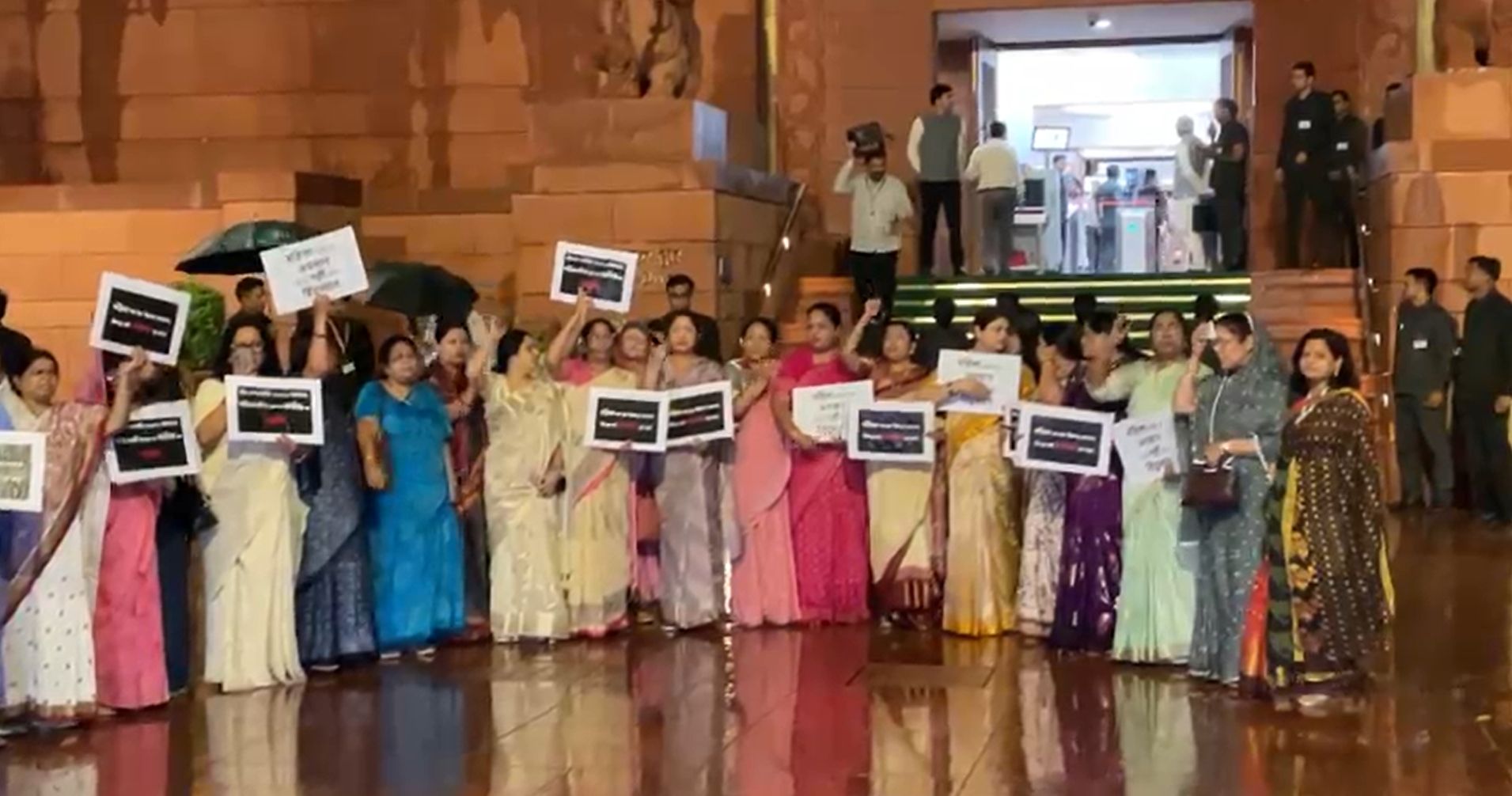
On the evening of April 17th, as rain pattered on the Parliament complex, a small knot of women MPs from the ruling BJP-led coalition raised slogans under sodden umbrellas. Their protest was theatrical but heartfelt: the Constitution (131st Amendment) Bill, 2026, had just been defeated in the Lok Sabha. It was the first time in 12 years that a constitutional amendment introduced by Narendra Modi’s government had fallen short. The numbers were unambiguous: 298 votes in favour, 230 against. A two-thirds majority of those present and voting—some 352—was required. The bill failed by a wide margin.
The legislation had been billed as a bold leap forward for Nari Shakti (women’s power). It sought to bring forward the 33% reservation for women in the Lok Sabha and state assemblies to the 2029 general election—rather than waiting for the post-2026 census and the delimitation that the 2023 Women’s Reservation Act had stipulated. It would also have expanded the lower house from 543 seats to as many as 850, with fresh boundaries drawn on the basis of 2011 census data. The government presented it as efficiency married to equity: more women in legislatures sooner, and a parliament finally reflecting India’s demographic realities after nearly five decades without redistricting.
Yet the opposition, marshalled by the Congress-led INDIA alliance and reinforced by southern regional parties, voted as one against it. Their stance was not, they insisted, a rejection of women’s reservation itself—something on which there has been broad consensus since the 1990s. It was a rejection of the vehicle in which that reservation arrived: a Trojan horse, they called it, for a politically explosive redrawing of the electoral map.
The week of pressure
The government had prepared the ground with characteristic vigour. A week earlier, on April 13th, Mr Modi had addressed a “Nari Shakti Vandan Sammelan” in Delhi, declaring that parliament was on the cusp of “new history”. The special three-day session beginning April 16th would, he suggested, deliver what generations of women had been denied. Over the following days ministers and BJP spokesmen blanketed television studios and social media with the message: this was about mothers, sisters and daughters, not politics. On April 16th the prime minister himself warned MPs that those who opposed the bill would “pay a price for a long time”. Amit Shah, the home minister, offered last-minute assurances that southern states would not lose out and even brandished the text of a possible amendment guaranteeing a 50% increase in seats across the board.
It was classic Modi-era legislative theatre: high moral stakes, relentless messaging, and the implication that dissent was tantamount to betraying half the population. The calculation appeared straightforward. With the BJP commanding a comfortable majority, and public sentiment broadly supportive of women’s quotas, how could the opposition resist without looking churlish?
The southern firewall
The answer lay in the bill’s fine print—and in the quiet arithmetic of federal power. India’s last major delimitation was frozen in 1976 on the basis of the 1971 census, partly to reward states that had successfully curbed population growth. Southern states—Karnataka, Tamil Nadu, Andhra Pradesh, Kerala, Telangana—have done precisely that. Fertility rates there are below the national average; family-planning programmes have worked. Northern Hindi-belt states, by contrast, have seen faster population growth. A fresh delimitation based on 2011 numbers (or any recent census) would shift dozens of seats northward. The 131st Amendment would have accelerated that shift while bundling it with the women’s quota.
Opposition leaders were blunt. Rahul Gandhi called the bill an “unconstitutional trick” to “break the Constitution in the name of women”. Mallikarjun Kharge, Congress president, described it as a “nefarious attempt” to use half the population as a shield for altering the federal balance. DMK leaders in Tamil Nadu and others from the south warned of a permanent dilution of their voice in Delhi. Even some allies of the NDA expressed unease. The government’s verbal guarantees—that southern representation would rise marginally in absolute terms—were dismissed as unenforceable. Why, critics asked, had such protections not been written into the bill itself?
The deeper grievance was political. The BJP’s strongest bastions are in the north and west. A parliament expanded and redrawn on current population lines would almost certainly hand it more seats, potentially locking in dominance for years. Southern and eastern states, many governed by opposition parties, saw the measure as gerrymandering dressed up as empowerment. They also suspected a deliberate sidelining of the caste census—a long-standing demand that might complicate the BJP’s electoral arithmetic among Other Backward Classes.
A rare display of unity
What made the defeat remarkable was not merely the numbers but the cohesion behind them. The INDIA bloc has often been fractious. Yet on this issue it held firm. Regional parties that rarely see eye to eye—Congress, DMK, Trinamool, Samajwadi, Left—coordinated their floor strategy with precision. Their argument was constitutional as much as political: the 2023 Act already exists. Implement it after the next census, through a proper parliamentary committee, and without using women’s reservation as camouflage for a larger restructuring. The government, they said, had manufactured urgency to force a binary choice—support us or be labelled anti-woman.
Mr Shah’s dramatic offer to adjourn the House and rewrite the bill on the spot came too late, and too transparently. The opposition had scented the linkage from the moment the bills were circulated days earlier. They refused to be stampeded.
The cost of caution
The defeat leaves women’s reservation where it was: legally enacted in 2023 but unimplemented until after the 2026-27 census and subsequent delimitation. That process, now back in the realm of consensus-building, could take years. Critics of the government will argue that it has delayed the very reform it claimed to champion. Supporters of the opposition counter that a rushed delimitation on outdated data would have entrenched regional imbalances for decades.
The episode also illuminates larger fault-lines. India’s federal compact has always been tense; population-based seat allocation risks widening the North-South divide at a time when southern states already grumble about fiscal transfers and linguistic policy. Mr Modi’s centralising instincts—visible in everything from GST to farm laws—have met a rare parliamentary check. For the BJP, the setback is tactical rather than existential; it can still campaign on the theme that dynastic parties fear empowered women. Yet the optics of women MPs protesting in the rain while the bill died will linger.
For the opposition, the victory is double-edged. It has protected southern and eastern interests and demonstrated that unity can work. But it must now explain to voters why a measure popular in principle was blocked. In a country where women’s workforce participation remains stubbornly low and political representation lags, the charge of “anti-woman” will not be easily shaken.
Parliament has adjourned. The 2023 law remains on the statute book, its promise deferred. Delimitation, when it eventually comes, will still reshape the electoral map—only now with more time for argument and, perhaps, compromise. India’s politicians have once again shown that even the most emotive reforms can founder when they collide with the cold logic of power and place. The women who might have entered the Lok Sabha in greater numbers in 2029 will have to wait a little longer. So, it seems, will the political map of the world’s largest democracy.