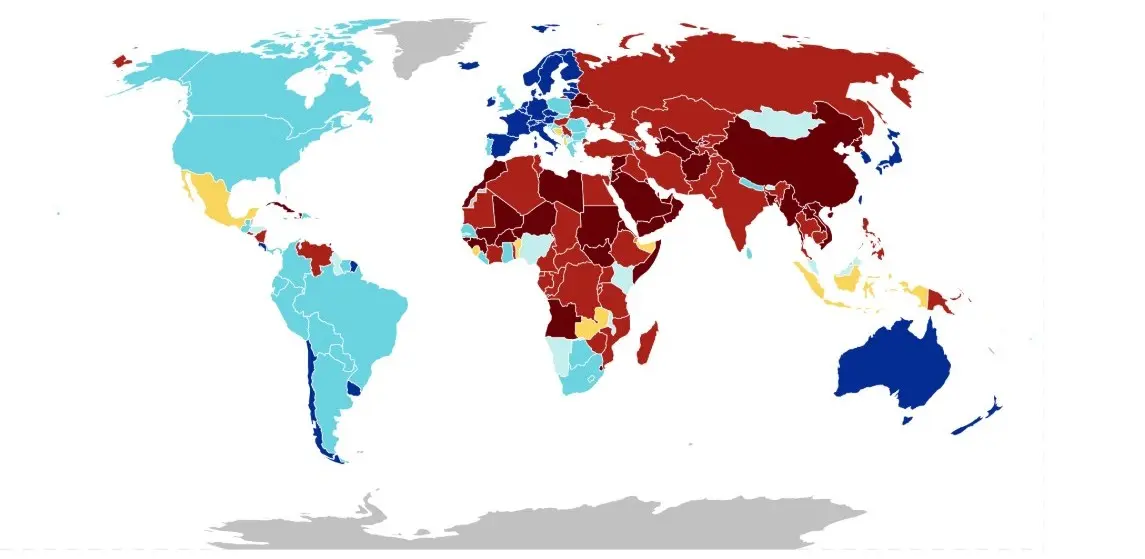
For nearly two decades, a subtle but relentless transformation has been reshaping governance across continents. Elections are held, opposition parties compete, and parliaments convene. Yet in country after country, the playing field has tilted decisively in favour of incumbents. Media outlets friendly to the ruler dominate the airwaves. Courts increasingly interpret the law in ways that hobble rivals. State contracts and public resources flow to loyalists. Critics face investigations, tax audits, or worse. This is “competitive authoritarianism” — a hybrid system in which democratic forms persist but the substance of fair competition erodes.
Political scientists Steven Levitsky and Lucan Way identified the phenomenon two decades ago. Today it has become the dominant mode of backsliding. According to the V-Dem Institute’s Democracy Report 2026, autocracies now outnumber democracies (92 to 87), and 74% of the world’s population lives under them. Some 44 countries are actively autocratising, home to 41% of humanity. Global freedom, as measured by Freedom House, has declined for the 20th consecutive year.
This is not the old-fashioned coup d’état or one-party dictatorship. It is something more insidious: elected leaders who use the tools of democracy to entrench themselves. The trend touches established Western democracies as well as fragile emerging ones. Its consequences — weakened rule of law, captured institutions, polarised societies, and often disappointing economic performance — deserve close attention from citizens everywhere.
Turkiye: Judicial Engineering and the Loyalist State
In Turkey, President Recep Tayyip Erdogan has perfected many of the techniques. After coming to power in 2003 on a wave of reformist promise, his Justice and Development (AK) party gradually consolidated control. The failed 2016 coup accelerated the process: a sweeping purge of judges, journalists, academics and civil servants followed. A 2017 referendum strengthened the presidency. Recent events illustrate the pattern. In 2025, prominent opposition figures such as Istanbul mayor Ekrem İmamoglu faced imprisonment on charges widely viewed as politically motivated. In May 2026, courts annulled the leadership election of the main opposition CHP, reinstating a less threatening veteran and sparking protests. Critics speak of a judiciary weaponised to reshape the opposition itself. Media dominance, control of large segments of the economy through loyalist conglomerates, and selective state resource allocation complete the picture. Turkiye remains “Not Free” in Freedom House assessments and has seen significant democratic decline.
Hungary: The Pioneer in Europe
For years, Hungary under Viktor Orban served as the leading European example. Returning to power in 2010, Orban’s Fidesz party rewrote the constitution, packed courts, redrew electoral districts, and captured much of the media through allies and state advertising. Public funds flowed to a new class of loyal oligarchs. Orban framed the project as defence of national sovereignty against Brussels and liberal elites. Though recent electoral shifts have challenged his dominance, the institutional changes proved sticky.
In Hungary’s parliamentary election on 12 April 2026, Orban’s Fidesz party suffered a crushing defeat after 16 years in power. Peter Magyar, a former Fidesz insider who parted with the party, led the centre-right Tisza Party (Respect and Freedom Party) to a landslide victory with two-thirds majority in 199-member National Assembly. Hungary illustrated how EU membership and formal democratic procedures offer limited protection when political will to defend norms falters. Its model has inspired imitators across Central Europe.
India: Majoritarianism and Institutional Pressure
India, the world’s largest democracy, has shown troubling trends under Prime Minister Narendra Modi and the Bharatiya Janata Party (BJP). Since 2014, the Hindu-nationalist government has faced accusations of using central agencies (tax authorities, enforcement directorate, CBI) selectively against opposition politicians and critical journalists. Media polarisation is stark, with pro-government outlets dominating. Concerns include pressure on the judiciary, internet shutdowns in sensitive regions, and laws that critics say chill free speech. India remains an electoral democracy with vibrant competition and a strong independent judiciary that still pushes back. Yet V-Dem and others have documented a clear autocratisation episode. The world’s biggest democracy shows that scale and ancient democratic traditions do not immunise a country when majoritarianism overrides pluralism.
Venezuela: From Competitive Authoritarianism to Collapse
Venezuela under Hugo Chavez and Nicolas Maduro represents the cautionary endgame. What began as competitive authoritarianism — using oil-funded patronage, media harassment, and judicial control — slid into outright authoritarianism. Opposition leaders were barred, elections manipulated, and the economy devastated. Once one of Latin America’s richest countries, Venezuela’s collapse drove millions into exile. The lesson: when checks erode far enough, recovery becomes extraordinarily difficult.
Wider Patterns
Similar dynamics appear elsewhere. In Serbia, long-serving President Aleksandar Vucic maintains dominance through media control and state patronage. Parts of Latin America (El Salvador under Nayib Bukele, for example) have seen popularity-driven concentration of power. In Asia, Cambodia has tightened control. Even in newer European cases, V-Dem’s 2026 report flags autocratisation in countries such as Slovakia, Slovenia, Italy, and the United Kingdom, alongside a sharp decline in the United States.
In the US, the second Trump administration has prompted scholars like Levitsky to describe a form of competitive authoritarianism, citing rapid executive concentration, pressure on institutions, and retribution against perceived opponents. Freedom House recorded notable declines in political rights and civil liberties in 2025. While American institutions retain significant resilience, the speed of change has alarmed observers.
Why It Happens And Why It Matters
Several drivers recur. Polarisation makes voters tolerant of strongmen who promise to crush the other side. Economic discontent or cultural anxiety provides fertile ground. Social media amplifies division while weakening traditional gatekeepers. Incumbents learn from one another — Orban, Erdogan, and others are studied and sometimes admired across borders. International democratic solidarity has weakened as Western powers focus on domestic woes or great-power competition.
The economic record is often an eye-opener. Cronyism distorts markets. Policy volatility deters investment. Talent emigrates. Turkey’s lira crises, Hungary’s stagnation phases, and Venezuela’s catastrophe remind us that tilting the political field rarely produces sustained prosperity.
For people in affected countries, the playbook is recognisable: watch for gradual capture of referee institutions (courts, electoral commissions, public broadcasters), selective law enforcement, and narratives that paint opponents as existential threats. Resistance works best when broad coalitions defend norms before they collapse entirely. Reversals are possible. Poland’s partial recovery after its 2023 election shows the value of persistent opposition. But, damaged institutions are hard to rebuild cleanly.
A Reversible Trend?
The third wave of autocratisation is real and global. Yet history is not linear. Public discontent, economic shocks, or effective civic mobilisation can restore balance. Independent courts, pluralistic media, and a citizenry that values fair rules over partisan victory remain the best defences. For readers from Ankara to Budapest, New Delhi to Washington, the message is the same: democracy’s forms are surprisingly resilient, but its substance requires constant vigilance. Elections alone are not enough. When the referee joins one team, the game changes — often irreversibly unless citizens act to restore fairness. The stakes, for prosperity, liberty, and peaceful coexistence, could hardly be higher.
