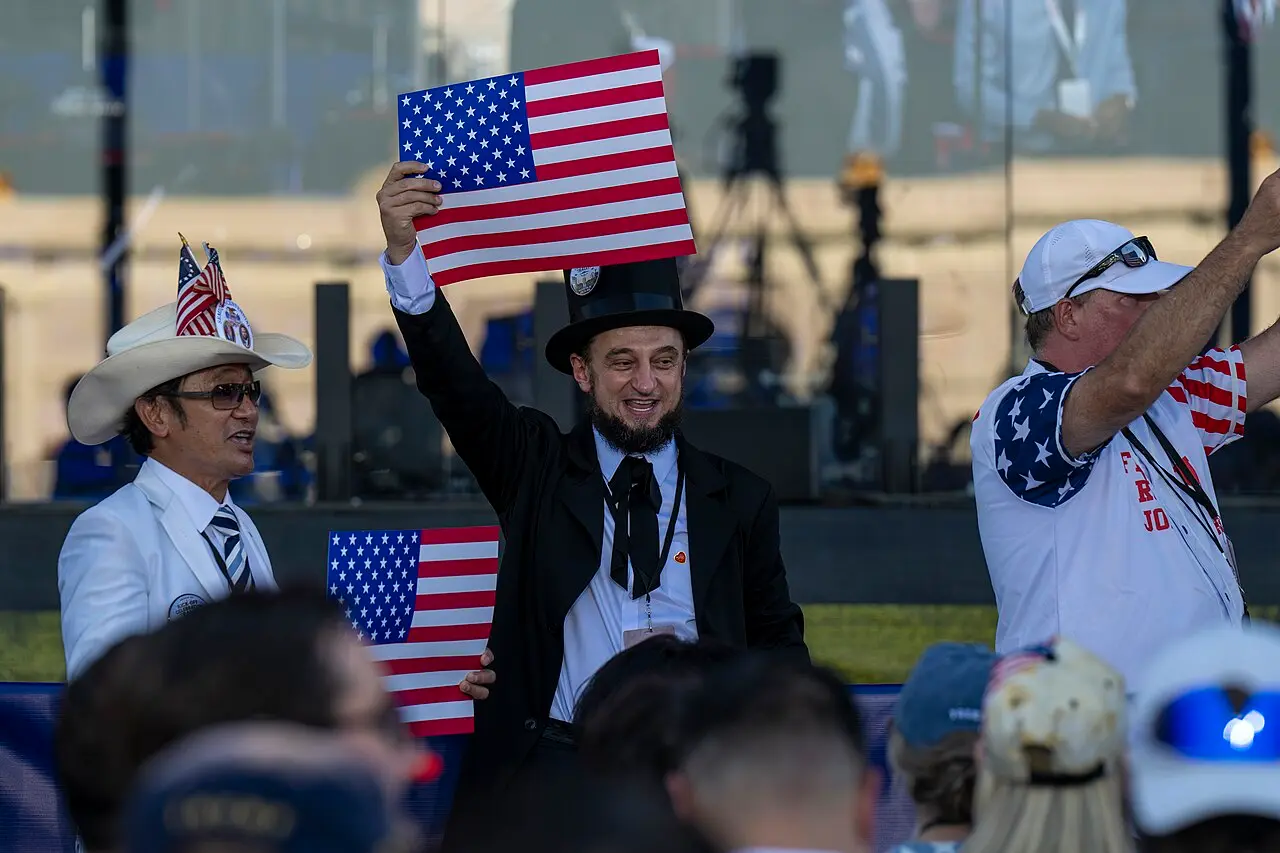
The rockets’ red glare lit up Washington on July 4th 2026 with unusual ambition. Organisers promised—and duly delivered—what they called the largest pyrotechnic display in history: some 850,000 shells bursting above the National Mall after a weather-delayed presidential speech. A “Great American State Fair” had colonised the same turf for days beforehand, featuring military flyovers, state pavilions and enough patriotic pageantry to make a Founding Father blush. Across the country, parades, tall ships and concerts joined the chorus. For a republic that often seems addicted to the present tense, the semiquincentennial offered a rare chance to wallow in its own longevity. Yet the bunting fluttered against a backdrop of fragile Middle Eastern truces, fiscal headaches and an approaching midterm contest. The spectacle was less a simple birthday party than a defiant assertion that America, having flexed its muscles abroad, still knows how to throw one at home.
History provides the template. In 1976, a battered nation emerging from Vietnam and Watergate treated its bicentennial as therapy by tall ship. Gerald Ford presided over Operation Sail and a year of nostalgic excess. Today’s version carries a similar whiff of reassurance, only this time the threats feel more diffuse and the domestic audience more sceptical. President Donald Trump has placed himself squarely at the centre, with events branded under “Freedom 250” initiatives that redirected resources toward high-visibility triumphs. To supporters, this is patriotic renewal; to critics, it is branding with public money. Either way, the timing is no accident.
The immediate context is the short, sharp 2026 Iran war. Hostilities began in late February with American and Israeli strikes on Iranian leadership and nuclear sites. Tehran hit back with missiles and drones aimed at Israel, Gulf partners and American bases, briefly choking the Strait of Hormuz and reminding the world how easily energy arteries can be squeezed. A two-week ceasefire in April was extended, patched up again in June, and is now held together by diplomacy, mutual exhaustion and the occasional violation. Lebanon ceasefires have required similar maintenance. The conflict was limited, but its aftershocks—disrupted shipping, volatile oil prices and strained alliances—linger like smoke after the fireworks.
From a global vantage, the anniversary carries mixed signals. European allies, relieved that Gulf escalation has paused, nevertheless eye Washington’s blend of military decisiveness and domestic showmanship with familiar unease. In Beijing and Moscow, state media portray the revelry as decadent distraction from imperial overstretch—a comforting narrative, perhaps, but one that underplays America’s persistent capacity to project power when it chooses. For energy-importing economies from Europe to South Asia, the brief Hormuz crisis served as an expensive reminder of strategic vulnerability. Even a partial blockade spiked insurance premiums and rerouted tankers, adding friction to already creaking supply chains. Emerging markets, still nursing pandemic and inflation scars, watched the spectacle with a mixture of envy and irritation: another American birthday, another assertion that its dramas remain the world’s.
Domestically, the celebrations arrive four months before midterm elections that could reshape Mr Trump’s second term. Republicans hold narrow majorities in Congress. History suggests the president’s party often loses ground in such contests, and Democrats spy opportunities for oversight if they reclaim the House. Economic ripples from the Iran episode, combined with ordinary voter gripes about prices and polarisation, will colour the mood. Lavish federal-backed festivities risk being cast as tone-deaf extravagance or savvy base mobilisation, depending on the audience. The irony is rich: a country marking 250 years of liberty does so while arguing fiercely over how that liberty should be exercised and who gets to define it.
Culturally, the moment exposes America’s enduring paradox. The founding story is simultaneously a source of unity and a battleground. Official programming leans toward tales of exceptionalism and resilience; parallel events emphasise pluralism, struggle and unfinished work. Both draw genuine lineage from 1776. John Adams foresaw “pomp and parade…from one end of this continent to the other.” He could not have imagined how thoroughly those illuminations would be livestreamed, memed and politicised.
Yet beneath the fireworks lies a harder question. America in 2026 is wealthier and more technologically supreme than in 1976, but also more internally fractured and externally contested. Relative power has ebbed as others rise. The Iran episode, however contained, highlighted the limits of swift victories in a world of proxies, drones and economic interdependence. A fragile truce is not victory; it is a breathing space. The real test is whether the rhetorical renewal survives the morning after—when the Mall is cleared, the midterms loom and the next regional crisis inevitably arrives.
Nations stage such anniversaries to remind themselves (and others) of their staying power. America has once again proved it can put on a memorable show. Sustaining the deeper virtues that the Declaration’s authors wagered upon—institutional restraint, economic adaptability and a modicum of social trust—will be a less photogenic, more arduous task. The rockets burst brightly. The republic’s work continues long after the embers fall.