In the misty dawn of October 19, 2025, a routine patrol in Srinagar’s Bunpora Nowgam neighborhood unearthed more than graffiti on weathered walls. Handwritten posters, scrawled in Urdu and signed by the enigmatic “Commander Hanzala Bhai,” bore the insignia of Pakistan-based Jaish-e-Mohammad (JeM). They thundered warnings against “sheltering Indian predators,” decried violations of Sharia, and vowed “revenge attacks” on security forces.
What seemed like a localized act of defiance—threatening police informants and urging anti-India fervor—ignited a 20-day manhunt that would span Kashmir’s valleys, Haryana’s industrial sprawl, and Uttar Pradesh’s labyrinthine lanes. It culminated in a cataclysmic blast near Delhi’s iconic Red Fort on November 10, claiming 13 lives, scorching 30 souls, and exposing a “white-collar terror ecosystem” masquerading behind stethoscopes and lecture halls.
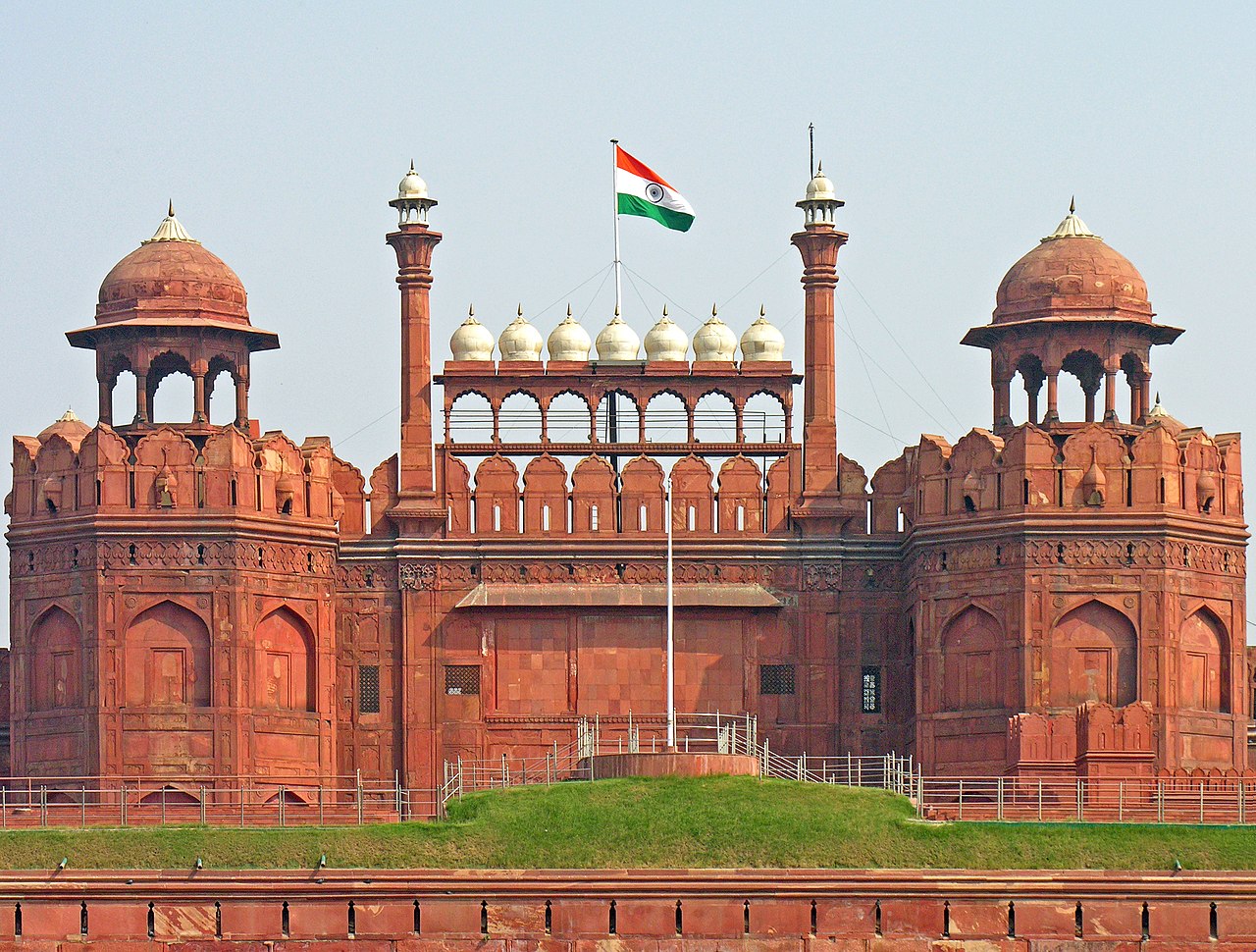
The explosion, a high-intensity inferno erupting from a slow-moving Hyundai i20 at 6:52 p.m. IST near Gate No. 1 of the Red Fort, shattered the unsuspecting people at the spot and neigbourhood. Eyewitnesses, their faces etched with horror, described a fireball engulfing the compact hatchback as it idled at a traffic signal amid evening commuters.
“The car just… vanished in flames,” recounted Dharmendra Dhaga, a 27-year-old vendor whose stall was mere meters away.
Limbs scattered like macabre confetti; screams pierced the acrid smoke as flames leaped to 10-12 nearby vehicles, gutting them in a chain of secondary blazes. No crater scarred the asphalt, no shrapnel rained down—hallmarks of an improvised explosive device (IED) that detonated prematurely, its ammonium nitrate core igniting in the bonnet or rear rather than delivering full fury.
Preliminary forensics pointed to a ‘fidayeen’ (suicide-style) attack gone awry, with the lone occupant perishing in the blast.
At least 12 dead, including the suspected bomber; 30 injured, many with third-degree burns and blast trauma. Three lingered in intensive care at Delhi’s Lok Nayak Jai Prakash (LNJP) Hospital as of November 12, two in critical condition, their families huddled in sterile corridors, whispering prayers amid the beep of monitors.
Delhi Police registered an FIR invoking relevant sections of the Unlawful Activities (Prevention) Act (UAPA), Explosives Act, and Bharatiya Nyaya Sanhita.
“This was no accident,” Delhi Police Commissioner Satish Golcha, flanked by soot-streaked investigators, declared at a midnight press briefing.
Within hours, the probe escalated: National Investigation Agency (NIA) took reins on November 11, deploying crack teams alongside the National Security Guard (NSG), Forensic Science Laboratory (FSL), Intelligence Bureau (IB), and Jammu & Kashmir (J&K) Police.
CCTV footage pieced together a chilling prelude—the white Hyundai i20 (HR-26-CE-7674) slinking into Old Delhi around 3:19 p.m. from Haryana, circling Connaught Place and Chandni Chowk like a predator scouting prey. It parked for three hours near Sunehri Masjid, the masked driver—now identified as Dr Mohammad Umar Nabi, 32, from Pulwama—idling in vigil. Then, the fateful creep toward the Red Fort signal. The vehicle’s provenance unraveled like a frayed fuse.
Originally owned by Md Salman in Gurugram, it changed hands thrice: sold to Devender in Delhi’s Okhla in March, then to an Ambala buyer, finally landing with Tariq Ahmed Malik from Pulwama in recent weeks.
Salman and Devender, detained for questioning, professed ignorance; Tariq, along with siblings Aamir and Umar Rashid from Pulwama, now sweats under interrogation in Kashmir.
DNA swabs from Umar Nabi’s mother, rushed to AIIMS forensics, match charred remains from the wreckage—confirming the Pulwama doctor as the ill-fated pilot.
Colleagues at Faridabad’s Al-Falah Medical College remembered him as unassuming: a Kashmiri transplant, MBBS from Government Medical College Srinagar, specializing in orthopedics.
But beneath the white coat lurked radicalization via Telegram channels—Farzandan-e-Darul Uloom (Deoband) and one helmed by JeM’s Umar bin Khattab—funneling allegiance to Ansar Ghazwat-ul-Hind (AGuH), Al-Qaeda’s J&K-specific offshoot, intertwined with JeM’s transnational tentacles.
This was no lone wolf’s frenzy. The blast’s ammonium nitrate signature mirrored a colossal haul unearthed hours earlier in Faridabad: 2,900 kilograms of the volatile chemical, enough for hundreds of IEDs to pulverize Delhi’s arteries. Operation Sindoor 2.0—J&K Police’s sequel to April’s Pahalgam strike retaliation—had, by November 10 morning, dismantled the module’s nerve center.
It began with those Nowgam posters: an FIR at Nowgam station under UAPA and Arms Act spurred arrests in Srinagar’s shadows. Arif Nisar Dar (alias Sahil), Yasir-ul-Ashraf, and Maqsood Ahmad Dar (alias Shahid)—all Nowgam locals—fell first, confessing to pasting the propaganda. Their leads snaked to Shopian’s Imam Irfan Ahmad Wagay, nabbed October 20, whose sermons masked recruitment drives.
By October 27, Ganderbal’s Zameer Ahmad Ahanger (alias Mutlasha) joined the roster, his Wakura hideout yielding electronic circuits and wires.
The trail heated in Anantnag: Dr. Adeel Ahmad Rather, 29, from Kulgam’s Wanpora—another GMC Srinagar alumnus—was pinched November 5 in Saharanpur, Uttar Pradesh, via CCTV from the poster sites. His locker at Government Medical College Anantnag disgorged an AK-56 rifle, ammunition, and 20 electronic timers on November 7.
Rather’s spill cracked the Faridabad vault: on November 8, Al-Falah Medical College— a 76-acre beacon in Dhauj village, accredited ‘A’ by NAAC since 2013—yielded pistols, detonators, and preliminary explosives.
The motherlode struck November 9-10: Dr Muzammil Shakeel Ganaie, 35, from Pulwama’s Koil—assistant professor at Al-Falah, accused of poster orchestration—was cuffed October 30. His rented rooms in Fatehpur Taga brimmed with 360 kg ammonium nitrate, a Krinkov assault rifle (three magazines, 83 rounds), a Beretta pistol (eight bullets, two magazines), walkie-talkies, and eight suitcases of reagents.
An adjacent raid at Imam Hafeez Mohammad Ishtiyaq’s Dhera Colony residence in Mewat netted 2,563 kg more—chemicals, batteries, remote controls, metal sheets—pushing the tally to 2,900 kg. A woman’s Swift Dzire, linked to Al-Falah’s Dr. Shaheena Saeed, concealed another AK-47.
By November 10 dawn, nine in custody: the Nowgam trio, Wagay, Ahanger, Rather, Ganaie, plus Madarasi from Dhauj and Ishtiyaq. Then, the jackpot—Dr Shaheen Saeed Shahid, 40, from Lucknow’s Daliganj, airlifted to Srinagar.
Divorced in 2012, once a liberal dreamer eyeing Australia with ex-husband Dr Hayat Zafar and their two children, Shaheen had morphed into JeM’s shadowy “women’s wing” architect under Jamaat-ul-Momineen. Tasked with recruitment, she bridged the module’s gender firewall. Kanpur raids netted nine more tied to her; Shopian and Pulwama yielded Sajad Malik, another Pulwama doctor, swelling Kashmir-linked medics to four.
Interrogations painted a “white-collar” hydra: radicalized professionals—doctors, clerics, academics—laundering terror through encrypted apps, charitable facades, and university labs. Al-Falah’s facilities? Suspected RDX synthesis hubs, probed by 800 Haryana cops in November 11 combing ops.
Procurement chains traced to Gulf and Pakistan handlers; funds funneled via hawala. The ecosystem spanned J&K, Haryana, UP, Gujarat—JeM’s post-Sindoor resurgence, aiming to eclipse Lashkar-e-Taiba.
Panic, investigators say, precipitated the blast. The module’s blueprint: serial bombings on December 6, Babri Masjid demolition’s anniversary, to ignite communal infernos. But Sindoor 2.0’s vise—raids nabbing colleagues—unhinged Dr Umar.
Three days prior, he ghosted, phone dark. On November 10, as Faridabad’s dawn raids echoed, he fled Al-Falah, commandeering the i20 from Tariq.
No ramming, no precision—just haste. “A fidayeen in desperation,” an NIA officer confided, off-record.
The IED, ammonium nitrate-fuel oil slurry, fizzled short of cataclysm, sparing Delhi worse. Yet, its ripples: hoax threats paralyzed Delhi Airport; a red Ford EcoSport hunt mobilized five Delhi teams, UP-Haryana alerts.
Prime Minister Narendra Modi, mid-Bhutan sojourn, cut short diplomacy for a November 12 LNJP visit, clasping bandaged hands. “Conspirators will face justice,” he vowed, echoing Home Minister Amit Shah’s war-room huddles.
The Union Cabinet, November 12, branded it a “terrorist incident by anti-national forces.”
Lieutenant Governor V.K. Saxena chaired Srinagar’s security conclave; Chief Minister Omar Abdullah decried the “heinous plot.”
Opposition Leader Rahul Gandhi demanded transparency; West Bengal Chief Minister Mamata Banerjee, condolences laced with calls for vigilance. BJP accused Congress of “soft-pedaling” terror after Karnataka Chief MInister Siddaramaiah questioned why terror attacks happens during elctions.
Globally, UN’s Farhan Haq offered sympathies; U.S. State Department pledged consular aid.
Delhi-NCR simmered under siege: Red Fort shuttered till November 13; DMRC idled Lal Quila station November 12. Bomb squads swept airports, rails, heritage sites; NH-44 checkpoints bristled with patrols. Kerala, Punjab, Haryana mirrored the frenzy—random vehicle scans, hoax busts.
Al-Falah, distancing itself as “no beyond-duty links”, grilled 52 staff; its principal under lens. As FSL sifts residues and NIA maps transnational webs, the Nowgam posters—once ephemeral threats—stand as harbingers.
In a nation scarred by Pulwama 2019 and Pahalgam 2025, this saga underscores terror’s insidious pivot: from rugged militants to suited savants, plotting in plain sight.
What drove these doctors—GMC peers like Umar, Muzammil, Adeel—to forsake Hippocrates for holy war? Interrogations hint at Telegram’s siren call, JeM-AGuH’s ideological venom, Pakistan’s ISI shadows. Shaheen’s arc—from émigré aspirant to recruiter—mirrors the module’s cunning: women as silent vectors, labs as bomb forges.
The haul—AKs, pistols, timers—evokes 26/11’s precision, but Sindoor 2.0 blunted the blade. Yet, as forensics match blast shards to Faridabad’s trove, questions linger: How amassed 2,900 kg under radar? Who greased the hawala? Gulf paymasters or Bahawalpur bunkers?
In Nowgam’s alleys, where posters peeled under autumn rain, locals whisper of normalcy’s fragility. In Red Fort’s shadow, where Mughals once dreamed empires, grief mingles with resolve. Twelve gone—commuters, vendors, dreams snuffed in an instant.
As Modi reiterated from Bhutan, “India stands unbroken.”
But in this web of white collars and wired detonators, the nation’s vigilance sharpens. The probe presses: NIA eyes Al-Falah’s bowels, Shaheen’s nine Kanpur contacts, a second red car prowling unseen. From Srinagar’s ink-stained walls to Delhi’s flame-kissed streets, the story unfolds—not as isolated blasts, but a transnational tapestry of terror, thwarted yet tenacious. Justice, officials pledge, will thread its needle through the ashes.
Soon after returning from Bhutan, Modi visited the LNJP Hospital in Delhi to meet survivors of the Red Fort blast on Wednesday, assuring that those behind the attack would be brought to justice.
Later in the evening, the Union Cabinet, meeting under the Prime Minister’s chairmanship, formally described the explosion as “heinous act of terrorism” carried out by anti-national elements.
In a resolution adopted at the meeting, the Cabinet condemned blast as a cowardly and dastardly act and reaffirmed India’s unwavering commitment to a policy of zero tolerance towards terrorism in all its forms and manifestations.
The Cabinet also directed investigating agencies to pursue the case with “utmost urgency and professionalism” and ensure that the perpetrators, their collaborators, and their sponsors are brought to justice without delay.