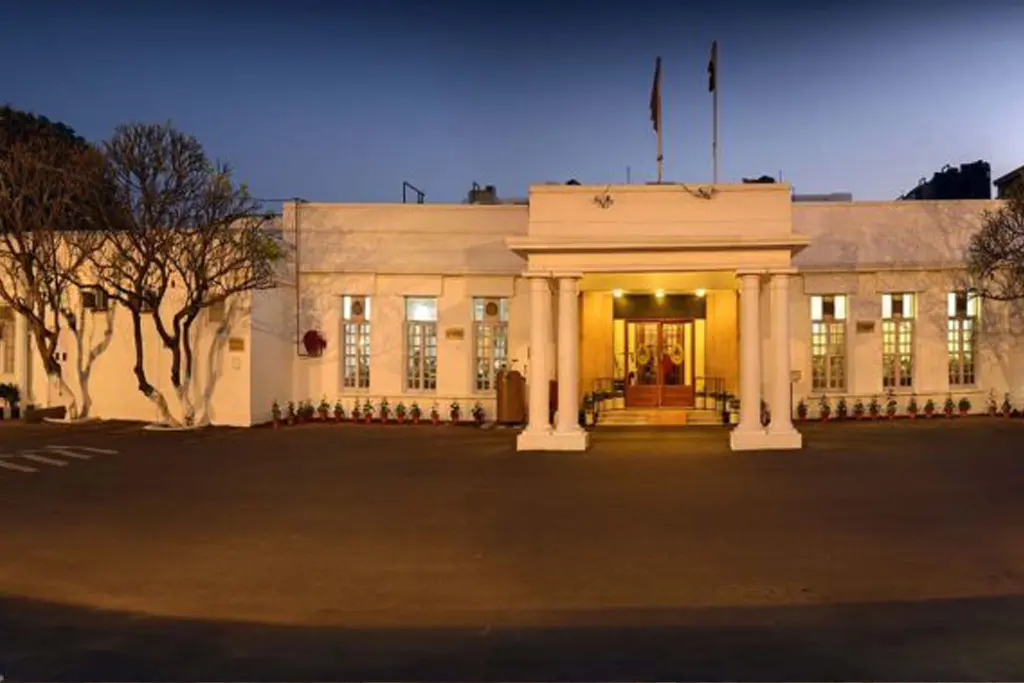
In the heart of Lutyens’ Delhi, where power, history, and privilege have long intertwined, one of India’s most storied institutions faces an uncertain future. The Delhi Gymkhana Club, nestled on a sprawling 27.3-acre plot at 2, Safdarjung Road adjacent to the Prime Minister’s residence, has been directed to hand over its premises by June 5. The order from the Land & Development Office (L&DO) under the Union Ministry of Housing and Urban Affairs cites the need to strengthen defence infrastructure and secure vital public interests in this highly sensitive strategic zone. Upon re-entry, the entire property—including buildings, lawns, and structures—will vest with the President of India. Club members and staff were left stunned by the abrupt notice, with many preparing to challenge it in court.
The club’s origins date back to July 1913, when it was established as the Imperial Delhi Gymkhana Club in the Civil Lines area. Its first president was Sir Spencer Harcourt Butler. It shifted to its current location in the 1930s, with structures designed by British architect Robert Tor Russell, known for his work on Connaught Place and Teen Murti House. The Club’s buildings were conceptualized by Sir Edwin Lutyens, who also planned the Rashtrapati Bhavan. After Independence in 1947, the “Imperial” prefix was dropped.
For over a century, the club has served as a premier social and sporting hub for Delhi’s elite—bureaucrats, military officers, industrialists, and influential families—complete with tennis courts, a swimming pool, library, and vast green spaces. Its legendary waiting list, once stretching decades, underscored its exclusivity.
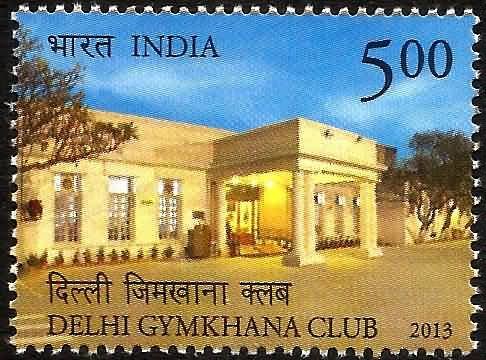
On the 100th anniversary of its establishment on July 3, 2023, the erstwhile President Pranab Mukherjee honoured Delhi Gymkhana Club by realising a commemorative postage stamp and a centenary souvenir in its name at an event organised on its premises, underlining that the Club has been a unique witness to history. The alcoves of the Club were venue of many meetings between those who played a pivotal role in the unification of India and transfer of power from the British to Indians. Mahatma Gandhi and Lord Irwin had also held a private meeting at the Club, which led to the Gandhi-Irwin Pact.
The roots of the current crisis stretch back to the early years of the Prime Minister Narendra Modi government. Shortly after the BJP came to power in 2014, the Centre began scrutinising the operations of the Delhi Gymkhana Club, an institution long seen as a bastion of Delhi’s entrenched elite networks.
What started as quiet inquiries in 2017 intensified after complaints about financial practices, particularly the club’s system of charging substantial waiting-list fees that the Ministry of Corporate Affairs viewed as unauthorised deposits. Critics within the club alleged that the government’s interest was not purely regulatory, pointing to instances where senior officials were reportedly denied timely membership. The club, in turn, maintained that it was being subjected to undue interference in its internal affairs, setting the stage for a protracted battle over autonomy versus accountability on prime government-leased land.
The confrontation escalated dramatically during the Covid-19 period. In 2020, the Ministry moved the National Company Law Tribunal, accusing the elected committee of nepotism, misuse of land, and irregularities in membership and construction. The NCLT eventually dissolved the original general committee in 2021–22, paving the way for government-appointed administrators and directors — several of whom had strong BJP affiliations. Scenes of officials arriving with police to assume control were widely reported, adding to perceptions of a political takeover.
While the government framed its actions as necessary to cleanse a relic of colonial-era privileges and ensure transparency, many members saw it as retribution for the club’s resistance to external influence, especially after it had denied membership to certain high-ranking ministry officials. Subsequent changes, including shifts in club aesthetics and hosting of ruling party events, only deepened the sense of a power shift.
Even as courts have mandated a return to elected governance by mid-2025, the club remains under significant government oversight into 2026. The appointment of BJP-linked figures to key positions, combined with the Prime Minister Modi’s occasional presence at club events in recent years — a notable departure from earlier distance — fuelled murmur about the ruling dispensation’s desire for greater influence over elite social institutions in Lutyens’ Delhi.
The Gymkhana episode now appears part of a broader pattern, with similar pressures visible at other heritage clubs. For the government, reclaiming control over strategically located public land serves national interest and administrative reform; for traditional members, it represents the gradual erosion of a cherished, independent space that once operated beyond the direct reach of political winds.
The L&DO order emphasises that the land was originally leased for a social and sporting club, but is now required for urgent institutional and governance needs, especially alongside redevelopment of adjoining properties. This move follows earlier actions like slum clearances nearby, though courts have sometimes intervened in similar cases involving other elite venues. Opposition leaders, including Aam Aadmi Party’s Saurabh Bharadwaj, have criticised the decision as part of a wider pattern affecting different sections of society. “Till now, it was the poor… Now the turn of senior officers and professionals who visit clubs has come,” he remarked.
Many club members expressed shock, noting that a government-appointed panel currently runs the institution, potentially limiting an institutional challenge—leaving individual members to approach the courts.
Inside the club, uncertainty grips nearly 600 employees. Long-serving staff, including gardeners who have tended the lawns for over 17 years, continue their routines amid whispers of the order. Workers report receiving little formal communication about their future, heightening anxiety as the deadline looms. Members, speaking anonymously, question the security rationale, citing the daily crowds at the nearby Indira Gandhi Memorial. For them, the club has been far more than an elite retreat—it is a living piece of Delhi’s social and sporting heritage.
As June 5 approaches, the Gymkhana Club’s story reflects deeper tensions in contemporary India: the balance between preserving historic institutions and advancing national security, redevelopment, and governance priorities in the capital’s most powerful enclave. Whether resolved through litigation, negotiation, or full handover, this chapter marks a potential turning point for Lutyens’ Delhi’s old guard. In its sunlit lawns and storied halls, the echoes of a century of influence may soon give way to a new chapter in the nation’s administrative landscape.