As Marco Rubio, America’s Secretary of State, began his four-day ramble through India on 23 May 2026—starting with a pious stop at Kolkata’s Mother House of the Missionaries of Charity before descending upon the capital—the exercise carried all the hallmarks of a relationship in need of gentle reminding. For two powers that never tire of calling each other “cornerstone” partners, the United States and India have lately shown a talent for testing the term’s elasticity.
The timing, like much in the Trump era, is both calculated and revealing. Bilateral ties have weathered an awkward patch since the middle of last year: punitive American tariffs on Indian goods (a pointed reminder of Washington’s displeasure over Russian oil purchases), public tiffs over who deserved credit for last year’s India-Pakistan de-escalation, and the general transactional breeziness of the second Trump administration. That Mr Rubio’s visit follows dutiful groundwork—Foreign Secretary Vikram Misri’s recent trip to Washington and a cordial April phone call between Narendra Modi and Donald Trump—suggests both sides recognise the cost of prolonged sulking.
Gestures and Substance
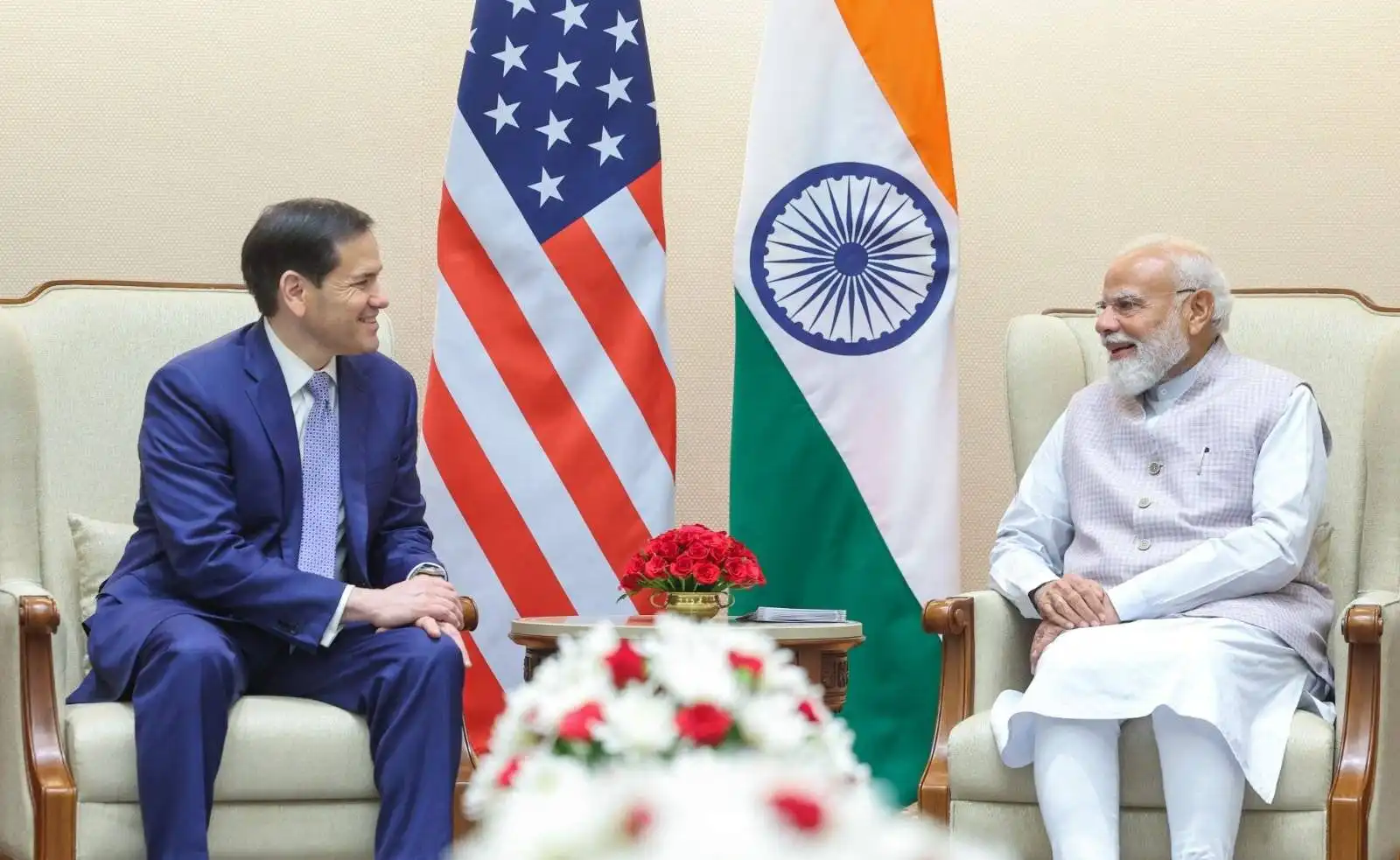
The Kolkata detour to honour Mother Teresa was a nice diplomatic flourish, blending American soft power with Indian sensibilities. Yet the real business began in Delhi. Mr Rubio met Prime Minister Modi shortly after landing and wasted little time briefing him on the West Asia imbroglio. America, he made clear, has no intention of letting Iran hold the global energy market hostage. Conveniently, this aligned with an offer of US energy exports to help India reduce its reliance on discounted Russian crude—an arrangement that neatly serves both Washington’s strategic aims and New Delhi’s pragmatic ledger-keeping.
Mr Modi, ever the gracious host, spoke of sustained progress in the “Comprehensive Global Strategic Partnership” and reaffirmed India’s preference for peace through dialogue. Mr Rubio, in turn, extended a formal invitation for the prime minister to visit the White House “in the near future,” describing India as central to America’s Indo-Pacific calculus. Both sides pledged deeper cooperation in defence, critical technologies, trade and energy, with nods to the somewhat aspirational “Mission 500” goal of doubling bilateral trade by 2030. Recent Indian investments in the United States, exceeding $20bn, were duly noted as evidence of goodwill.
One suspects the warmth was genuine, as far as such things go. Mr Rubio later emphasised the personal rapport between Messrs Modi and Trump as a sturdy foundation. In the transactional world of great-power politics, leader chemistry is often hailed as a substitute for resolved structural differences—until it isn’t.
The Wider Menu
Sunday’s talks with External Affairs Minister S. Jaishankar and preparations for Tuesday’s Quad foreign ministers’ meeting complete the agenda. The Quad (America, India, Japan, Australia) remains a favoured instrument for managing China’s rise, though its members have occasionally struggled to turn lofty declarations into concrete deeds. Mr Rubio has stressed practical advances in supply-chain resilience and critical minerals, areas where Beijing’s dominance continues to concentrate minds.
Trade, predictably, remains the prickliest file. While both capitals profess eagerness for a mutually beneficial deal, the reality of tariffs, market access disputes and non-tariff barriers suggests that “mutually beneficial” is still open to vigorous interpretation. Mr Rubio’s championing of an “America First” visa scheduling tool, which prioritises certain business travellers, adds another ironic layer: courting Indian investment while refining the welcome mat for Indian professionals. He has reassured New Delhi that new green-card rules are not India-specific, merely part of a broader immigration streamlining—cold comfort, perhaps, for those who recall earlier Trump-era rhetoric.
Strategic Realities
Beneath the pleasantries lies a familiar geopolitical paradox. Washington needs capable partners to counterbalance China and keep the Indo-Pacific navigable. India, for its part, covets American technology and defence collaboration without wishing to sacrifice strategic autonomy, energy deals with Russia, or its longstanding habit of hedging. The Trump administration’s own selective overtures towards Beijing have only heightened Delhi’s caution. Personal chemistry between leaders can paper over such cracks—for a while. In this light, Mr Rubio’s mission feels less like a triumphant reset than a careful recalibration: steadying a relationship too valuable to let drift, yet too riddled with contradictions for effortless harmony.
Measured Progress
As the visit unfolds, outcomes remain more directional than dramatic. The White House invitation signals intent. Hints of forthcoming announcements on trade, technology and defence suggest movement, albeit at the deliberate pace favoured by both bureaucracies. The Quad gathering will offer another test of whether the grouping can deliver substance beyond the usual affirmations of a “free and open Indo-Pacific.”
For now, the Rubio visit has performed its immediate function: it has steadied the ship after a spell of choppy waters. Whether it charts a genuinely steadier course will depend on turning polite commitments into durable arrangements that survive the inevitable next disagreement. In the grand game of 21st-century geopolitics, India and America need each other more than either readily admits. The irony, of course, is how often they require high-level visits to remember precisely why.