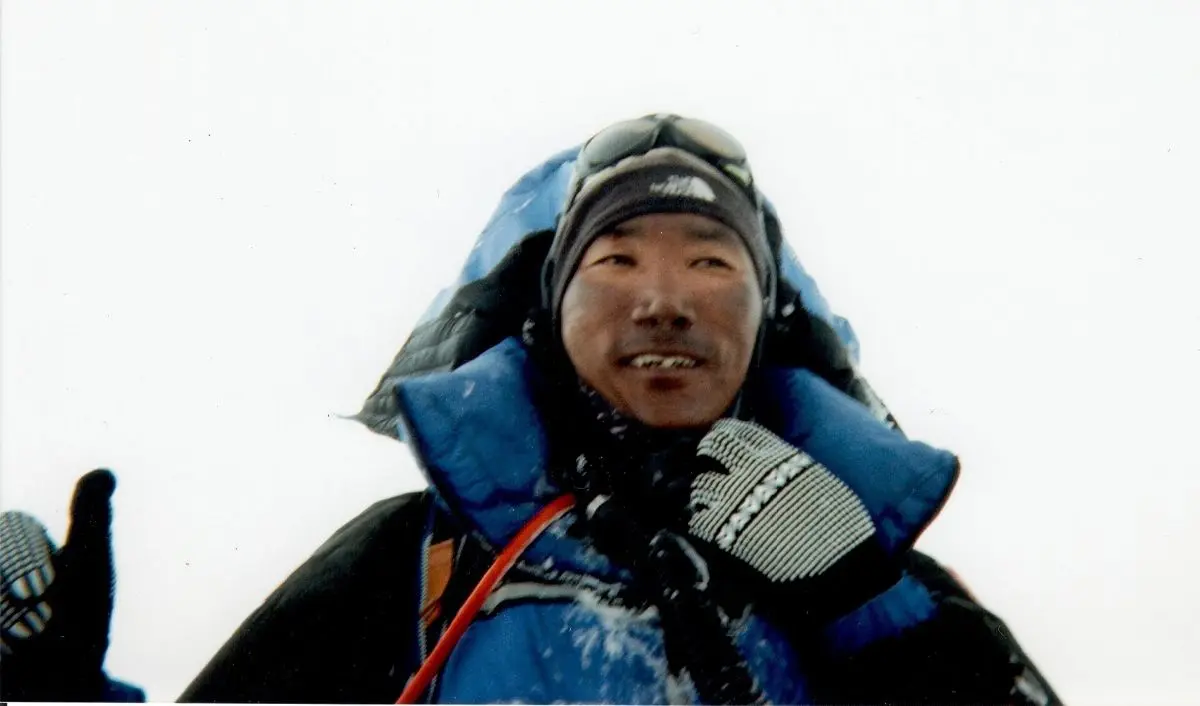
On a clear Sunday morning in May, Kami Rita Sherpa once again stood at 8,848.86 metres, where the sky feels close enough to touch. At 56, the Sherpa mountaineer had just completed his 32nd ascent of Mount Everest — a feat so extraordinary that it stretches the boundaries of human endurance and redefines what is possible on the highest point on Earth.
Known across the Himalayas as the “Everest Man”, Kami Rita reached the summit at 10:12 a.m. local time, leading an expedition for 14 Peaks. For most climbers, reaching the top once is the crowning achievement of a lifetime. For him, it has become a calling.
Born in 1970 in the quiet village of Thame in Solukhumbu district — the same rugged homeland that produced Tenzing Norgay — Kami Rita belongs to a lineage deeply woven into the story of the Himalayas. His father was a pioneering high-altitude porter. The mountains were never a distant dream; they were simply home.
He first summited Everest in 1994. Since then, he has returned with remarkable consistency, treating the world’s most unforgiving mountain with a mixture of deep respect and quiet confidence. He has summited twice in the same season on several occasions, a testament not just to physical strength but to an almost instinctive understanding of the mountain’s moods, crevasses, and capricious weather.
On the same day, another Sherpa legend made history. Lhakpa Sherpa, the first Nepali woman to climb Everest, completed her 11th ascent, further cementing the community’s extraordinary dominance on the peak.
The True Masters of Everest
What makes Kami Rita’s record particularly significant is what it reveals about the hidden architecture of Himalayan mountaineering. Behind every foreign climber’s selfie at the summit stands the knowledge, strength and sacrifice of Sherpa guides. They fix the ropes on the treacherous Khumbu Icefall, carry impossibly heavy loads, prepare camps, and shoulder the greatest risks
.Prime Minister Balendra Shah acknowledged this debt in generous terms, describing Sherpas as the “unsung heroes of the Himalayas” whose courage and expertise give the mountains their glory. Everest, he said, is not merely a geological wonder but a powerful symbol of Nepali resilience and identity.
Yet for all the accolades, Kami Rita remains characteristically humble. Those who know him speak not only of his technical skill and stamina but of his discipline and respect for the mountain — qualities that have allowed him to survive and thrive where so many others have not.
More than 7,500 people have now stood on Everest’s summit. Over 300 have perished in the attempt. In this age of commercial mountaineering, records continue to fall, but few are likely to match the sheer persistence of a man who has made the highest place on Earth feel almost like a second home.
At 56, Kami Rita Sherpa shows little sign of slowing down. As he begins his careful descent — the most perilous part of any climb — one truth remains clear: the eternal guardian of the summit has once again reminded the world what sustained human excellence looks like.