Pakistan, Saudi Arabia and Türkiye’s new defence pact signals a multipolar Middle East—and leaves India watching carefully
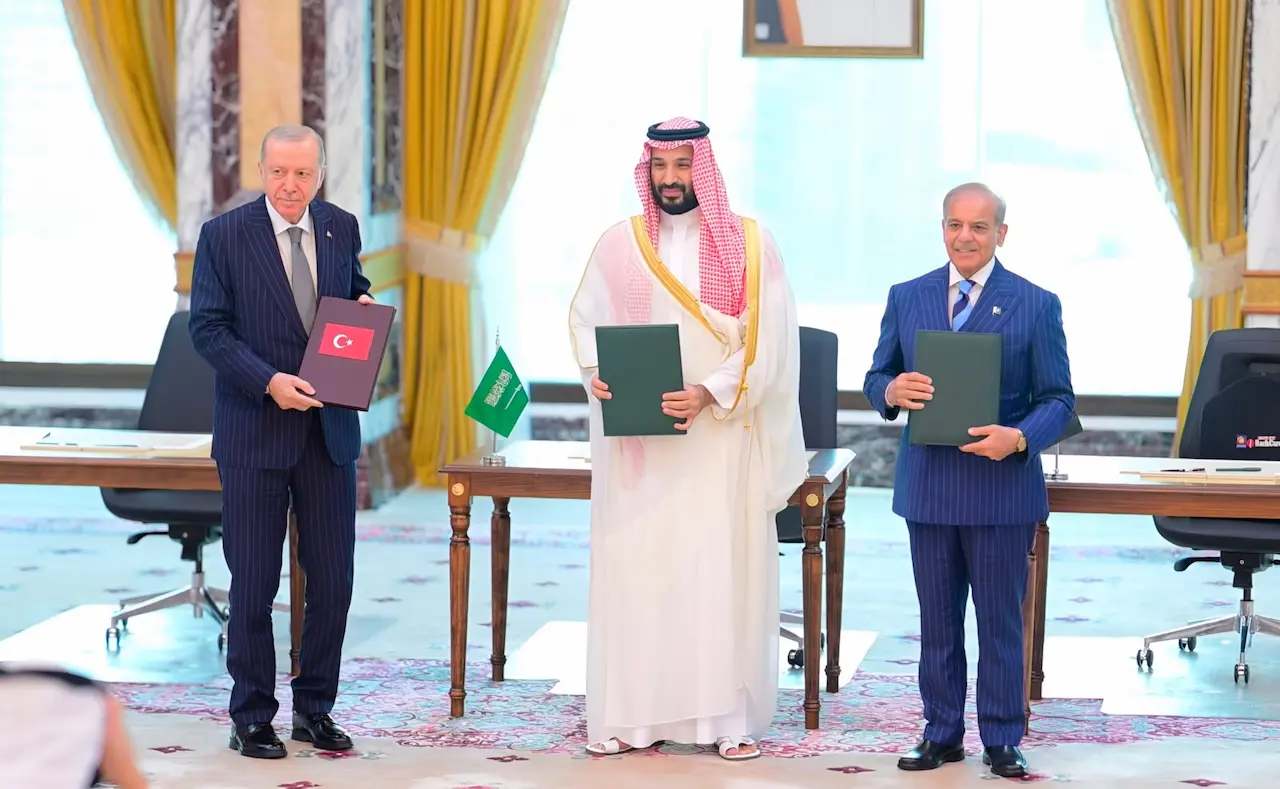
In the shadow of the Kaaba, three leaders of the Muslim world formalised a pact that may prove more consequential than its deliberately vague wording suggests. On 7 August, Saudi Crown Prince Mohammed bin Salman, Turkish President Recep Tayyip Erdoğan and Pakistani Prime Minister Shehbaz Sharif signed the Makkah Joint Defence Agreement in the holy city. Its core clause is stark: any armed attack on one shall be regarded as an attack on all. The arrangement builds upon a bilateral mutual-defence understanding struck between Riyadh and Islamabad in September 2025, and arrives amid the grinding attrition of a regional war that has drawn in America, Israel, Iran and an assortment of proxies.
The timing is no accident. Since a joint American-Israeli campaign against Iran intensified in late February, Iranian missiles and drones have struck Saudi and other Gulf targets housing Western bases and energy infrastructure. Houthi attacks from Yemen have further disrupted shipping through the Red Sea and Bab al-Mandeb. Confidence in the long-standing American security umbrella has frayed. Gulf capitals, which have spent decades and hundreds of billions of dollars on American weapons, watched as Iranian strikes hit facilities that Washington was supposed to protect. The result is a classic hedging exercise: deepen regional insurance policies without formally abandoning the superpower patron.
Complementary strengths, deliberate ambiguity
The three signatories bring complementary assets that look impressive on paper. Turkey fields NATO’s second-largest standing army and a thriving defence industry that has become a major exporter of drones and precision munitions. Saudi Arabia offers deep pockets, one of the region’s better-equipped air forces, custodianship of Islam’s holiest sites and the leverage that comes with being a pivotal oil exporter. Pakistan contributes the only nuclear arsenal in the Muslim world, a large and battle-hardened army with decades of experience training Gulf forces, and a strategic location bridging South Asia and the Middle East. Officials insist the pact is purely defensive, open to other “brotherly” states, unlinked to nuclear ambitions or sectarian axes, and compatible with existing commitments—including Turkey’s NATO obligations.
Yet the text remains unpublished, and the precise obligations of collective defence are opaque. Analysts note that the three militaries operate largely incompatible equipment inventories: American systems in Saudi service, a Chinese-Pakistani mix in Islamabad’s, and a hybrid of NATO-standard and indigenous platforms in Ankara’s. Building true interoperability, joint command structures or rapid response mechanisms will take years, if it happens at all. The real value, for now, is political signalling and deterrent ambiguity. An adversary contemplating a strike on Saudi energy facilities or Turkish interests must now price in the possibility of Pakistani or Turkish involvement—however limited that involvement might ultimately prove.
Global ramifications: a more multipolar Middle East
The broader geopolitical implications are clearer. The pact accelerates the slow erosion of America’s monopoly as the external security guarantor in the Gulf. It does not replace Washington; all three signatories remain American partners of varying intimacy. Turkey is a NATO member, Pakistan a major non-NATO ally, and Saudi Arabia the largest purchaser of American arms. Rather, it reflects a judgment that American commitment alone is no longer sufficient. Former American diplomats have described the agreement as evidence that regional allies increasingly view the United States as “unreliable.” For an administration in Washington that has long preached greater burden-sharing, the development is double-edged: welcome evidence of regional initiative, yet a reminder that partners are preparing for scenarios in which American power is distracted or constrained.
Iran will read the arrangement as encirclement by a nuclear-armed neighbour, a NATO army and a Gulf financier. Israeli officials are likely to view it with equal suspicion, particularly given Ankara’s sharp deterioration in relations with Jerusalem over Gaza and Syria, and the long-term possibility of defence-industrial or even nuclear co-operation among the three. Energy markets will watch closely: any credible elevation of deterrence around the Gulf and Red Sea could, over time, reduce risk premiums on oil and shipping. Conversely, if the pact emboldens risk-taking or fragments existing coalitions, volatility could rise.
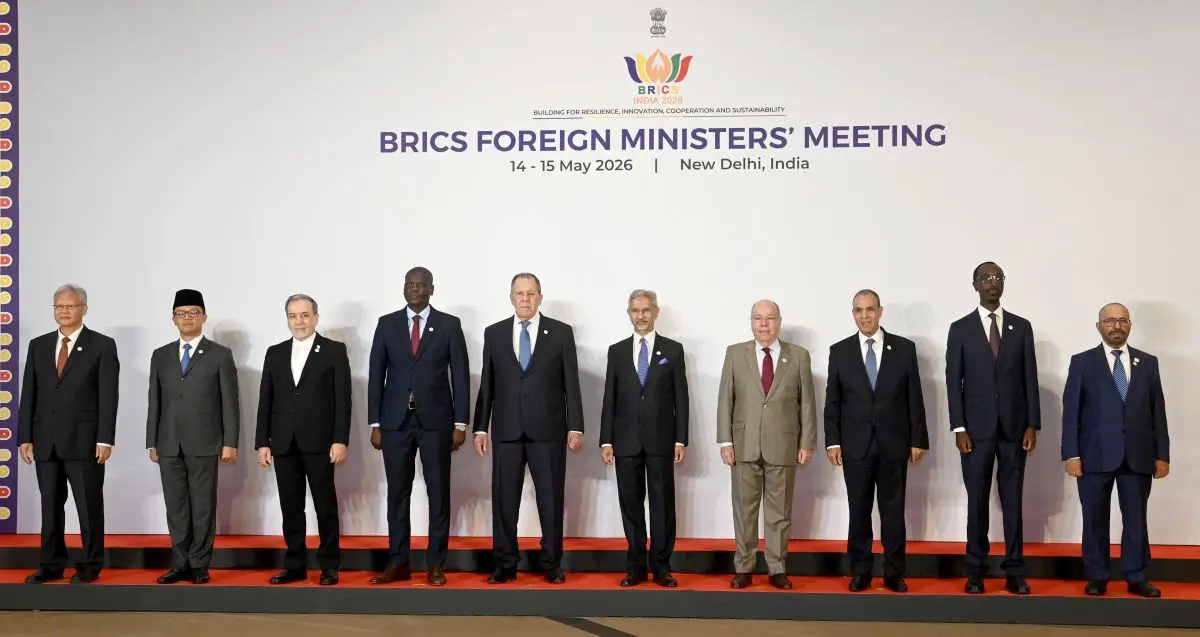
The agreement also fits a wider pattern of middle-power networking. From the expanded BRICS to various Asian and African security dialogues, states are constructing overlapping, non-exclusive security architectures that reduce dependence on any single external power. Whether the Makkah framework expands—Qatar, Egypt or others have been mentioned in regional speculation—will determine if it becomes a durable institution or remains a political gesture. For now it is both hedge and statement of intent.
Implications for India: vigilance without panic
For India, the pact lands in an already complex neighbourhood. New Delhi’s Ministry of External Affairs has limited itself to the diplomatic equivalent of a raised eyebrow: it is “closely following” the development. The caution is understandable. Turkey’s defence relationship with Pakistan has long irritated Indian strategists, and the prospect of deeper technology transfer—particularly in drones and munitions—raises the costs of any future crisis with Islamabad. Pakistan’s enhanced diplomatic weight in the Gulf, and potential access to Saudi financing that could subsidise its military posture, are unwelcome. Some Pakistani commentators have already floated the idea that the collective-defence clause might deter Indian pressure; such claims overstate the case.
Yet structural realities constrain the pact’s impact on the subcontinent. Saudi Arabia has invested heavily in a multidimensional partnership with India—energy, investment, diaspora remittances and strategic dialogue. Riyadh has no interest in jeopardising those ties by taking sides in an India-Pakistan confrontation. Turkey’s primary theatres remain the eastern Mediterranean, Syria and its own complicated relationship with Israel; deploying Turkish forces to the Line of Control is vanishingly unlikely. Pakistan’s nuclear deterrent remains oriented toward India, not extended to its new partners. Analysts note that the most probable effect is incremental: greater Turkish resupply options for Pakistan in a prolonged crisis, and Saudi financial ballast that prolongs Islamabad’s staying power. These are real but manageable challenges.
India’s response should therefore be steady rather than reactive. It already enjoys strong economic and defence relationships across the Gulf, including with the UAE and others who may yet join or parallel the Makkah framework. Deepening those partnerships, accelerating indigenous defence production, and maintaining open channels with Riyadh and Ankara remain the rational course. Symbolic posturing about an “Islamic NATO” risks overstating both the cohesion of the new arrangement and its hostility to Indian interests.
The Makkah agreement is best understood as a symptom of a larger transition. The post-Cold War American security order in the Middle East is giving way to a more fragmented, multipolar landscape in which regional powers insure themselves against the uncertainties of great-power politics. Whether the pact evolves into genuine collective defence or remains a carefully hedged declaration of solidarity will depend on implementation—and on the next shocks the region inevitably delivers. For India, as for others, the prudent course is to watch the details, strengthen one’s own options, and resist the temptation to treat every new alignment as an existential threat. In geopolitics, as in markets, overreaction is often more costly than the underlying risk.