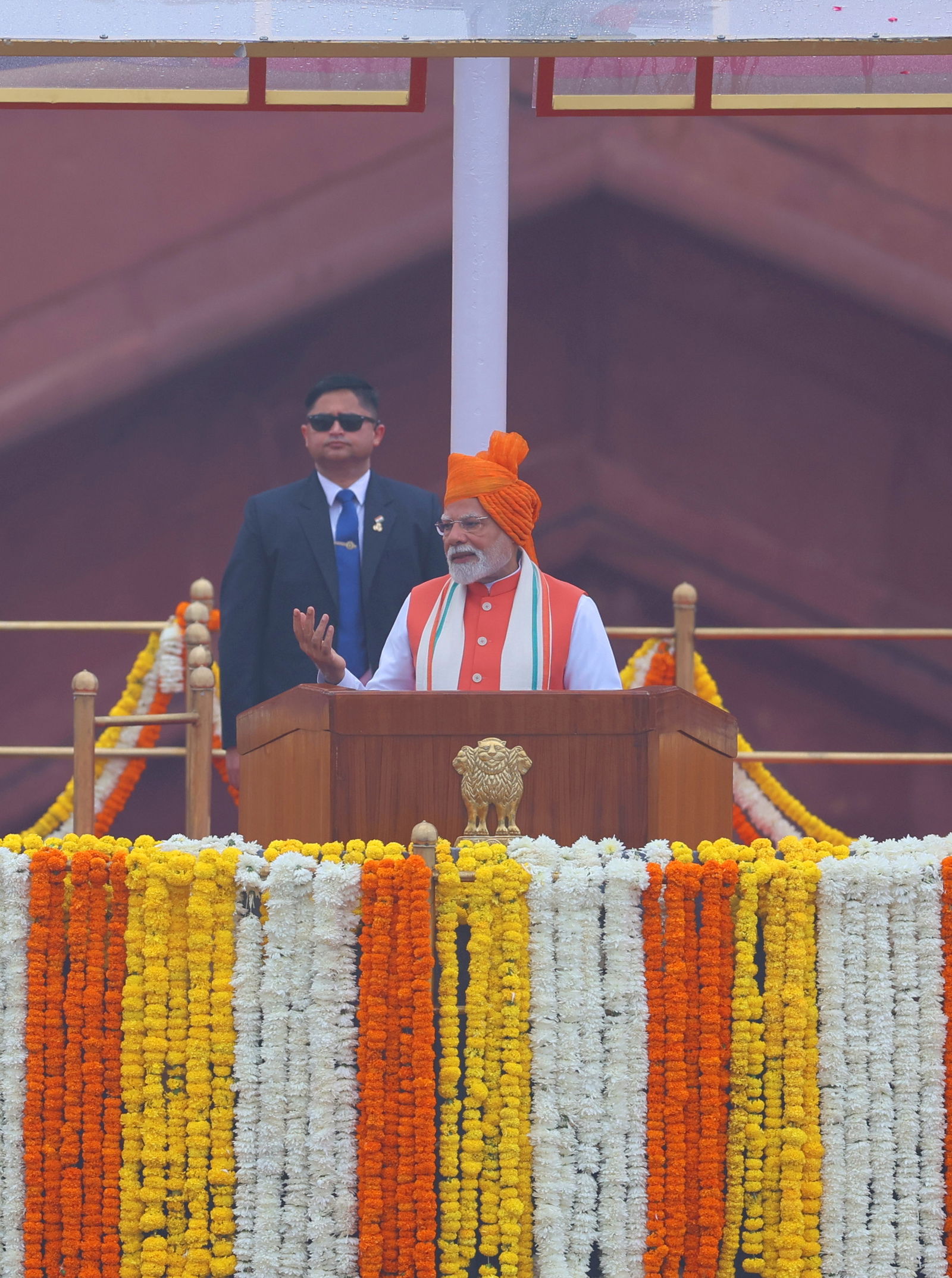
Prime Minister Narendra Modi on Monday firmly denied any foreign intervention in India’s halting India’s military response to the April 22 terror attack in Kashmir that killed 26 people, asserting in the Lok Sabha on Tuesday that India does not take orders from “any external power” but refrained from category reject US President Donald Trump’s repeated assertion that he prevented nuclear war between India and Pakistan asking them to “stop” and trade.
Modi’s comments came in response to the Opposition demand for a clarification on the US President’s persistent claim during a special debate on the Pahalgam terror strike and the subsequent halt to India’s military offensive, dubbed as Operation Sindoor, even as Lok Sabha leader of opposition and Congress MP Rahul Gandhi dared dared him to categorically tell the House that “Trump is lying”.
“India destroyed Pakistan’s military strength between May 9 and May 10. Pakistan now clearly understands that India’s response will always get bigger and that India can do anything if it engages in any misadventure in future,” he told Lok Sabha.
Modi said US Vice President J D Vance called him up a few times J D Vance on May 9 but he did not call him back as he was busy in meetings with the armed forces brass. “Later I called back and the Vice President told me that Pakistan is going to launch a big attack. I told him if this is Pakistan’s intention, then this will cost it dearly. We will respond with a bigger attack. We will fire cannonballs to return their bullets.”
No country stopped India from acting in its defence, Modi said, adding that only three of the 193 UN members spoke in favour of Pakistan, soon after Leader of Opposition in Lok Sabha Rahul Gandhi claimed no country condemned Pakistan and cited Trump’s claims to question Modi’s leadership.
“India is a sovereign nation. No foreign leader can dictate our national security decisions. We took decisions based on our own strategic calculus, and we shall continue to do so,” Modi told the Lower House of Parliament, breaking his silence for the first time since the Pahalgam terror strike.
The opposition, led by Congress’ Rahul Gandhi, mounted a blistering attack on the government, demanding accountability for the failure to prevent the attack and questioning why the military operation was halted just days after it began. Gandhi accused the government of a “massive security failure” and suggested that the Prime Minister and Home Minister Amit Shah were “trying to evade responsibility.”
“This is not the first time innocent people have died due to your incompetence,” Gandhi thundered, addressing Modi directly. “But this time, the entire nation is watching. Why were 26 people killed in cold blood? And why did the army suddenly stop retaliating when it had begun to act?”
The April 22 attack, which claimed the lives of 25 Indian tourists and one Nepali national in the Baisaran meadow area of Pahalgam, sent shockwaves across the country. The scenic spot, nestled in the Anantnag district of Jammu and Kashmir, has long been a favorite of visitors, making the mass killing even more chilling.
According to intelligence reports, heavily armed Pakistani terrorists targeted a group of civilians with automatic weapons, asking each of them if they were Hindu, in a brutal daylight assault. The victims, mostly families and young professionals, had hiked to Baisaran. The attack marked the deadliest on civilians in Kashmir in over a decade. Those who managed to survived said there was no security arrangement in the area and the security took more than an hour to reach the location after the incident.
Opposition leaders repeatedly referenced US President Donald Trump’s remarks claiming credit for defusing tensions between India and Pakistan. Trump has claimed on record at least 28 times that he convinced India and Pakistan to stop fighting, a statement that has been widely circulated on social media in recent weeks .
“Is it true that you stopped the army after receiving a call from Washington? Did you back off under American pressure to secure a trade deal?” Gandhi asked during the debate, pointing to what he called a pattern of “capitulation” under the Modi government.
Trinamool Congress leader Mahua Moitra also raised concerns over the role of foreign intelligence agencies in shaping India’s response. “If our actions are being dictated by what foreign powers want, then what’s the point of us sitting in this House?” she said.
Modi, however, dismissed these claims as “baseless and politically motivated,” and went on to accuse the Congress of speaking the language of Pakistan and condemned the opposition party leaders for stooping down to such levels for appeasement politics. He said the army acted “with restraint and resolve,” and decisions on the ground were taken by military commanders “based on evolving threat assessments.”
“We neither began the operation under pressure nor ended it under pressure. This is a government that takes pride in our armed forces and their judgment. The Indian Army does not need lessons in courage from the Congress party,” Modi said.
Home Minister Amit Shah, in a separate intervention, said three of the militants involved in the Pahalgam attack had been killed in joint operations by the Army and Jammu and Kashmir Police on Monday. “We have achieved significant breakthroughs. This was a highly planned and externally sponsored attack. The security forces have neutralized three of the attackers and are pursuing leads to locate the others,” Shah said.
Shah also told Parliament that initial investigations pointed to the involvement of The Resistance Front (TRF), a shadow outfit believed to be a proxy of Pakistan-based terror group Lashkar-e-Taiba. He added that the attackers had received training in infiltration, reconnaissance, and soft-target execution — techniques used previously in Pulwama and Uri attacks.
Rahul Gandhi, however, was unimpressed. “Every time, you blame Pakistan and pat yourself on the back after a few encounters. But the real question remains — why do these attacks keep happening? Why is our intelligence failing to stop them? Why are our citizens left unprotected in one of the most militarized zones in the world?”
Gandhi’s intervention was met with a standing ovation from opposition benches, while ruling BJP members accused the Congress leader of “demoralizing the forces.” BJP MP Nishikant Dubey said Gandhi had “crossed all limits” by questioning military decisions in Parliament and suggested he was “echoing Pakistan’s script.”
Outside Parliament, protests erupted in Srinagar and Jammu, with civil society groups and victims’ families demanding a judicial probe into the security lapses that allowed such a large group of unprotected civilians to reach a vulnerable location.
Several eyewitnesses told local media that there was no visible security presence near Baisaran on April 22, despite multiple warnings about the movement of militants in the region. A local guide who was with the group at the time of the attack claimed they had received no warning or advisory from police or tourism officials.
“This attack was preventable,” said Mehbooba Mufti, former Chief Minister of Jammu and Kashmir and leader of the People’s Democratic Party. “The intelligence inputs were there, yet no one acted. We need answers, not political speeches.”
Security experts have also expressed concern over the rising frequency of targeted attacks on civilians in the Valley, even as official figures claim a reduction in overall terror incidents. Former Northern Army Commander Lt. Gen. D.S. Hooda said in an interview that the success of militancy lies not in numbers but in psychological impact.
“Even one attack like this can create panic, destabilize the region, and embarrass the government. That’s what the terrorists want,” Hooda said.
As the Lok Sabha debate stretched late into the evening, it became clear that the political fallout from the Pahalgam massacre and Operation Sindoor was far from over. While the government stood by its actions, the opposition vowed to keep up the pressure, hinting at a possible demand for a parliamentary probe or even a no-confidence motion.
“This is not just about one attack. It’s about a government that has repeatedly failed to learn from its mistakes,” said Congress MP Shashi Tharoor. “We lost 26 innocent lives. That blood is on someone’s hands, and the nation deserves to know whose.”
With the monsoon session still underway and general elections less than a year away, the Pahalgam tragedy is likely to remain a dominant theme in national discourse. Both sides appear locked in a battle — not just over facts, but over the political narrative itself.