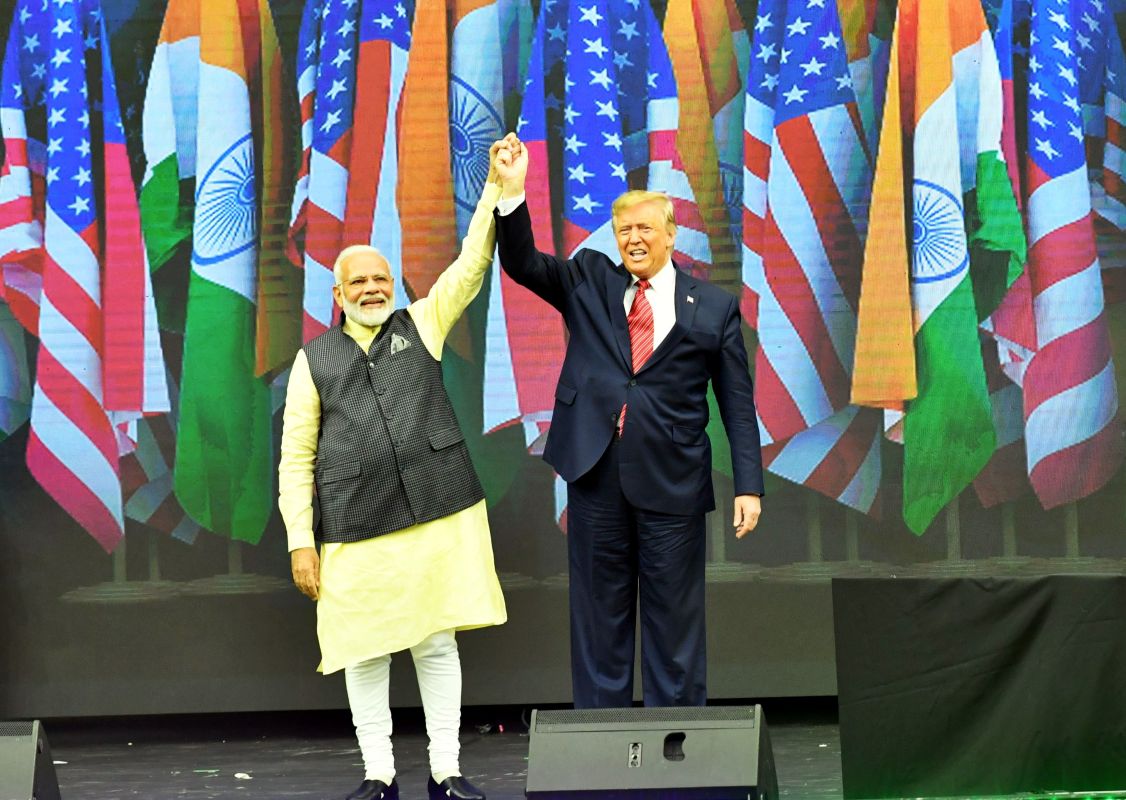
Two days after the collapse of direct negotiations between the United States and Iran in Islamabad, President Donald Trump held a nearly 40-minute telephone conversation with Indian Prime Minister Narendra Modi on April 14. The call, the third between the two leaders this year, focused on the volatile situation in West Asia and the critical need to keep the Strait of Hormuz open and secure for global shipping. It came as Washington announced a naval blockade of Iranian ports and amid speculation about possible further talks between the two adversaries.
The timing was telling. The Islamabad talks, which stretched over 21 hours on April 11-12, broke down without agreement on Iran’s nuclear programme, control of the strait, or sanctions relief. With a fragile two-week ceasefire due to expire around April 21, the risk of renewed disruption to one of the world’s most important energy chokepoints—through which roughly one-fifth of global oil passes—has sharpened concerns in import-dependent economies such as India.
Mr Modi, in a post on social media shortly after the conversation, described the exchange as a review of “substantial progress” in bilateral ties and a reaffirmation of both countries’ commitment to strengthening their Comprehensive Global Strategic Partnership “in all areas”. He added that the leaders had discussed the West Asia situation and “stressed the importance of keeping the Strait of Hormuz open and secure”. According to US Ambassador to India Sergio Gor, who briefed journalists, Mr Trump also conveyed a personal note of warmth, telling the prime minister: “I just want you to know we all love you.”
The call underscored India’s stake in regional stability. New Delhi has long relied on the Gulf for a large share of its crude imports and has watched with alarm as tensions pushed up energy prices. Ambassador Gor framed the American position bluntly, describing Iran as a nation “holding the entire world hostage” through its actions in international waterways. He emphasised that reopening the strait would benefit not only the United States but also India and other consuming nations. The envoy noted that the two leaders had addressed the US naval blockade and the urgency of restoring free passage “as soon as possible”.
Beyond the immediate crisis, the conversation highlighted the broader trajectory of India-US relations. Mr Gor told journalists that “big-ticket” deals, including in the energy sector, were expected to be sealed in the coming days or weeks. Sources indicated that Indian public-sector energy companies may soon announce collaborations with American firms. The ambassador described the bilateral relationship as being “on a firm footing”, with “something very interesting and exciting” in prospect.
This latest engagement builds on recent efforts to repair ties that had come under strain. Earlier in Mr Trump’s second term, Washington imposed punitive tariffs on Indian goods, partly linked to India’s purchases of Russian oil, and there were public differences over the handling of last year’s India-Pakistan clashes. A framework for an interim trade agreement was reached in February, reducing certain reciprocal tariffs and opening markets in both directions. The personal rapport between the two leaders, long cultivated, appears to have helped steady the relationship.
The call also follows a three-day visit to Washington by India’s Foreign Secretary Vikram Misri. US Secretary of State Marco Rubio is expected to travel to India next month for wide-ranging discussions with External Affairs Minister S Jaishankar and other officials, covering trade, defence, energy security, and Indo-Pacific cooperation, including the Quad.
The Modi-Trump conversation reflects India’s careful balancing act. New Delhi has consistently called for de-escalation and the earliest restoration of peace in West Asia while prioritising energy security and freedom of navigation. By engaging directly with Washington at this sensitive moment, India signals its interest in a stable outcome without aligning overtly with any party. For the United States, the outreach to a major energy consumer and strategic partner serves to broaden international support for its position on the strait and to reinforce economic ties at a time of global uncertainty.
Whether the conversation yields tangible diplomatic progress or merely keeps channels open remains to be seen. The failure in Islamabad exposed deep differences over sequencing, trust, and core demands. A sustained blockade or renewed conflict would ripple through oil markets, inflation, and growth worldwide. For India, which has worked to diversify its energy sources yet remains exposed, the stakes are particularly high.
In the short term, markets will watch for any announcements on energy deals and for signs of whether the ceasefire holds. In the longer term, the episode illustrates how personalised diplomacy between Mr Trump and Mr Modi continues to play a role in navigating crises, even as structural differences in interests persist. The path to calmer waters in West Asia is far from assured; the latest India-US exchange is a reminder that major powers are positioning themselves carefully as the region’s tensions linger.