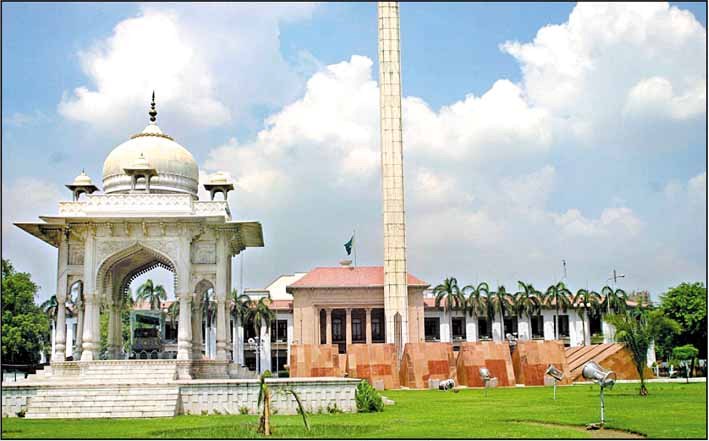
In the grand chamber of Punjab’s provincial assembly, a resolution tabled on Thursday has a distinctly ambitious ring. Rana Arshad, A lawmaker from the ruling Pakistan Muslim League-Nawaz (PML-N) has proposed nominating Chief of Army Staff Field Marshal Gen Asim Munir, Prime Minister Shehbaz Sharif and Foreign Minister Ishaq Dar for the Nobel Peace Prize. The motion credits the three with “effective diplomacy” that helped secure a fragile two-week ceasefire between the United States and Iran and paved the way for direct talks in Islamabad this weekend.
The timing is no coincidence. Hostilities that erupted on February 28 escalated into a conflict that killed thousands, threatened the Strait of Hormuz and drove up global energy prices. Pakistan’s quiet back-channel efforts, leveraging the army chief’s contacts in Washington and Tehran, are being presented as instrumental in halting a wider conflagration. Islamabad now finds itself in the improbable position of mediator between two long-standing adversaries.
For a country more accustomed to headlines about political instability, economic strain and domestic security challenges, this moment of diplomatic visibility is being seized upon enthusiastically at home. Moved by PML-N chief whip Rana Muhammad Arshad, the resolution praises the leadership trio for promoting regional stability and averting a larger global crisis. It also acknowledges the overarching guidance of Nawaz Sharif, the party’s patriarch. Provincial assemblies cannot formally nominate Nobel candidates, but the symbolic value is clear.
Grounds for caution
The ceasefire remains conditional and short-lived. This weekend’s negotiations in Islamabad, expected to involve senior American and Iranian delegations, confront formidable obstacles: uranium enrichment, ballistic missiles, sanctions relief and Iran’s network of regional proxies. Israel’s continued operations add another layer of complexity. The deep-seated rivalry between America and Iran is structural; it will not be resolved in a few days of talks in a Pakistani conference centre. History is littered with Middle Eastern truces that proved fleeting.
Pakistan’s unusual leverage derives from its relationships with both sides. Field Marshal Munir has built ties in Washington while maintaining channels to Tehran. The alignment between the civilian government and the military on this issue has enabled a rare display of unity on the international stage. For an establishment grappling with debt burdens, political divisions and its own security headaches, the episode provides a timely narrative of global relevance.
Whether Oslo’s Nobel committee will pay any attention is doubtful. Prizes for peace have occasionally honoured process over outcome, but the bar is high and the conflict is far from over. In Pakistan’s domestic arena, however, the resolution serves a clear purpose: it casts a precarious diplomatic opening as a historic achievement and elevates the current civil-military leadership as statesmen.
The true measure of success will emerge from the negotiating rooms in Islamabad. Should the talks produce even a modestly durable agreement, Pakistan will have earned discreet credit in foreign capitals. If they collapse, as so many previous efforts have, Thursday’s resolution may be remembered less as a diplomatic milestone than as effective political theatre. For now, in Lahore at least, the applause is loud.