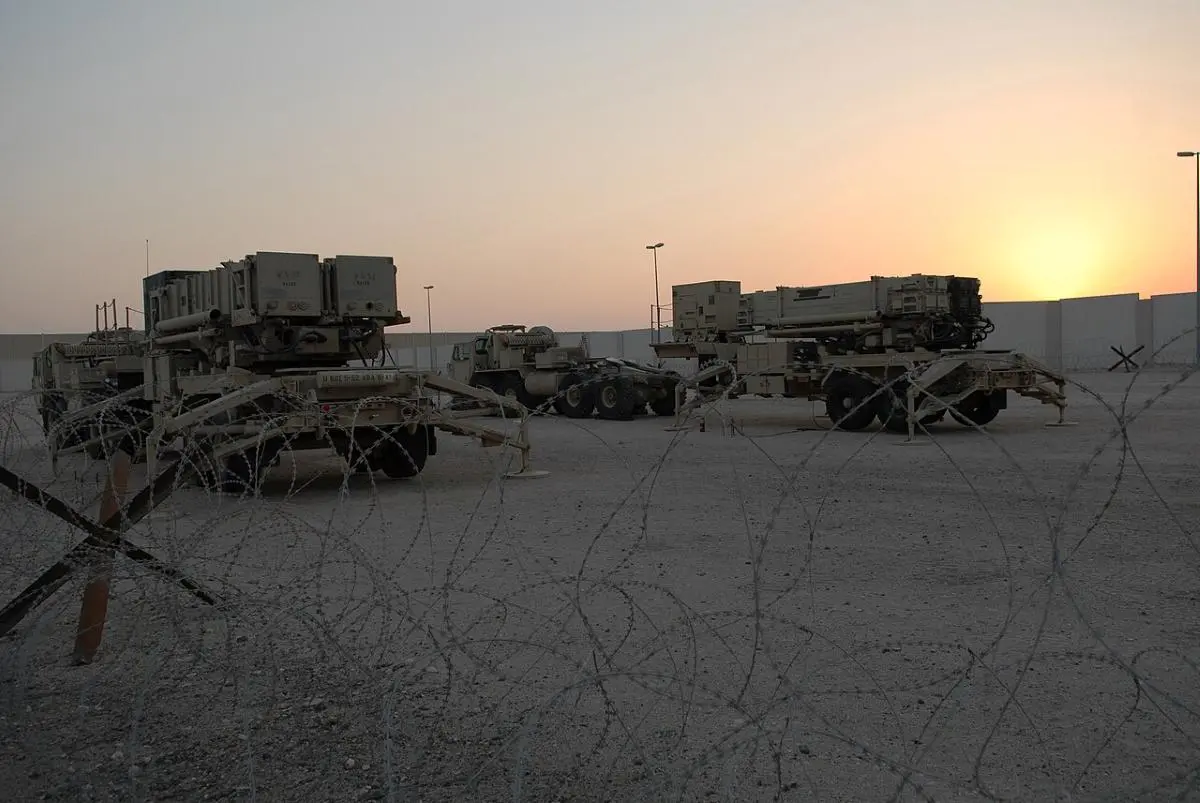
In a letter dated May 26th to President Donald Trump and the United States Congress, Volodymyr Zelenskyy delivered a blunt plea. Ukraine’s stocks of Patriot PAC-3 interceptors, the country’s premier shield against Russian ballistic missiles, are running critically low. “For us—for a nation fighting for its survival—there is hardly anything more painful to see than Patriot batteries with no missiles loaded,” the Ukrainian president wrote.
The timing was pointed. Days earlier, Russia had unleashed one of its heaviest aerial assaults of 2026: some 90 missiles, including an Oreshnik intermediate-range ballistic missile, and around 600 drones. Kyiv and other cities absorbed the blows. Four civilians died and over 100 were wounded. Ukrainian air defences performed respectably against the cheaper drones but struggled, as ever, with the ballistic component.
This is more than another episode in Europe’s grinding attritional war. It illuminates a deeper transformation in modern conflict: the return of massed missile and drone warfare and the central importance of robust, sustainable air and missile defence. The lessons stretch well beyond the plains of Ukraine.
The cost of asymmetry
Russian strategy is clear. Moscow cannot easily achieve air superiority or rapid armoured breakthroughs, so it seeks to degrade Ukrainian morale and infrastructure through sustained aerial pressure. Waves of cheap Iranian-designed Shahed drones act as a costly screen, forcing Ukrainian and Western systems to expend expensive munitions before ballistic missiles—faster, harder to intercept—strike home. Ukraine has become remarkably adept at downing drones, often with cheap interceptor drones of its own. Yet ballistic threats remain a different league.
The Patriot system, particularly its PAC-3 variant, has proven one of the few reliable counters. But production is limited—roughly 600 missiles a year from Lockheed Martin—and global demand is fierce. Conflicts elsewhere, notably involving Iran, have diverted stocks. Zelenskyy’s letter acknowledges this reality while underscoring Ukraine’s near-total reliance on American supply for effective ballistic-missile defence.The economics are punishing. A single PAC-3 missile costs hundreds of thousands of dollars; a Shahed drone a fraction of that. This is the classic attacker’s advantage in the missile age, familiar from the Gulf, the Red Sea, and potential future crises over Taiwan. Defenders must either achieve extraordinary interception rates, field far cheaper counters, or strike the launchers and production sites preemptively. Ukraine is attempting all three, with mixed but instructive results.
Enduring lessons
Several structural truths emerge from Ukraine’s experience. First, air defence is no longer a niche capability but a foundational requirement for national resilience. Protecting cities, power grids, and ports is as vital as holding front lines. Civilian infrastructure has become a primary target; its defence a strategic necessity.
Second, industrial depth matters more than peacetime inventories. Western arsenals, optimised for short, high-intensity campaigns, have struggled with prolonged consumption. The war has exposed fragile supply chains and modest production rates. Europe, in particular, is being forced to confront decades of underinvestment in munitions and defence industry capacity.
Third, innovation flourishes under pressure. Ukraine has integrated commercial technologies, developed drone-based interceptors, and refined electronic warfare tactics with impressive agility. Its forces reposition air-defence assets constantly and layer systems creatively. These adaptations will interest defence planners from the Baltic to the Indo-Pacific.
Fourth, alliances face hard choices. Under the current American administration, aid has shifted emphasis toward European-funded purchases and sales rather than open-ended grants. Zelenskyy’s appeal tests this framework. It also highlights the difficulty of prioritising across theatres. A world with multiple concurrent threats—Russia in Europe, Iran and its proxies in the Middle East, China eyeing Taiwan—strains even the richest arsenal.
Beyond the immediate
The war in Ukraine is unlikely to be decided by any single weapons system. Frontline progress remains slow and bloody, a contest of manpower, artillery, and incremental gains. Yet control of the skies—and the ability to deny it to the enemy—shapes what is possible on the ground and what civilians endure at home.
For Western strategists, the deeper question is preparation for higher-intensity conflicts where massed precision strikes and autonomous systems dominate. Cheap mass (drones, missiles) versus expensive precision (intercepting systems) poses a procurement dilemma. Pure defence is expensive; credible deterrence and offensive deep strikes to disrupt enemy production and launch infrastructure may prove more economical in the long run.
Zelenskyy’s letter is both urgent and timeless. It pleads for immediate help against Russian attacks but also serves as a reminder that the missile and drone age has arrived. Nations that master layered, sustainable, and innovative air and missile defence—while maintaining the industrial base and political will to sustain them—will hold a decisive edge in future wars. Those that do not may find their batteries standing silent when the barrages begin.