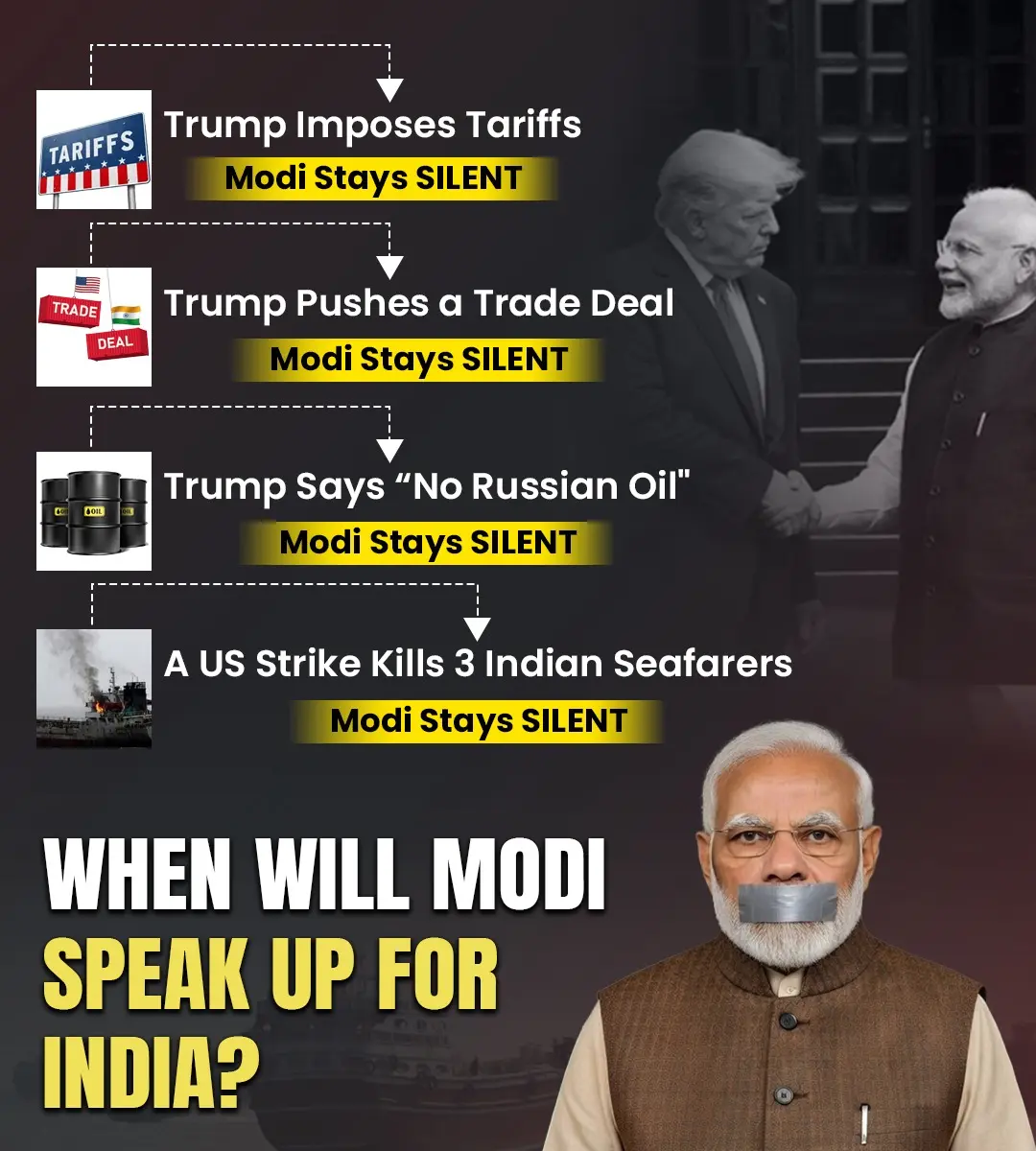
Killing of three Indian merchant sailors by US forces in the Gulf has triggered a widespread outarge across India and sharp criticism of the Prime Minister Narendra Modi.
The incident, which occurred late on Friday, has escalated diplomatic tensions between New Delhi and Washington while exposing deep domestic divisions over India’s foreign policy posture.
The sailors, all from coastal communities in Kerala and Tamil Nadu, were aboard the MV Lakshmi, a Singapore-flagged cargo ship carrying industrial machinery through the Strait of Hormuz when it came under fire.
US forces, enforcing what Pentagon officials described as a “targeted interdiction against vessels suspected of breaching sanctions linked to regional security threats,” struck several ships in a convoy.
Indian diplomatic sources confirmed that the three men – identified as Captain Ravi Menon, 42, engineer Suresh Kumar, 35, and deckhand Arjun Pillai, 28 – were killed in the ensuing chaos. At least five other Indian crew members were injured and are now receiving treatment in a UAE hospital.
The US Central Command (CENTCOM) issued a statement saying the operation was “precise and necessary” to counter “hostile actors” attempting to disrupt maritime traffic. However, it stopped short of directly addressing the Indian casualties, promising only a “full review” of the incident.
Eyewitness accounts from surviving crew members, relayed through maritime unions, painted a more chaotic picture: explosions lit up the night sky as missiles struck nearby vessels, with the MV Lakshmi caught in crossfire despite flying clear international identification signals.
News of the deaths spread rapidly on Saturday morning, igniting protests outside the US embassy in New Delhi and at ports in Mumbai, Chennai, and Kochi. Families of the deceased gathered in grief, holding photographs of their loved ones and demanding justice. “My husband left for work like any other day. Now I am a widow because of someone else’s war,” said Priya Menon, wife of Captain Menon, speaking to local television channels from her home in Kochi.
Maritime unions have called for an immediate inquiry and compensation, warning that Indian seafarers – who form a significant portion of the global merchant navy workforce – are increasingly vulnerable in volatile waters.
The episode comes amid heightened tensions in the Gulf, where a US-led blockade has sought to curb alleged arms shipments and oil smuggling networks. India, heavily reliant on Gulf energy imports, has traditionally maintained a delicate balancing act: strong defence and economic ties with the US alongside longstanding relations with Iran and Arab states. The deaths have thrust this tightrope walk into the spotlight.
Opposition leaders were quick to seize on the government’s apparent reticence. Congress president Mallikarjun Kharge led the charge and said in a post on X: “Three Indian lives lost in US strikes and the Prime Minister remains silent? This is not strategic autonomy; this is surrender of India’s dignity. Modi ji must speak to the nation and demand accountability from Washington.” The post garnered hundreds of thousands of interactions within hours.
Rahul Gandhi, the Leader of the Opposition in the Lok Sabha and former Congress chief, followed with a more pointed critique: “Narendra Modi talks tough on China but goes quiet when American missiles kill our sailors. Where is the ‘Atmanirbhar’ foreign policy? Our brave seafarers deserve better than being treated as collateral damage.”
Senior Congress leader Shashi Tharoor added his voice, posting a thread on X outlining India’s maritime vulnerabilities and calling for parliamentary debate: “This tragedy highlights the risks of over-reliance on volatile supply routes without adequate diplomatic safeguards. The silence from South Block is deafening.”
Other opposition leaders joined the tirade against the Modi government. Trinamool Congress chief Mamata Banerjee expressed solidarity with the families and questioned the ruling BJP and its allies.
Regional parties from southern states, where many sailors hail from, amplified calls for stronger consular protection.
Even some voices within the broader NDA alliance expressed private unease, though public criticism remained muted.
As of Sunday morning, Prime Minister Narendra Modi had not issued a direct statement on the incident. External Affairs Minister S Jaishankar is understood to have held urgent calls with his US counterpart, emphasising the need for a thorough investigation and measures to prevent recurrence.
Government sources pointed to “ongoing diplomatic engagements” and stressed that India was “seeking full facts” before commenting publicly.
A Ministry of External Affairs spokesperson described the deaths as “deeply regrettable” and confirmed that the Indian ambassador in Washington had raised the matter at the highest levels.
Analysts say the episode tests the resilience of the India-US strategic partnership, forged over two decades through defence pacts, intelligence sharing, and the Quad grouping. “The relationship is mature enough to withstand friction, but optics matter,” said Dr Harsh Pant of the Observer Research Foundation. “For the Modi government, which has invested heavily in personal diplomacy with US presidents, this is an uncomfortable moment. Domestic politics will demand visible assertion of Indian interests.”
The tragedy has also reignited debates about the safety of Indian diaspora workers in conflict zones. With over 13 million Indians living abroad, many in the Gulf, the deaths serve as a grim reminder of the human cost of global power plays. Seafarers’ organisations estimate that Indians man nearly 10% of the world’s merchant ships, often navigating the world’s most dangerous chokepoints.
In Mumbai’s bustling Ballard Estate, headquarters of several shipping firms, executives voiced concerns about insurance premiums and crew willingness to sail through the Gulf. “We are already seeing some reluctance,” said one senior maritime official who wished to remain anonymous. “If this escalates, supply chains for oil and goods could face serious disruption – something India can ill afford.”
International reactions have been measured. The UK, a close partner in the Indo-Pacific, expressed condolences and called for restraint.
China offered a veiled critique of “hegemonic actions” in the Gulf, while Iran – a key player in regional tensions – condemned the strikes as “piracy.”
The United Nations urged all parties to respect international maritime law under the UNCLOS framework.
Back in India, candlelight vigils continued into the evening. In Thiruvananthapuram, students and workers marched with banners reading “Indian Lives Matter” and “Modi, Break Your Silence.”
Social media platforms buzzed with hashtags #JusticeForIndianSailors and #GulfBlockade, mixing raw grief with political point-scoring.
As the sun sets on another day of mourning, the families of Ravi Menon, Suresh Kumar, and Arjun Pillai prepare for funerals while the nation awaits a clear response from its leadership.
The incident, though limited in scale, has laid bare the complexities of navigating great-power rivalries in an era where no corner of the ocean remains truly neutral.
For a rising India with global ambitions, ensuring the safety of its citizens far from home may define the credibility of its foreign policy for years to come.
Whether this leads to a recalibration in New Delhi’s approach to Gulf security or merely another diplomatic footnote remains to be seen. What is certain is that three ordinary Indian sailors, doing their jobs on the high seas, have become the latest unintended victims of conflicts far beyond their control. Their deaths demand more than condolences – they demand answers.