In the early weeks of what has become the Middle East’s most destructive conflict in a generation, Qatar quietly reached out to its Iranian neighbours. According to security officials cited by The Washington Post, Doha proposed a discreet understanding: Iran would spare Qatar’s vast Ras Laffan gas complex from attack, and in return Qatar would voluntarily halt production at the facility, which handles nearly a fifth of the world’s liquefied natural gas (LNG).
The move, which The Washington Post reports was known to American intelligence through intercepted communications, offers a revealing window into the calculations of Gulf states caught between powerful patrons and an irascible neighbour.
Qatar has denied any such secret arrangement, insisting that decisions on Ras Laffan were driven purely by security concerns. Yet the episode underscores a recurring truth in the region’s power politics: when great-power rivalries and proxy wars rage, even wealthy micro-states scramble for survival.
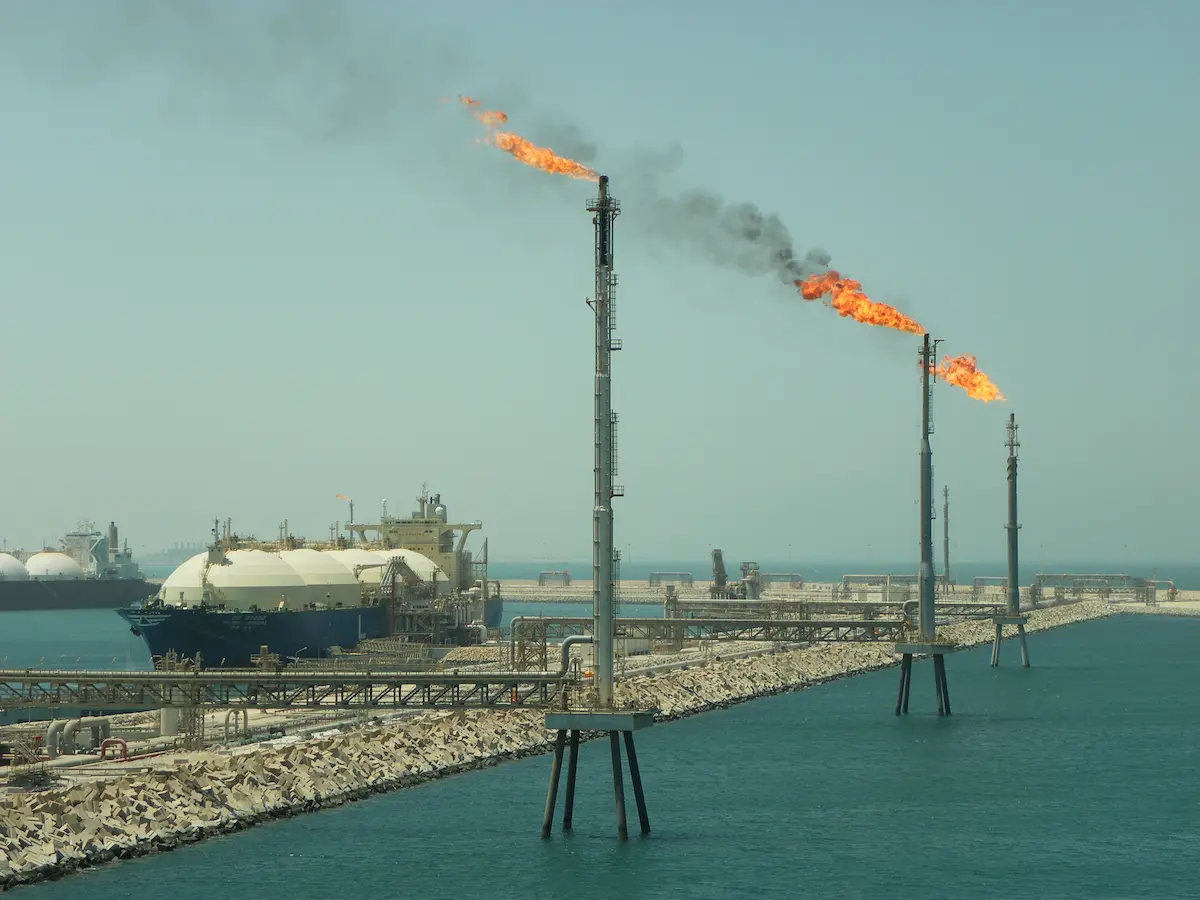
Ras Laffan is more than an industrial site; it is the beating heart of Qatar’s economy and global relevance. Sitting on the North Field, the world’s largest natural-gas reserve shared with Iran (where it is known as South Pars), the complex has powered Qatar’s rise as an energy superpower and diplomatic player. Halting output there would have tightened global LNG markets, raised prices for buyers from Europe to Asia, and—according to the logic reportedly conveyed to Tehran—added economic pressure on America and Israel to shorten the war.
The proposal came to nothing. In mid-March, after Israel struck Iranian energy infrastructure, Iran retaliated against Qatar. Missiles damaged parts of the Ras Laffan facility, sending plumes of smoke over the Gulf, sidelining roughly 17% of its capacity for years and disrupting long-term contracts. Qatar, long a mediator between Washington and Tehran, found itself dragged directly into the fray.
Hedging in a Dangerous Neighbourhood
This episode fits a broader pattern. Gulf monarchies have long practised sophisticated hedging. Saudi Arabia and the UAE have drawn closer to Israel and America while maintaining back-channels to Tehran. Qatar, which hosts both the largest American air base in the region and a major Iranian gas partner, has cultivated ties with everyone from Hamas to the Taliban. Its willingness to contemplate a deal that might indirectly squeeze its Western partners reveals the limits of such balancing when existential economic assets are at risk.
For Iran, the overture—if accepted—would have offered a propaganda win and a means to divide the Gulf Cooperation Council without firing a shot. For Qatar, it was presumably an insurance policy. The North Field’s shared geology makes mutual vulnerability a fact of life; an attack on one side risks retaliation against the other, potentially crippling both economies.
Yet the failure of the reported initiative highlights Iran’s strategic calculus. When its own facilities were hit, restraint evaporated. Energy infrastructure, once somewhat insulated in previous skirmishes, has become fair game. The result has been higher global energy prices at a delicate moment, complicating Western efforts to manage inflation and support allies.
Wider Implications
The affair carries several lessons. First, energy security in the Gulf remains alarmingly fragile. Even a partial outage at Ras Laffan ripples through markets, reminding importers of the folly of over-reliance on any single chokepoint. European countries, still adjusting to the loss of Russian pipeline gas, and Asian buyers locked into long-term Qatari contracts, now face renewed uncertainty.
Second, it complicates diplomacy. Qatar’s value as a mediator stems partly from its ability to talk to all sides. Being targeted by Iran may harden Qatari attitudes, while its reported willingness to contemplate production cuts could breed suspicion in Washington. President Donald Trump has already positioned himself as eager for deals with Tehran; revelations of Gulf manoeuvring add another layer of complexity.
Third, and most enduringly, it illustrates the structural weakness of the Gulf order. Shared resources, overlapping security dilemmas, and competing alliances mean that no state can fully insulate itself. Qatar’s reported outreach was less an act of disloyalty than a symptom of a region where survival often trumps solidarity.
The damage at Ras Laffan will take years to repair fully. In the meantime, the episode serves as a cautionary tale. In a war that has already redrawn assumptions about escalation, even the richest players are discovering that neutrality is illusory and self-preservation comes at a price—sometimes paid in smoke rising over the world’s largest gas complex.