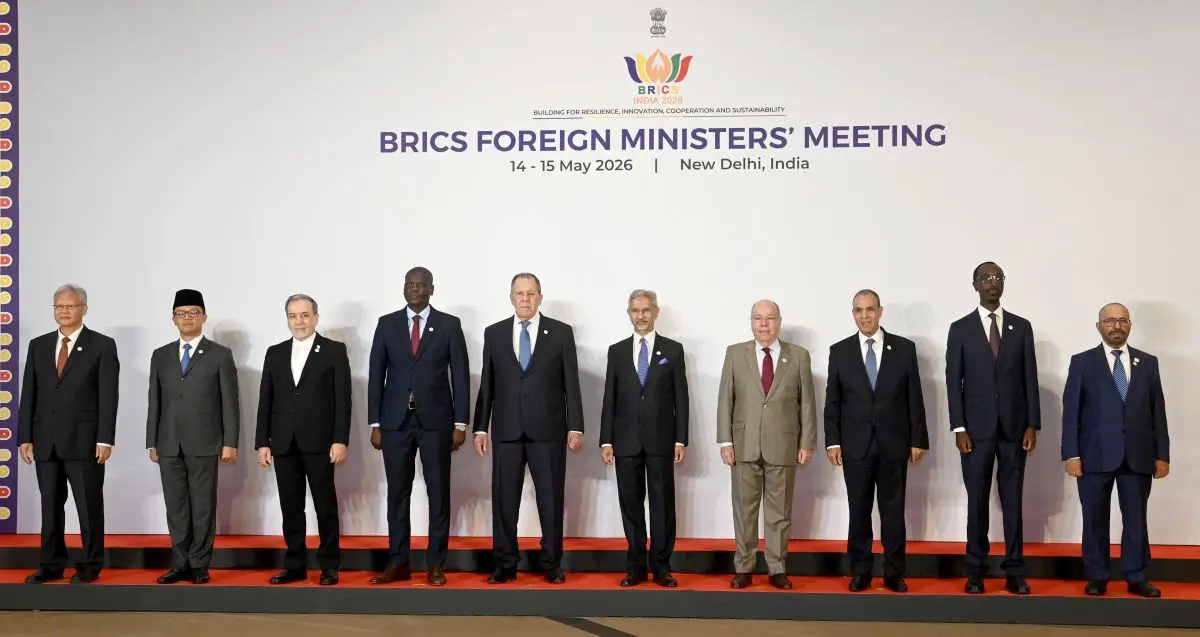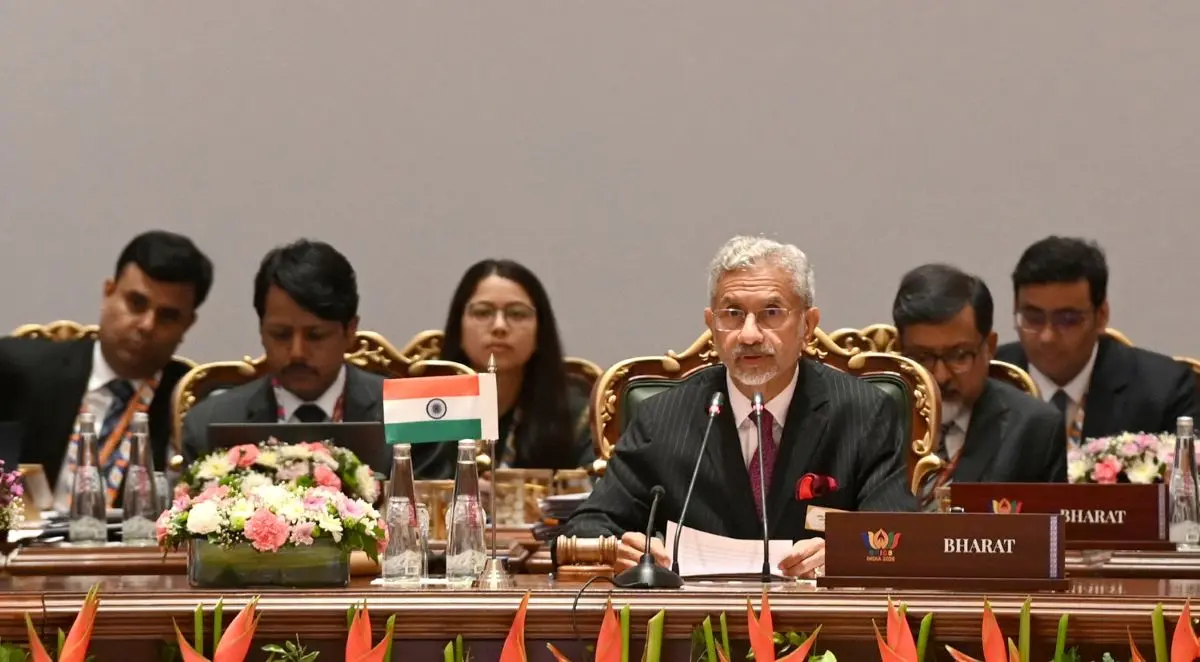
The BRICS grouping’s foreign ministers’ meeting in New Delhi concluded on Friday without a joint statement, exposing sharp divisions over the escalating crisis in West Asia. As Iran traded accusations with the United Arab Emirates, India found itself navigating a delicate diplomatic path between its traditional partners and emerging multilateral ambitions. The impasse highlighted the limits of consensus within the expanded bloc even as New Delhi sought to project stability ahead of its hosting of the leaders’ summit later this year.
In the absence of full agreement, India issued a chair’s statement that acknowledged differing views on the regional turmoil. The document emphasised the need for dialogue, respect for sovereignty, and the unimpeded flow of maritime commerce, while reaffirming support for a two-state solution in Palestine. Footnotes in key paragraphs signalled reservations on issues including the unification of Gaza and the West Bank under the Palestinian Authority and navigational freedoms in the Red Sea and Bab el-Mandeb. Iranian Foreign Minister Abbas Araghchi pointedly criticised a Gulf state—widely understood to be the UAE—for blocking stronger language against Israel and the United States, alleging it had facilitated attacks on Iranian targets. He insisted Tehran had no quarrel with that country itself, but maintained that American bases on its soil made it complicit.
Despite the public recriminations, Araghchi struck a constructive note on India’s potential contribution, suggesting New Delhi’s balanced relationships across the region positioned it to play a larger mediating role. He expressed hope that consensus might yet emerge by the time of the BRICS summit.
Modi’s Message of Solidarity in Abu Dhabi
While differences played out in New Delhi, Prime Minister Narendra Modi used a stopover in Abu Dhabi to deliver a clear message of support for the UAE. Meeting President Sheikh Mohamed bin Zayed Al Nahyan, Modi strongly condemned recent attacks on the Gulf state, describing them as unacceptable. He praised the UAE’s leadership for its restraint and wisdom amid provocation, and assured his counterpart that India stood “shoulder to shoulder” with the country.
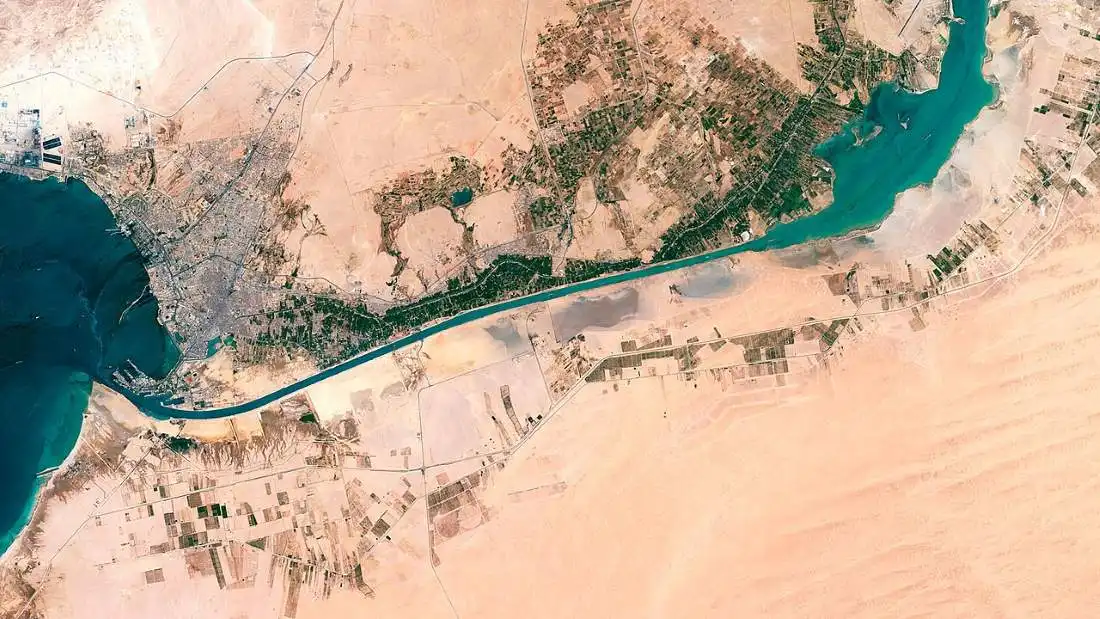
Modi reiterated India’s readiness to support efforts towards the earliest restoration of peace and stability in West Asia. He stressed the importance of keeping the Strait of Hormuz open and secure, warning of the global repercussions of any prolonged disruption. The conflict, which began with US-Israeli strikes on Iran at the end of February, has seen Tehran impose a blockade on the strait, through which roughly a fifth of the world’s petroleum passes. For energy-import dependent India, the stakes could scarcely be higher.
The visit, the eighth by Modi to the UAE in twelve years, combined symbolic warmth with substantive deliverables. Sheikh Mohamed personally received the Indian leader, who was accorded full ceremonial honours including an escort by Emirati military jets.
Landmark Pacts Bolster Strategic Ties
The centrepiece of the engagement was a suite of agreements spanning energy, defence, and economic cooperation. Abu Dhabi pledged $5 billion in fresh investments in India, including commitments from major Emirati entities. These encompass infrastructure funding through partnerships with India’s National Investment and Infrastructure Fund, significant stakes in Indian banks and financial institutions, and other growth-oriented sectors.
In energy, Indian Strategic Petroleum Reserves Limited and Abu Dhabi National Oil Company signed a strategic collaboration to expand UAE participation in India’s strategic stocks to 30 million barrels and explore joint gas storage initiatives. A separate deal between Indian Oil Corporation and ADNOC will secure long-term LPG supplies, vital for Indian households. Further pacts covered ship repair facilities in Gujarat, port and coastal infrastructure, and a supercomputing cluster to advance India’s artificial intelligence ambitions.
Defence ties received a notable upgrade through a new framework agreement focused on industrial collaboration, technology sharing, joint development of military hardware, maritime security, and cyber defence. These moves come as India seeks to diversify and deepen partnerships in a volatile neighbourhood.
Indian officials described the agreements as pivotal for the comprehensive strategic partnership between the two countries. The operationalisation of a virtual trade corridor linking customs and port authorities is expected to reduce logistics costs and build supply-chain resilience at a time of global disruption.
Energy Insecurity and Diplomatic Balancing
The timing of these developments is telling. The West Asia conflict has rattled energy markets and raised fears in New Delhi over oil and gas supplies. Iran has signalled openness to resuming energy exports to India once sanctions ease, with Araghchi noting historical trade volumes exceeded $20 billion annually. Yet India must weigh such overtures against its growing stakes in the Gulf and its broader relationships with Western partners.
Araghchi, speaking in New Delhi, criticised the US for undermining ongoing negotiations with an unprovoked act of aggression. He acknowledged the lack of trust as the central obstacle to diplomacy while insisting Iran was prepared for both continued conflict and eventual talks. On the Chabahar port project, he expressed hope that India would persist with development of the strategic facility.
For India, the challenge lies in safeguarding its interests across a fractured region. It maintains strong defence, economic, and diaspora links with the UAE and other Gulf states, even as it preserves longstanding ties with Iran. The BRICS chairmanship offers a platform to advocate for multilateral solutions and oppose unilateral sanctions, a position reiterated in the New Delhi statement. Yet the grouping’s internal divisions underscore the difficulty of translating that rhetoric into unified action.
Modi’s brief but productive visit to Abu Dhabi, followed by his departure for European capitals, reflects a pragmatic approach: reinforcing reliable partnerships while keeping channels open elsewhere. As the West Asia crisis continues to reverberate—from energy chokepoints to regional alignments—India’s ability to balance relationships and promote stability will be closely watched. The coming months, culminating in the BRICS summit, may reveal whether New Delhi can convert its diplomatic balancing act into tangible influence.