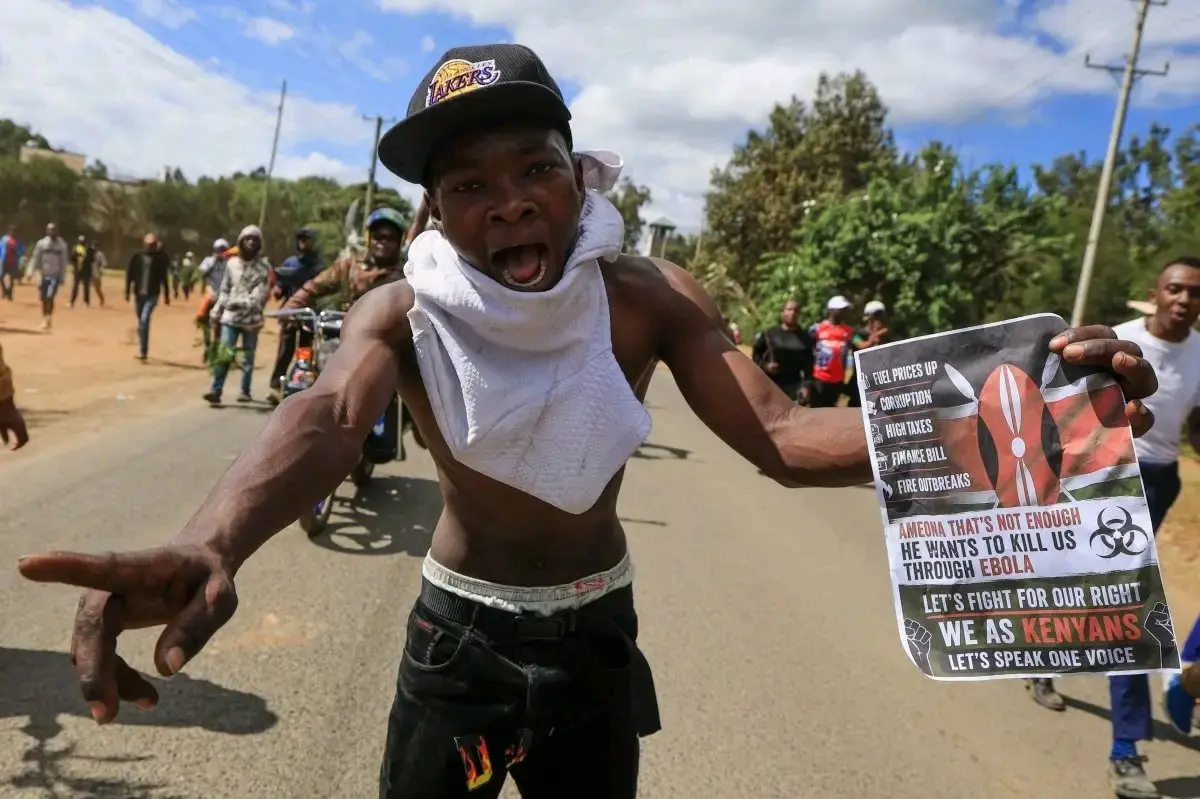
In the dusty streets of Nanyuki, central Kenya, hundreds of youths marched on June 1st, 2026, erecting barricades and chanting against an unwelcome visitor: Ebola. The target of their fury was a planned 50-bed American-backed quarantine facility at nearby Laikipia Air Base, intended primarily for United States personnel exposed to the virus in outbreaks ravaging the Democratic Republic of Congo and Uganda. Kenya has recorded no Ebola cases. Protesters, and a subsequent lawsuit by the Law Society of Kenya, decried the project as turning their town into a foreign dumping ground for biological risk. Two people died amid clashes with police. A Kenyan court swiftly suspended the plan, demanding transparency over the US-Kenya agreement.
The episode illuminates a stark reality of global health security: powerful nations prioritise their own populations with ruthless pragmatism, often shifting hazards to poorer partners who possess weaker health systems and louder claims to sovereignty. America’s current stance is explicit. Senior officials, including Secretary of State Marco Rubio, have declared that the US “cannot and will not allow any cases of Ebola to enter the United States.” Exposed Americans are to be held in forward facilities abroad rather than risk long-haul flights home or domestic contamination.
Kenya’s government defended the site as mutual preparedness, bolstered by American funding and training. Locals and doctors’ unions were unconvinced: if too dangerous for Americans at home, why tolerable for Kenyans?
This is realpolitik dressed in the language of global solidarity. Wealthy states invest heavily in containment at source—America has committed over $162m to the current response—but draw firm lines at home. Proximity helps: Nanyuki is far closer to the outbreak zone than Atlanta or Washington. Yet the asymmetry is glaring. The US maintains sophisticated biocontainment units capable of handling such cases, as demonstrated in past outbreaks. Kenya’s health infrastructure, though improving, is more fragile. A breach would test it severely.
Such arrangements are not new. During the catastrophic 2014-16 West African Ebola epidemic, which killed over 11,000, Western nations eventually led a robust response—America deployed thousands of personnel and billions of dollars. Yet early hesitation was telling. Foreign medical workers who contracted the virus were often repatriated to Europe or the US for superior care in specialised units. African patients, by contrast, relied on overstretched local facilities. While this made clinical sense, it fed perceptions of tiered humanity. One Liberian-American, Thomas Eric Duncan, died in Texas after diagnosis, sparking domestic panic and policy overreach that included unnecessary quarantines. The episode revealed how swiftly rich nations pivot from internationalism to self-preservation when risks materialise at home.
History offers harsher precedents. Pharmaceutical trials in Africa have long provoked controversy. In the 1990s, a Pfizer trial for an antibiotic in Nigeria during a meningitis outbreak drew accusations of inadequate consent and ethical shortcuts after child deaths. HIV research in Zimbabwe allegedly used placebos despite proven treatments being available. Colonial-era forced contraception experiments in parts of southern Africa linger in collective memory. More recently, networks of US-funded laboratories across Africa—ostensibly for disease surveillance and capacity-building—have sparked conspiracy theories and genuine unease about sovereignty and dual-use research. While many serve legitimate public-health goals, their opacity and foreign military links fuel suspicion that Africa supplies raw materials (pathogens, data, trial subjects) for Northern security.
During COVID-19, patterns repeated. Rich countries hoarded vaccines through bilateral deals while blocking intellectual-property waivers that might have accelerated production in the global south. Africa, with its young population and prior experience of outbreaks, was sidelined until later donations arrived—often near-expiry stock.
Wealthy nations’ “vaccine nationalism” was understandable politics but devastating optics. Poorer states became both testing grounds and afterthoughts.
The underlying logic is cold but consistent. States exist first to protect their citizens. No government willingly imports lethal contagion when workable alternatives exist via allies or clients. Forward-deployed facilities reduce transit risks and keep outbreaks contained geographically. Funding and training trickle down as side-payments. For host nations, the calculus can be rational: resources, infrastructure, and geopolitical favour in exchange for bearing some risk. Kenya’s president framed the deal in precisely these terms.
Yet fairness and optics matter. Global health security is only as strong as its weakest links and public trust. When citizens in Nanyuki see their town as collateral in America’s zero-tolerance policy, resentment festers. Lawsuits and protests force disclosure and debate—democratic correctives that authoritarian partners might suppress. Over time, such friction risks eroding the very cooperation needed for pandemics that respect no borders.
Powerful countries will continue this game. They possess the money, technology, and leverage. But enlightened self-interest suggests more equitable burden-sharing: genuine technology transfer, transparent agreements with genuine local consent, and investment in African-owned biocontainment capacity. Without it, every new facility abroad will meet not just protestors but deeper resistance. In global health, as in trade or climate, realpolitik unchecked breeds instability. The virus, indifferent to power, ultimately exploits the gaps.