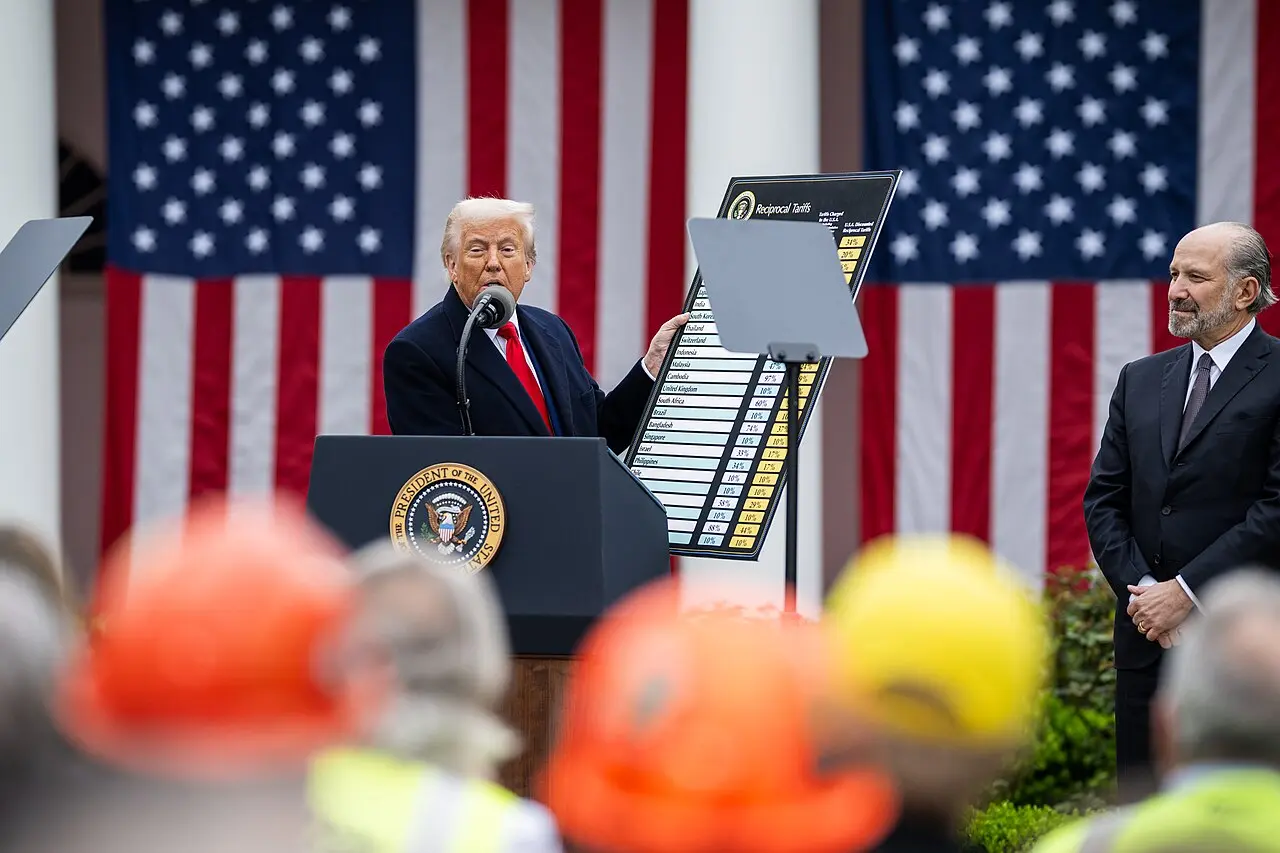
In the spring of 2025, President Donald Trump marked what he called “Liberation Day” with a proclamation that upended the postwar trading order. Tariffs—broad, blunt, and often eye-watering—were slapped on imports from dozens of countries, framed as rectification for decades of unfairness. A baseline 10% levy applied almost universally, with steeper rates for those running large surpluses with America, especially China. Pauses, negotiations, exemptions, and fresh threats followed in a pattern that has become familiar: chaos as strategy.
To outsiders, it looked like economic self-harm dressed up as machismo. To the president and his circle, it was something else: a deliberate wielding of America’s unmatched consumer market as leverage to remake globalisation on terms more favourable to the United States. Understanding the game requires setting aside textbook economics and entering the transactional world of power, leverage, and deal-making.
The Surface Rationale: Fairness, Deficits, and Revival
Mr Trump has long argued that America has been played for a sucker. Its markets are open; others’ are not. It runs persistent goods-trade deficits—over $1trn in recent years—while allies and adversaries alike protect their industries and subsidise exports. Manufacturing jobs hollowed out. Supply chains grew dangerously dependent on rivals, notably China.
The tariffs address this triad. First, they aim to shrink deficits by making foreign goods dearer, encouraging reshoring or “friend-shoring.” Second, they punish unfair practices—state subsidies, intellectual-property theft, forced labour—and force renegotiation. Third, they generate revenue: hundreds of billions potentially funneled toward tax cuts or deficit reduction, though estimates vary wildly and ignore downstream costs.
Recent measures, including 10-12.5% duties on imports from over 60 countries justified on forced-labour grounds, fit the pattern. Lower rates reward co-operation; higher ones punish laggards. Allies such as Canada, the EU, and Britain grumbled about sovereignty and costs but engaged in talks. China faced steeper effective barriers, accelerating a partial decoupling already under way.
The Deeper Game: Leverage, Security, and American Strength
The real game is less about optimal tariffs than about power. Mr Trump views trade imbalances not as benign reflections of savings and investment preferences but as proof of weakness that must be corrected through strength. Tariffs are the opening bid in bilateral horse-trading. Threaten pain; extract concessions on purchases of American energy, weapons, and goods; secure investment commitments; and claim victory.
This is “reciprocity” redefined. Not matching tariff schedules tit-for-tat, but using America’s market access as a club to demand broader rebalancing. Deals with the EU, Japan, South Korea, Vietnam, and Britain have involved commitments to buy more US goods, invest stateside, or adjust policies—often in exchange for moderated rates. Critics call it extortion; supporters see overdue burden-sharing.
National security looms large. Dependence on China for critical minerals, pharmaceuticals, electronics, and more is reframed as vulnerability. Tariffs accelerate diversification, even if they raise costs. The approach blends economic nationalism with geopolitical realism: weaken a rival’s industrial base while bolstering America’s. China has responded with its own diversification, stimulus, and tech push, suggesting resilience but also pain.
There is a domestic political layer too. Tariffs speak to the Rust Belt voter who watched factories close. They project strength abroad and deliver tangible (if inflationary) “wins” at home. Revenue talk appeals to fiscal hawks; industrial policy to those tired of laissez-faire decline.
Global Ripples: Pain, Adaptation, and Realignment
The effects have been uneven but real. US importers and consumers foot most of the bill through higher prices, though substitution, currency moves, and negotiations blunt the impact. Inflation ticked up; growth forecasts were trimmed. Manufacturing has seen some investment pledges, but large-scale reshoring takes years and requires more than tariffs—skills, energy costs, regulation.
Abroad, the pain is sharper for export-dependent economies. Mexico and Canada, deeply integrated via USMCA, faced 25% threats tied to migration and drugs, prompting frantic diplomacy and some concessions. Europe grumbled but largely avoided full escalation, striking deals involving energy and investment. Developing nations scrambled. China accelerated “dual circulation” and Belt and Road alternatives.
Retaliation has been selective—enough to hurt US agriculture and certain manufacturers, but not a full spiral. Many countries prefer negotiation to mutually assured destruction. Supply chains are rerouting: Vietnam and Mexico gained as China-plus-one destinations, though Chinese firms sometimes route through them, inviting further US scrutiny. Global trade volumes held up better than feared in 2025, but uncertainty chilled investment.
Winners and losers are emerging. Commodity exporters selling energy or food to America may fare better. Nations able to offer credible purchase pledges or pivot to other markets adapt. The biggest risk is fragmentation: a world of competing blocs, higher costs, and slower growth. The IMF and others have warned of GDP hits, though estimates vary with assumptions about retaliation and duration.
Risks and Realities: Will It Work?
Economists mostly cringe. Tariffs are inefficient taxes. They distort incentives, invite cronyism, and rarely deliver promised manufacturing renaissance without complementary policies. Bilateralism undermines the WTO, risking a rules-free jungle where might makes right. America’s own exporters suffer collateral damage.
Yet pure economics misses the point. Mr Trump bets that America’s leverage—its consumer market, dollar dominance, innovation edge, and energy abundance—outweighs the costs. In a geopolitically contested world, relative strength matters more than absolute efficiency. If tariffs force allies to buy more US LNG or weapons, or prompt China to open markets selectively, he will declare success. Early deals suggest some movement on purchases and investments.
The dangers are several. Overreach could trigger broader retaliation or dollar flight. Prolonged uncertainty deters investment everywhere. Allies alienated by capriciousness may hedge toward China or deepen intra-European or Asian ties. Legal challenges at home test the expansive use of emergency powers. And if inflation or slowdown sours voters, the political arithmetic shifts.
China’s response is pivotal. Beijing has absorbed blows before, using them to justify self-reliance. A prolonged stand-off risks mutual impoverishment but could hasten technological bifurcation.
The Long View
Mr Trump’s trade war is no mere protectionism; it is a blunt instrument for renegotiating America’s place in the world. It rejects the post-1945 bargain—that America would tolerate deficits and openness in exchange for alliances and influence—in favour of explicit transactionalism. Globalisation is not ending, but it is mutating into something more fragmented, politicised, and regional.
For the rest of the world, the lesson is sobering. America remains indispensable but less predictable. Adaptation—diversifying markets, investing in resilience, and offering credible partnerships—beats confrontation. For America, the test is whether leverage yields durable gains in manufacturing, security, and fiscal health, or merely higher prices and diplomatic friction.
The art of the deal, applied to global trade, has opened a new chapter. Its ending is unwritten, but the plot is clear: power, not piety, now shapes the flows of goods and capital. Whether this strengthens the republic or merely rearranges its burdens remains the great question of the Trump era.