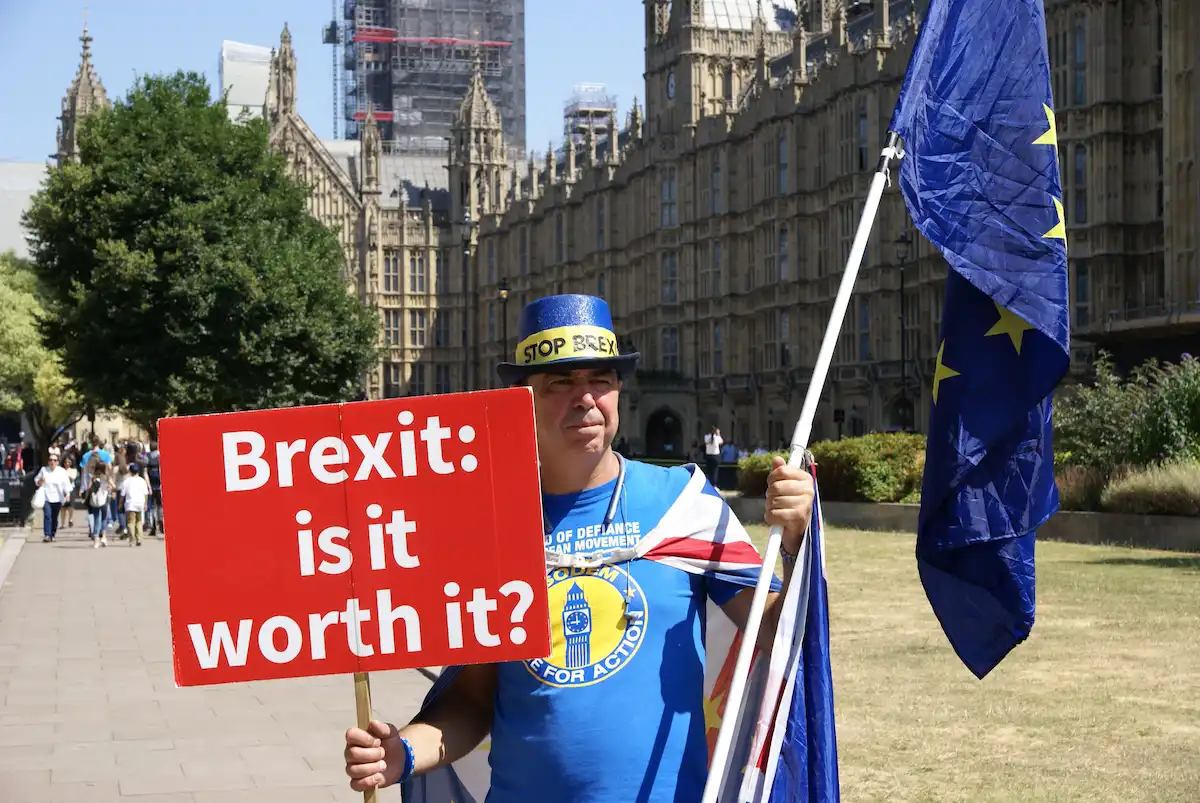
Ten years after Britain voted to leave the European Union on 23 June 2016, the country finds itself marking the anniversary in characteristically turbulent fashion. Keir Starmer’s resignation as prime minister this week, after just two years in office, has brought the total to seven prime ministers since David Cameron stepped down in the referendum’s immediate aftermath. What was once an aberration now feels like a structural feature of British politics. Brexit did not invent the country’s divisions, but it widened and hardened them into semi-permanent fault lines that make stable governance elusive.
The referendum exposed and accelerated deep cleavages: between graduates and non-graduates, cosmopolitan cities and post-industrial towns, London and the regions, and cultural liberals and social conservatives. These were not new, but the binary choice of Leave or Remain turned them into identities that reshaped party allegiance. The Conservative Party, traditionally the party of business and stability, became consumed by Euroscepticism. Labour, under Jeremy Corbyn, struggled to reconcile its metropolitan base with its working-class heartlands. Both parties have since fractured further.
The political consequences have been dramatic. The share of the vote captured by the two main parties has declined sharply. In 2019, Conservatives and Labour together took 76% of the popular vote; by 2024 that had fallen to around 58%, with further erosion since. Nigel Farage’s Reform UK has capitalised on disaffected Leave voters, particularly in the North and Midlands, blending hardline immigration control, net-zero scepticism, and anti-establishment rhetoric. On the left, the Greens have made gains. The result is a multi-party system squeezed into a first-past-the-post electoral framework designed for two-party dominance.
This fragmentation has produced chronic instability. Since 2016, Britain has had Theresa May, Boris Johnson, Liz Truss, Rishi Sunak, Keir Starmer — and now almost certainly Andy Burnham or another successor. No leader since Cameron has served a full term. Brexit consumed May’s premiership. Johnson won a large majority in 2019 by “getting Brexit done,” yet his government was defined by chaos. Truss’s brief, disastrous tenure showed how markets punish perceived radicalism. Starmer’s Labour restored some stability after 14 years of Tory rule but could not escape the gravitational pull of regional discontent, living-cost pressures, and Reform’s rise.
Economically, the picture is sobering. Serious studies now estimate that Brexit has reduced UK GDP by 6-8% relative to what it would otherwise have been, with trade frictions, reduced investment, and regulatory divergence taking a cumulative toll.
Britain has adapted, but adaptation is not the same as prosperity. Productivity growth remains weak, regional inequalities stubborn, and public services stretched. Many Leave voters feel their concerns about sovereignty and immigration were legitimate, yet the promised economic dividend has not materialised. A majority of Britons now view Brexit as a mistake, though rejoining the EU remains politically distant.
The deeper damage is institutional and cultural. Brexit hardened parliamentary tribalism and exposed the limitations of Britain’s uncodified constitution. It strained the Union, particularly in Scotland and Northern Ireland. It turned every policy debate — from trade deals to immigration and regulation — into a proxy battle over the meaning of 2016. Even attempts at “reset” with the EU under Starmer became politically fraught. The rise of Reform shows that the Brexit divide endures, even as the original Leave-Remain split evolves into new cleavages over globalisation, identity, and competence.
Yet Britain’s malaise is not solely attributable to Brexit. The financial crisis, austerity, the pandemic, and global populist trends all played a part. First-past-the-post exacerbates volatility by punishing mainstream parties while allowing insurgent forces to punch above their weight in specific seats. Social media and a frenetic news cycle reward confrontation. Nevertheless, the referendum acted as a catalyst that made these problems harder to manage. It realigned politics around identity and place rather than traditional class lines, leaving both major parties as uneasy coalitions.
What lies ahead? A new government, most probably led by Burnham may attempt a more interventionist, regionally focused approach to rebuild trust in the Red Wall. Closer EU cooperation on trade and security is likely, but full rejoining is improbable in the near term. The real test will be whether Britain can achieve a new political settlement. Possibilities include further realignment — perhaps a merger or understanding on the right between Conservatives and Reform — or modest electoral reform to better reflect a multi-party reality. Without such adjustments, Britain risks a prolonged period of weak governments, policy whiplash, and voter disillusionment.
A decade on, Brexit’s greatest legacy is not sovereignty regained or lost, but a country that remains unsettled with itself. The referendum forced Britain to confront fundamental questions about its identity and place in the world. Resolving them will require more than a change of leader. It demands a politics capable of bridging the fault lines that the vote so starkly revealed. For now, the revolving door at Downing Street continues to spin.


