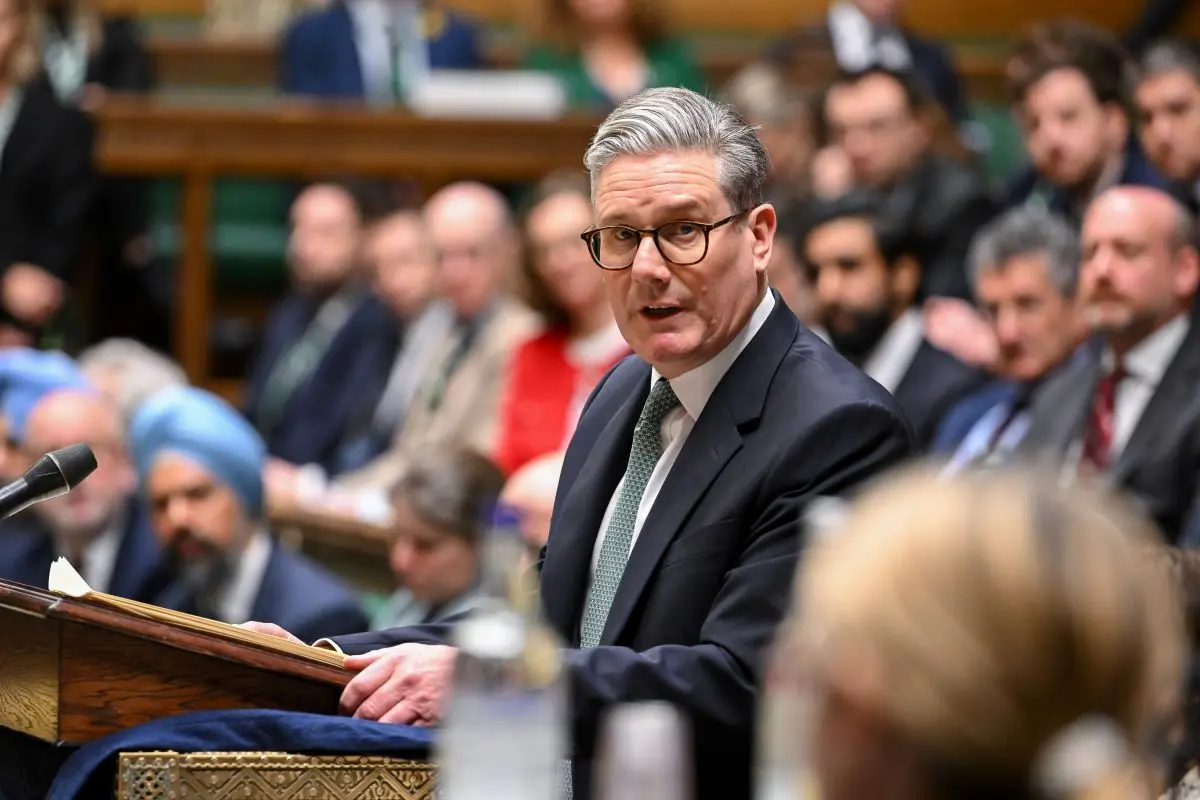
Sir Keir Starmer stood outside 10 Downing Street and announced his resignation as Labour leader and prime minister today. Barely two years after leading his party to a landslide victory that ended 14 years of Conservative rule, he conceded to an internal revolt. He will remain in office as a caretaker until a successor—widely expected to be Andy Burnham—is chosen later this summer. Britain now braces for its seventh prime minister in roughly a decade.
The end came swiftly once the parliamentary party turned. Starmer had clung on through months of discontent, insisting on his 2024 mandate and warning that a leadership contest would bring chaos. Yet Andy Burnham’s emphatic victory in the Makerfield by-election four days earlier proved decisive. The former mayor of Greater Manchester secured 55% of the vote and a majority of over 9,200, holding a classic Red Wall seat against a strong challenge from Nigel Farage’s Reform UK. The result was framed as Labour’s “last chance to change.” With Burnham returning to the Commons, dozens of Labour MPs shifted allegiance. Facing the prospect of a formal challenge he could not win, Starmer bowed to the inevitable.
How the Rot Set In
Starmer entered No 10 in July 2024 promising stability and “national renewal” after the convulsions of the Brexit era and successive Tory premierships. His government steadied some immediate crises: settling public-sector strikes, launching Great British Energy, tightening border security measures that contributed to a fall in small-boat crossings, and passing an Employment Rights Bill hailed as the biggest upgrade to workers’ protections in a generation. Real wages for the low-paid rose, and there were moves to address child poverty.
Yet these achievements were overshadowed by persistent failures and missteps. Economic growth remained sluggish. Living costs—particularly energy and water bills—stayed painfully high. Fiscal caution collided with voter expectations, producing unpopular decisions such as cuts to winter fuel payments for pensioners and awkward U-turns on welfare and tax policy. A string of controversies damaged trust: the appointment of Peter Mandelson as ambassador to Washington, despite past links to Jeffrey Epstein, revived accusations of sleaze. Policy flip-flops and a sense of managerial caution without bold delivery alienated both the party’s left and its newly won centrist and northern voters.
Reform UK’s rise in post-industrial towns exposed Labour’s vulnerability on immigration and cultural issues. Heavy losses in the May 2026 local elections, in which Labour shed hundreds of seats, turned unease into open panic. Backbench and cabinet voices grew louder. Burnham, who had cultivated a reputation for pragmatic regional leadership in Greater Manchester, positioned himself as the man who could reconnect with the party’s traditional base. By the time he won Makerfield, the momentum was unstoppable.
A Decade of Instability
Starmer’s departure underscores a deeper malaise in British politics. Since David Cameron’s resignation in 2016 following the Brexit referendum, the country has churned through leaders at an alarming rate: Theresa May, Boris Johnson, Liz Truss, Rishi Sunak, and now Starmer. The reasons are structural as much as personal. Brexit fractured both main parties and exposed tensions between London and the regions, globalist economics and national sovereignty, and cultural conservatives and liberals. First-past-the-post elections amplify swings, while a fragmented media and short-termist 24-hour news cycle reward drama over delivery.
Weak majorities or narrow ones, combined with rebellious backbenches and powerful external pressures—from markets to populist challengers—have made sustained governance difficult. Voters, exhausted by the carousel, crave competence but punish perceived weakness or elitism. The result is a self-reinforcing cycle of high hopes followed by rapid disillusionment.
What Lies Ahead
A Burnham premiership would mark a leftward shift in tone if not necessarily in radical policy. He promises an end to “trickle-down economics,” greater emphasis on regional devolution, and tangible relief on household bills. His appeal rests on authenticity and a track record in the North. Yet he inherits the same structural problems: anaemic growth, strained public finances, an assertive Reform UK, and a watchful financial establishment wary of higher borrowing.
The leadership contest, with nominations opening in early July, may also draw in figures such as Wes Streeting. Whoever wins will likely face pressure for an early election to secure a fresh mandate, though economic and fiscal realities may counsel delay. For Britain’s international partners, the immediate question is continuity: can any new leader restore predictability in foreign policy and economic management?
Starmer’s tenure was shorter than many hoped but longer than his harshest critics predicted. He restored Labour’s electability after the Corbyn years and delivered a historic majority, yet struggled to translate it into a sense of national momentum. His graceful exit speech, emphasising service to country and family, reflected the decency that first recommended him. But decency alone proved insufficient in an unforgiving political climate.
Britain’s political instability is not solely the fault of individuals; it reflects a country still grappling with its post-Brexit identity, regional divides, and the tensions between short-term democratic pressures and long-term governing challenges. The next prime minister will discover, as Starmer did, that steadying the ship in such turbulent waters is a formidable task. For now, the revolving door at No 10 continues to turn.