The United States is deploying thousands more Marines and sailors to the Middle East, even as President Donald Trump indicated his administration is considering “winding down” military operations against Iran, highlighting the contradictory messages emanating from Washington as the conflict enters its fourth week.
The Pentagon announced the movement of the USS Boxer amphibious assault ship, accompanied by its Marine Expeditionary Unit and supporting warships, to the region. Officials confirmed that this deployment, rerouted and accelerated from other theatres, would add roughly 2,500 to 4,500 personnel to the approximately 50,000 US troops already stationed in the Middle East. The reinforcements include elements from two Marine Expeditionary Units, with one expected to arrive imminently.
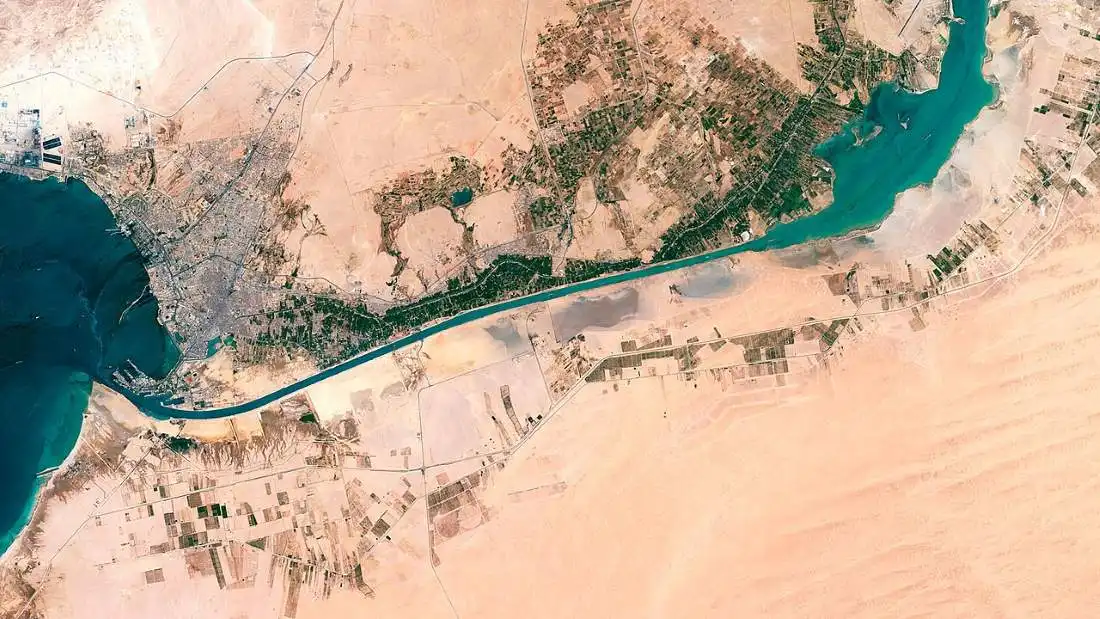
This escalation comes despite President Trump’s public statements suggesting a potential de-escalation. In a post on his social media platform, Mr Trump wrote that the US was “getting very close to meeting our objectives” and was considering “winding down our great Military efforts in the Middle East with respect to the Terrorist Regime of Iran.” Such remarks contrast sharply with the ongoing military buildup, which defence sources describe as providing options to secure vital maritime routes, including the Strait of Hormuz, amid fears of Iranian disruption to global energy supplies.
The conflict, which erupted on 28 February with joint US-Israeli airstrikes that killed Iran’s Supreme Leader Ali Khamenei and other senior officials, shows no immediate signs of abating. Israel has conducted deep strikes into Iranian territory, targeting naval headquarters, missile production facilities, energy infrastructure such as the South Pars gas field, and military sites near Tehran. In response, Iran has launched repeated missile and drone barrages at Israel, US bases, and allied nations in the Gulf, including Saudi Arabia, Bahrain, Kuwait, Qatar, and the United Arab Emirates.
Casualties continue to mount. Iranian state media and opposition sources report more than 1,300 deaths in Iran, with millions displaced. In Lebanon, where Israeli operations against Hezbollah have intensified, over 1,000 people have been killed and widespread displacement reported. Israel has recorded 15 fatalities from Iranian attacks, while the US has confirmed 13 military personnel killed in the region. No comprehensive independent verification of figures is available due to restricted access.
On Saturday, air raid sirens sounded across Israel as the military intercepted incoming missiles from Iran. The Israeli Defence Forces announced strikes on targets in Tehran and Hezbollah positions in Beirut’s southern suburbs, renewing evacuation warnings for several neighbourhoods. Residents reported gunfire used to alert families to flee. No immediate casualties were confirmed from the latest exchanges.
Elsewhere, an Iraqi security official reported that a drone struck the headquarters of the National Intelligence Service in Baghdad’s Mansour district. General Saad Maan, head of the Iraqi Security Media Cell, provided no further details, and no group has claimed responsibility.
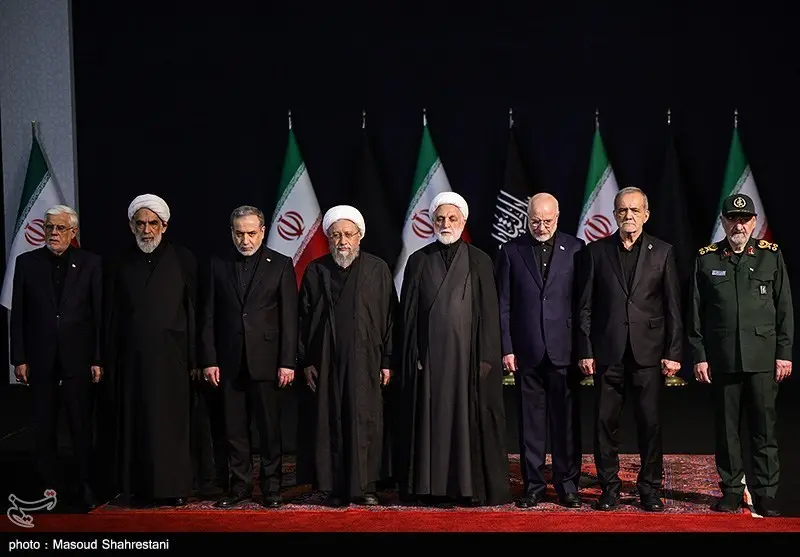
Iranian President Masoud Pezeshkian, in a social media post on Saturday, stated that his country “doesn’t have any dispute” with its neighbours, asserting that “the only beneficiary of our differences is the Zionist entity,” a reference to Israel. Earlier statements from Pezeshkian have included apologies to Gulf neighbours for strikes that affected them, while emphasising that Iran would not target countries unless attacks originated from their territory.
Iran held funeral services in Qom on Saturday for Minister of Intelligence Esmail Khatib, killed in an Israeli strike last week, and for Revolutionary Guard spokesperson Ali Mohammad Naini, who died in a separate attack. State television broadcast footage of prayers and processions in the holy city, a significant centre for Shiite scholarship.
The war has increasingly targeted energy infrastructure, prompting sharp fluctuations in global oil markets. Brent crude, the international benchmark, has surged from around $70 per barrel before the conflict to highs near $119.50 earlier this week, settling recently around $112 per barrel amid ongoing volatility. Disruptions in the Strait of Hormuz, through which a significant portion of world oil passes, and attacks on Gulf facilities have fuelled fears of prolonged supply shortages.
In response to soaring fuel costs, the Trump administration announced it would lift sanctions on Iranian oil cargoes loaded on ships, a measure aimed at easing pressure on global markets. South Korea’s Foreign Ministry confirmed it was engaged in “multifaceted” talks with Iran and other parties to protect citizens and secure energy transport routes. Iranian Foreign Minister Abbas Araghchi told Japan’s Kyodo news agency that Tehran was prepared to facilitate passage for Japanese vessels through the Strait of Hormuz, with negotiations ongoing.
The economic fallout has rippled through industries reliant on fuel. United Airlines chief executive Scott Kirby informed employees that jet fuel prices, which have more than doubled in recent weeks, could add $11 billion annually to costs if sustained. The company is preparing scenarios where oil reaches $175 per barrel and does not return to $100 until late next year. Mr Kirby noted there was “a good chance it won’t be that bad,” but emphasised the prudence of planning for worst-case outcomes.
Saudi Arabia reported intercepting 20 drones in its eastern province, home to critical oil installations, with no injuries or damage. The defence ministry attributed the attack to Iranian-backed forces, though no immediate claim was made.The broader regional impact includes Houthi statements from Yemen indicating readiness to target vessels from “aggressor countries” in support of Iran, though their involvement has remained limited compared to earlier conflicts.
Analysts note the mixed signals from Washington reflect internal deliberations on how to balance military pressure with economic considerations. The deployment of additional forces provides flexibility for operations to protect shipping lanes, but risks further entrenching the US in a prolonged engagement that Mr Trump has historically criticised.
As strikes and counter-strikes continue, diplomatic channels remain strained. South Korea and Japan are among nations seeking assurances for safe passage, while Gulf states grapple with the dual threats of Iranian retaliation and economic disruption from elevated energy prices.
The conflict’s trajectory remains uncertain, with both sides inflicting significant damage but neither achieving decisive gains. Oil markets, stock exchanges, and civilian populations across the region continue to bear the brunt of the escalation.