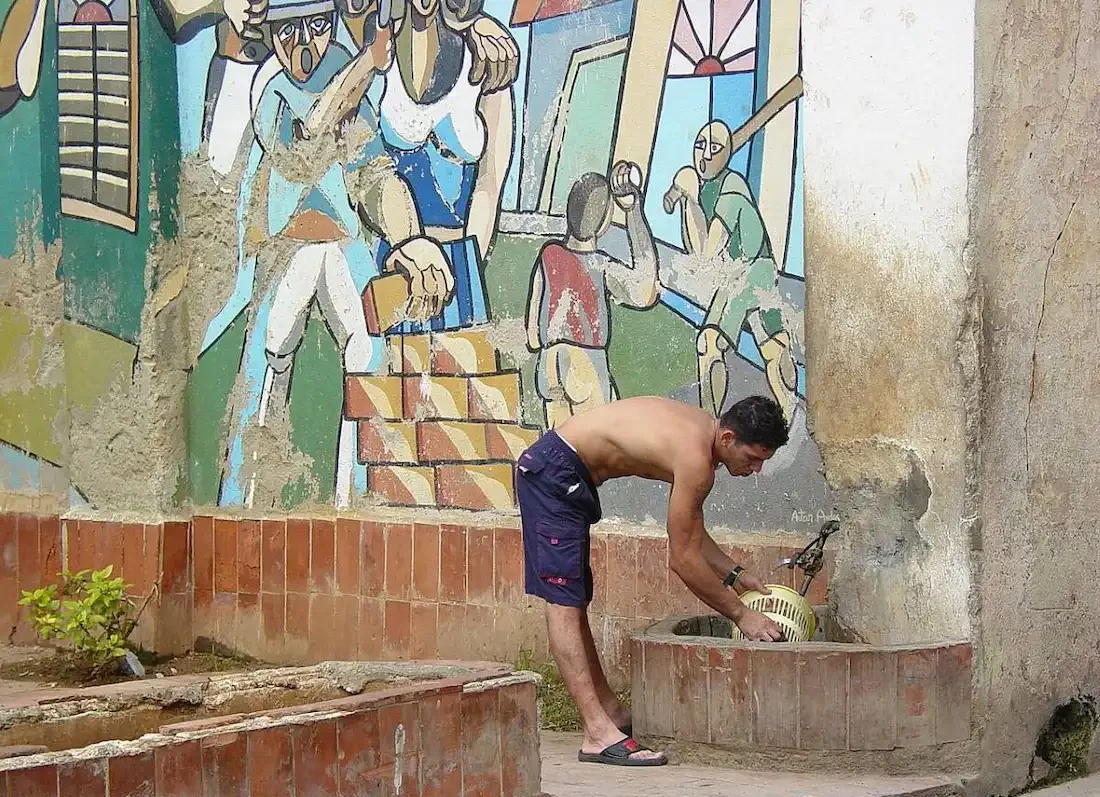
In the sweltering streets of Havana, residents queue for hours with buckets and jerry cans as ageing tanker trucks, known as pipas, deliver irregular supplies of water. What used to be a persistent nuisance has escalated into a severe daily ordeal. Across the Caribbean island, water shortages have intensified dramatically in recent months, driven by a collapsing energy system that can no longer keep the pumps running. For a nation of about 11 million people, this is more than a technical glitch: it is the visible symptom of intertwined economic, infrastructural, and political crises.
Cuba’s water supply depends overwhelmingly on electricity. Roughly 84% of its pumping stations require power to draw from aquifers, reservoirs, and treatment plants and push treated water through the network. When the grid falters, taps run dry. Decades-old pipes leak prodigiously—often 40-50% or more of water is lost before it reaches homes—while treatment and distribution systems suffer from chronic under-maintenance. In normal times these weaknesses already strained supply. Today, they have become critical.
Responsibility for this water crisis is layered. The immediate catalyst is the sharp cut in fuel imports precipitated by US policy. Washington’s measures, aimed explicitly at increasing pressure on the Cuban government, have acted as a powerful accelerant. American officials argue that such steps are justified by Cuba’s political repression, human-rights record, and alignment with adversaries. UN human-rights experts have criticised the approach as “energy starvation,” warning of its severe effects on access to water, health, and food.
Cuba produces only around 40% of the oil it needs and has long relied on imports, chiefly from Venezuela in exchange for medical and other services. That arrangement unravelled after political upheaval in Venezuela, including the removal of Nicolás Maduro, and subsequent American actions. In early 2026, the United States imposed measures widely described as an “oil blockade”: threats of tariffs on third countries supplying fuel, combined with direct pressure on shipments. Mexico suspended deliveries. Remaining imports dwindled to a trickle. By mid-May, Cuba’s energy minister announced that reserves of diesel and fuel oil had been exhausted. Power plants, many of them obsolete Soviet-era relics prone to breakdowns, now operate far below capacity. Blackouts lasting 20 hours or more have become routine; the national grid has suffered repeated total collapses.
Without reliable electricity, water systems grind to a halt. Sanitation falters. Hospitals ration supplies. Farms struggle to irrigate. The United Nations and aid agencies report that up to a million or more people now depend on trucked water, a stopgap itself hampered by diesel shortages. In a tropical climate already prone to disease outbreaks, the risks to public health are rising.
Responsibility for this predicament is shared, though the balance is fiercely contested. The Cuban government points squarely at external pressure, particularly the long-standing American embargo—tightened under the current administration with the explicit goal of encouraging political change. Washington maintains that Havana’s alignment with adversarial states, domestic repression, and economic mismanagement justify the squeeze. There is little doubt that the recent escalation in fuel restrictions has acted as a powerful accelerant.
Yet the crisis also exposes profound, long-standing domestic failures for which the Cuban government is accountable. Decades of centralised economic management have produced chronic underinvestment in both energy and water infrastructure. Power plants and water networks have not been modernised at the pace required. Resistance to meaningful market-oriented reforms has left the economy brittle and overly reliant on a few external patrons—first the Soviet Union, then Venezuela. Even when external support was available, it often masked rather than fixed structural weaknesses such as inefficiency, corruption, and a bloated state sector. Environmental factors, including droughts and saline intrusion into aquifers, add pressure, but they are secondary to governance and maintenance shortcomings.
For ordinary Cubans, the consequences are immediate and grinding. Families ration every drop, improvise storage, and sometimes treat questionable water. Small private initiatives—selling filtered supplies or digging wells—have emerged where possible, but they cannot substitute for systemic failure. Youthful emigration continues, draining talent and labour. Public frustration has sparked occasional protests, though tight security keeps them contained.
The regime in Havana insists that lifting the “blockade” would unlock recovery. American officials counter that meaningful reform in Cuba must come first. In truth, both the external constraints and internal governance failures matter. Limited private-sector openings and tourism have provided some relief in the past, but they have not offset the decay in core state services.
As reservoirs of fuel—and public patience—dwindle, Cuba faces a punishing summer. Water, like electricity, is a foundation of modern life. Its absence strips away dignity, productivity, and hope. International observers watch warily: a full humanitarian collapse could trigger fresh migration waves and regional instability. For now, the island’s citizens bear the cost of a crisis whose causes are both imported and home-grown. Without pragmatic economic restructuring at home and a less confrontational path abroad, the queues for water may become a lasting emblem of Cuba’s predicament.