To the casual outsider, Hungary—or Magyarország, the Land of the Magyars—might seem like just another Central European country, sandwiched between Austria and Romania, known for Budapest’s thermal baths, potent pálinka, and perhaps a footballing past. Yet scratch the surface and you find one of Europe’s most singular nations: a people whose Finno-Ugric language sets them linguistically adrift among Slavs, Germans, and Latins; a history of conquest, survival, and reinvention; and a society that has produced Nobel laureates and Rubik’s Cubes in enviable per-capita abundance.
From Steppe Warriors to Christian Kingdom
The Magyars arrived in the Carpathian Basin around the end of the 9th century, a confederation of tribes led by Árpád, sweeping in from the Pontic-Caspian steppe. These horse-borne warriors raided as far as Spain and Constantinople before settling. Their descendants like to note the “double conquest” theory linking them to earlier Avars or even echoes of the Huns under Attila—whose name still stirs national myth.In 1000, Stephen I (Szent István) was crowned the first king, forging a Christian kingdom that anchored Hungary in Western Europe. He suppressed pagan holdouts, built churches, and established the administrative framework that endured for centuries. The Árpád dynasty’s realm became a medieval powerhouse, its Golden Bull of 1222—one of Europe’s earliest constitutional documents—curbing royal power centuries before similar charters elsewhere.
Mongol hordes devastated the land in 1241–42, but recovery followed. Kings like Matthias Corvinus (r. 1458–1490) turned Buda into a Renaissance jewel, his Bibliotheca Corviniana rivalled only by the Vatican’s collections. Hungarian forces under John Hunyadi checked the Ottomans at Belgrade in 1456. Yet the tide turned at Mohács in 1526: a crushing defeat that ushered in 150 years of Ottoman occupation in the centre, Habsburg rule in the west, and semi-autonomous Transylvania in the east.
Empire, Dismemberment, and Rebirth
Liberation from the Ottomans led to Habsburg dominance. The 1848 revolution, led by the poet Sándor Petőfi and Lajos Kossuth, was a romantic blaze of liberal nationalism swiftly crushed—yet it seeded modern Hungarian identity. The 1867 Compromise created the Dual Monarchy of Austria-Hungary, a glittering if fractious power that punched above its weight until the guns of 1914.
The Treaty of Trianon in 1920 was the national trauma: Hungary lost 71% of its territory and a third of its ethnic Hungarians to new neighbours. This “Trianon syndrome” still colours politics and memory. Interwar revisionism, alliance with the Axis, and devastation in World War II followed. Soviet occupation brought a communist regime, brutal Stalinist years under Mátyás Rákosi, and the heroic but doomed 1956 revolution—crushed by Soviet tanks yet immortalised as a beacon of anti-totalitarian defiance.
The Kádár era offered “goulash communism”: a softer authoritarianism with modest consumer goods and relative tolerance. By 1989, Hungary played a pivotal role in the collapse of the Iron Curtain, literally cutting the barbed wire on its Austrian border, allowing East Germans to flee west. The Third Republic joined NATO and the EU, embracing markets and democracy.
Society and the Magyar Character
Hungarians number around 9.5 million in a landlocked country of plains, hills, and the Danube’s sweep. Ethnically homogeneous by European standards (with a notable Romani minority), they guard a language that sounds like nothing else on the continent—full of vowel harmony and agglutination that delights linguists and confounds visitors.
Traditional society was rural and communal. Village life revolved around agriculture, with folk costumes, embroidered motifs, and dances like the fiery csárdás still performed at festivals. Easter water-pouring rituals (echoing pagan fertility rites) and Busójárás carnival in Mohács—where horned, fur-clad “busós” scare away winter—preserve pagan-Christian blends. Christmas retains family rituals; name days often trump birthdays.
Many old ways have faded with urbanisation and globalisation: collective farm life, certain harvest rites, and large multi-generational households. Yet Hungarians remain proudly hospitable, with a wry, sometimes mordant humour born of surviving empires and dictators. Coffee houses in Budapest buzz with debate; thermal baths serve as social equalisers where pensioners and youths alike soak in mineral-rich waters.
Cuisine is robust: paprika-laden stews (gulyás), goose liver, and strudel reflect Turkish, Austrian, and local influences. Wine regions like Tokaj (whose “nectar of kings” was praised by Louis XIV) and emerging craft beers show revival.
Intellectual life thrives disproportionately: Hungary claims an outsized share of Nobel laureates relative to population, from Albert Szent-Györgyi (vitamin C) to more recent winners like Katalin Karikó (mRNA technology). Inventors gave the world the ballpoint pen (László Bíró), the Rubik’s Cube, and contributions from John von Neumann in computing.
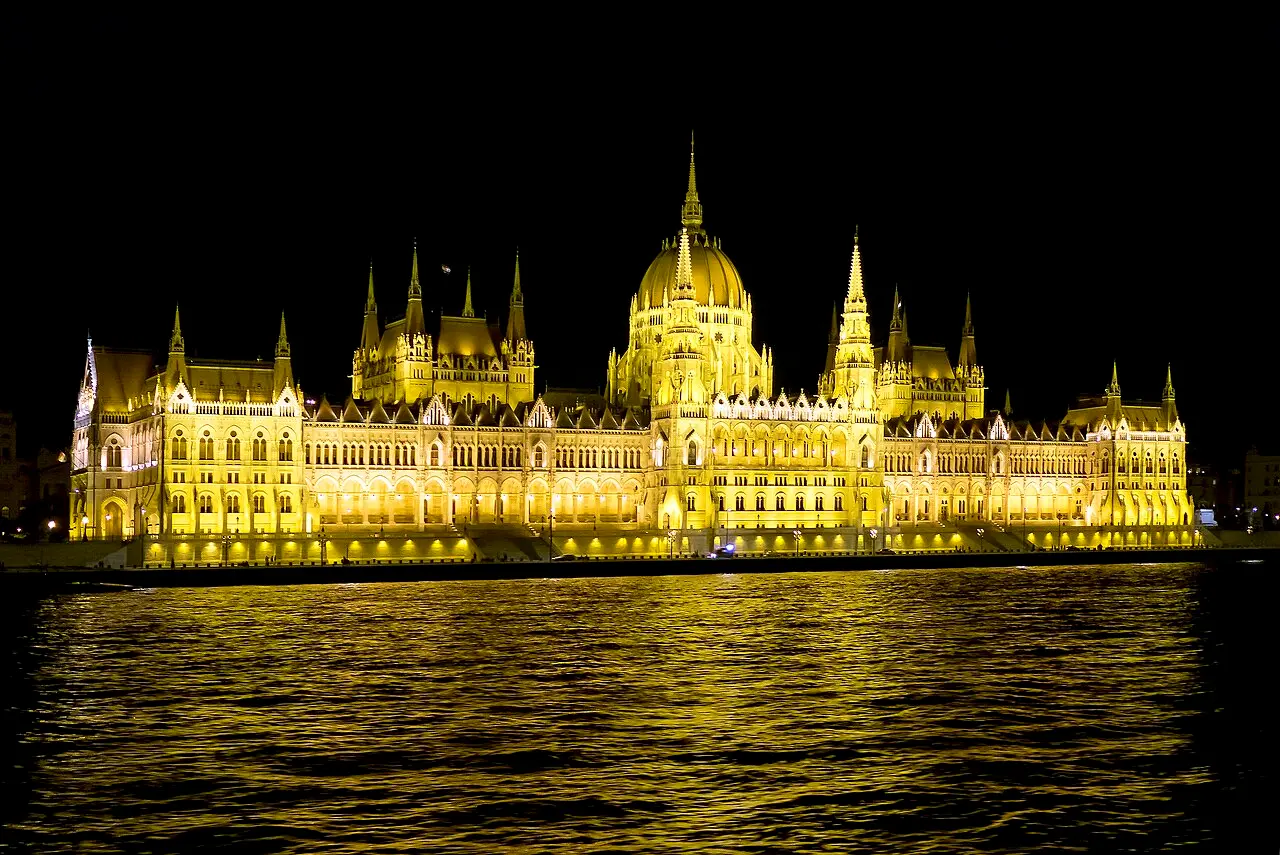
Budapest, the “Queen of the Danube,” remains the magnet: Buda’s hills with Matthias Church and the Fisherman’s Bastion; Pest’s neo-Gothic Parliament (one of the world’s largest); the ruin bars of District VII where Soviet-era decay meets hipster ingenuity; and the Széchenyi Baths, where outdoor chess persists even in winter steam.
Politics: Democracy’s Pendulum
Hungary is a parliamentary republic with a unicameral National Assembly. After the post-communist transition, Viktor Orbán’s Fidesz dominated politics from 2010, building what he termed an “illiberal democracy” — centralising power, championing national sovereignty, and frequently clashing with the EU over rule of law, migration, and values. Supporters credited the era with stability, family policies, and resistance to external overreach; critics warned of democratic backsliding and institutional capture.
In 2026, voters delivered a decisive shift, handing Péter Magyar’s Tisza Party a landslide victory and a two-thirds parliamentary majority, ending 16 years of Fidesz rule. The episode underscored a recurring theme in Hungarian history: the electorate’s capacity for sharp course corrections at the ballot box.
Whatever the flavour of government, Hungary’s political system remains anchored in competitive elections and European integration, even as it grapples with questions of identity, sovereignty, and its place in the EU.
Enduring Spirit
Hungary’s story is one of improbable endurance: nomadic horsemen who became a bulwark of Christendom, a kingdom dismembered yet culturally intact, a society that laughs in the face of history’s blows. Its people have traded conquest for ingenuity, empire for EU membership, and successive regimes for fresh democratic promise. In a continent often homogenised, Hungary’s distinct tongue, thermal wonderlands, and restless creativity offer a vivid reminder that small nations can shape the wider world—through music (Liszt, Bartók), intellect, and sheer stubborn grace. For outsiders and Magyars alike, it repays the journey.