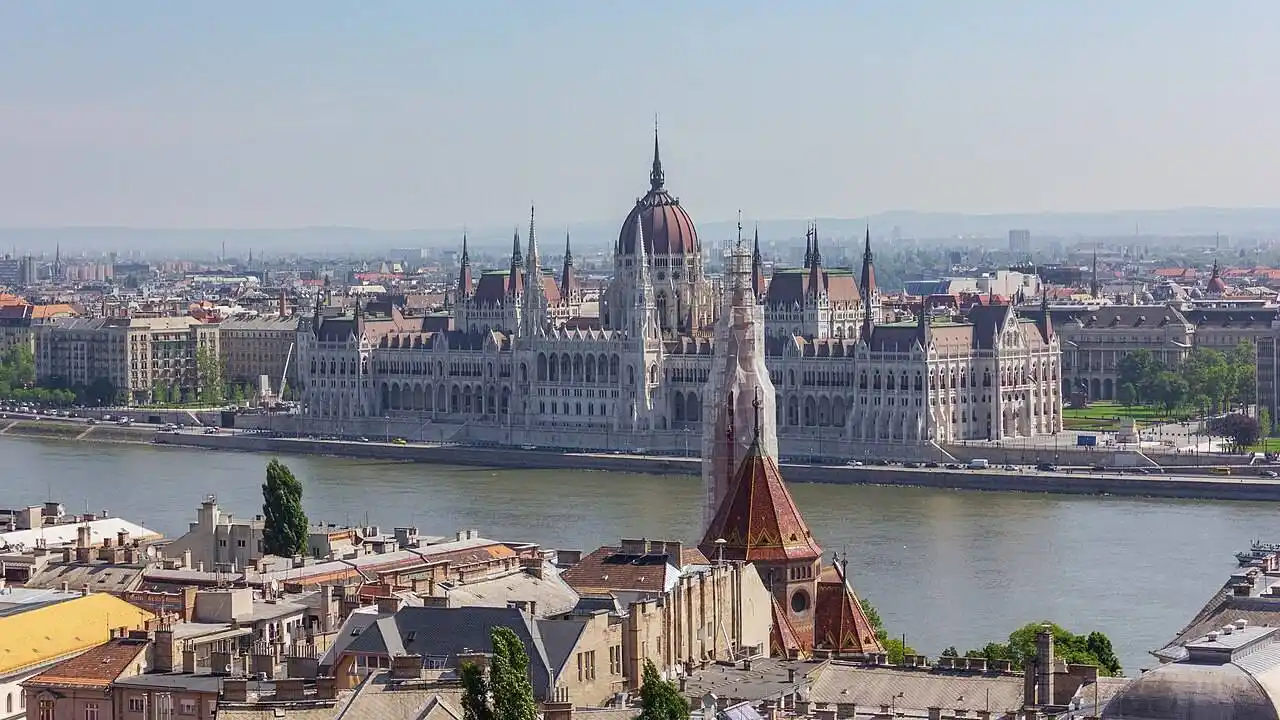
In a parliamentary vote on May 27th, Hungary’s lawmakers decided by a comfortable margin to keep the country inside the International Criminal Court. The move reverses a withdrawal process started last year by Viktor Orbán’s government, which had been set to make Hungary the first European Union member to quit the Hague-based tribunal. For a nation better known to many outsiders for thermal baths, paprika-laced cuisine, and a combative prime minister, this decision carries more weight than it might first appear.
The International Criminal Court, established in 2002 under the Rome Statute, is the world’s only permanent court with jurisdiction to prosecute individuals for genocide, war crimes, crimes against humanity, and aggression. It was designed as a backstop for when national courts cannot or will not act. Hungary was an early signatory; Mr Orbán himself backed ratification during an earlier stint in power. Yet in April 2025, during a high-profile visit by Israel’s Benjamin Netanyahu—who faces an ICC arrest warrant over alleged crimes in Gaza—Hungary announced its intention to leave, citing the court’s alleged political bias.
The reversal, pushed through swiftly by the new prime minister, Péter Magyar, and his Tisza party, passed with 133 votes in favour and 37 against. It comes just days before the withdrawal would have taken legal effect on June 2nd. The episode illuminates both Hungary’s turbulent domestic politics and the shifting currents of European geopolitics.
Domestic Realignment
To understand the significance, one must grasp Hungary’s recent political earthquake. For 16 years, Viktor Orbán dominated the country with a mix of nationalist rhetoric, centralised power, family-friendly policies, and frequent clashes with Brussels. His Fidesz party framed the ICC withdrawal as a defence of sovereignty against a meddlesome international institution that dared target allies like Israel.Mr Magyar, a former Orbán ally turned fierce critic, swept to power in April 2026 with a landslide victory, securing a two-thirds majority. His campaign promised a more pro-European course without abandoning Hungarian interests. The fast-tracked ICC vote is among his first major acts: a pointed repudiation of his predecessor’s style as much as the substance.
For Hungarians, the decision carries symbolic weight. It suggests a government less inclined to pick fights with European institutions and more focused on reintegrating the country into the Western mainstream. Yet opposition voices from the Orbán camp decry it as weakness—another concession to “globalist” pressures. The parliamentary arithmetic shows Mr Magyar’s command, but the depth of societal division remains. Hungary’s politics, long polarised, now feature a fresh contest between sovereigntist nationalism and pragmatic Europeanism.
Geopolitical Ripples
The move carries broader implications. Had Hungary left, it would have stood alone among EU members, joining the likes of America, China, Russia, and Israel in rejecting the court’s authority. That isolation risked complicating Hungary’s EU relations further, especially as membership in the ICC is often seen as aligned with European values and is a de facto expectation for serious integration.
By reversing course, Hungary signals a desire to mend fences in Brussels and restore some predictability in its foreign policy. It also avoids becoming an outlier in a bloc that prides itself on support for international justice. European officials quietly welcome the shift, even if few said much publicly during the original withdrawal.
The timing is telling. The original exit was tied to solidarity with Israel and scepticism of the ICC’s handling of the Gaza conflict. Staying in the court does not mean Hungary will eagerly arrest high-profile figures, but it recommits the country, at least on paper, to the rules-based order it once helped shape. For smaller and medium-sized nations, such institutions offer protection against great-power impunity—a logic that resonates beyond Europe’s borders.
Yet the U-turn is no panacea. Mr Magyar’s government must still navigate tricky relations with Russia, China, and energy dependencies, while delivering on domestic expectations. The ICC episode is an early test of whether the new administration can translate electoral triumph into sustained strategic repositioning.
Wider Meaning
For global observers, Hungary’s volte-face highlights how domestic political change can swiftly alter a country’s international footprint. It also underscores the resilience—and fragility—of multilateral institutions. The ICC has faced criticism from many quarters for slow proceedings, selective focus, and limited enforcement power. But its near-universal acceptance within the EU (now restored) remains a statement of values.
Hungary, a landlocked nation of roughly 9.5m people with a distinct Finno-Ugric language and a history of surviving empires, Mongol invasions, Ottoman rule, Habsburg control, and Soviet domination, has long oscillated between East and West. Its latest pivot may prove more enduring if it reflects genuine recalibration rather than mere tactical adjustment.
In reversing the ICC withdrawal, Hungary has chosen not to become the EU’s odd one out. Whether this marks the start of a broader normalisation with its European partners—or merely a tactical pause—will depend on what follows. For now, the country has stepped back from the brink, reminding the world that even in an age of nationalist resurgence, electoral politics can still reshape foreign policy in unexpected ways.