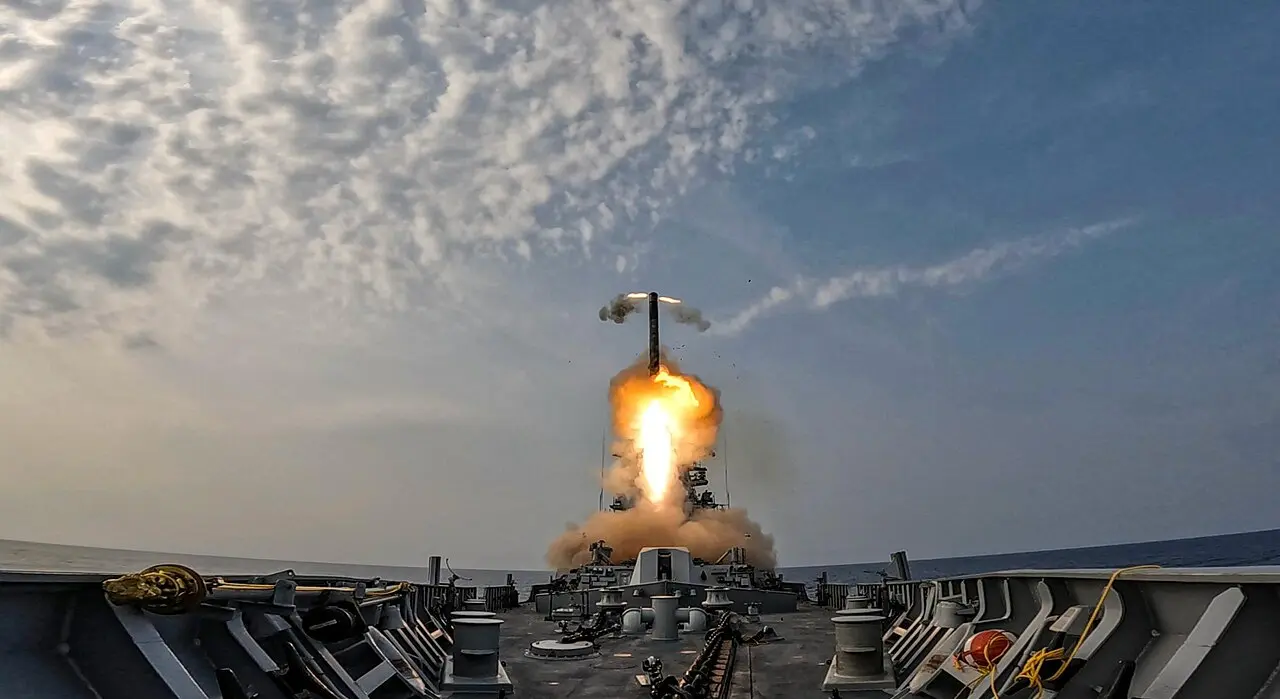
In the early hours of 7 May 2025, the Indian Air Force executed a highly precise military operation that lasted exactly 23 minutes. Indian forces struck nine targets across Pakistan and Pakistan-occupied Kashmir using precision munitions, satellite-guided weapons, and loitering drones. Indian military officials stated that the strikes successfully bypassed and jammed Pakistan’s Chinese-supplied air defence systems, demonstrating a clear technological advantage.
High-resolution commercial satellite imagery provided compelling independent verification. Images from Maxar, KawaSpace, and MizarVision, captured on 10 and 11 May, showed detailed before-and-after evidence of the strikes. At Shahbaz Air Base in Jacobabad, a major hangar on the main apron was reduced to rubble, with only minor damage to the air traffic control building. Clear craters appeared on runways at Sargodha, Rahim Yar Khan, and Nur Khan, while air defence radars at Pasrur, Chunian, and Arifwala sustained visible damage.
According to Indian defence analysts, the satellite imagery represented one of the operation’s greatest strengths. It created a rare level of accountability: every target hit and every effect achieved could be independently verified worldwide through commercial providers, turning transparency into a strategic asset.
Pakistan’s response followed a markedly different pattern. Pakistani forces used drones and heavy artillery to target religious sites inside India, including the Shambhu Temple in Jammu, a Gurdwara in Poonch, and several Christian convents. These strikes appeared intended to inflame communal tensions. In the days that followed, cross-border artillery and small arms fire intensified in Poonch, Rajouri, Kupwara, Baramulla, Uri, and Akhnoor. Heavy shelling of Poonch town killed at least 11 civilians and damaged an Islamic school along with numerous homes.
Indian officials and analysts pointed to a clear technological and doctrinal divide: India relied on integrated intelligence and precision capabilities, while Pakistan resorted to indiscriminate, long-range artillery barrages that were difficult to verify independently.
According to officials familiar with the planning, India’s success stemmed from deep inter-agency intelligence coordination. The National Technical Research Organisation used commercial satellites and Indian spy drones for real-time monitoring. The Intelligence Bureau tracked internal movements and Kashmir-based networks. Intercepted militant communications provided key details on the Pahalgam attackers. Military Intelligence and the Defence Intelligence Agency carried out target analysis. All streams were fused into a unified threats dashboard under the National Security Council, integrating inputs from R&AW, NTRO, DIA, and IB. Real-time data was shared directly with commanders. National Security Advisor Ajit Doval is reported to have personally led critical briefings with the Prime Minister, Chief of Defence Staff, and service chiefs.
This created a sophisticated technology stack — blending signals intelligence, imagery intelligence, drone surveillance, satellite data, and communications intercepts — enabling decisions based on verified, real-time intelligence.
In contrast, Pakistani retaliatory shelling resulted in 16 civilian deaths, including three women and five children, from unprovoked heavy artillery and mortar fire into civilian areas. These strikes produced casualty figures but little verifiable target information.Indian defence sources noted that the effective use of indigenous platforms added long-term strength. Systems such as the BrahMos missile, Akash air defence, SkyStriker loitering drones (co-developed with Israel’s Elbit Systems), the Nagastra-1 munition, and the fully indigenous JM-1 kamikaze drone from Johnnette Technologies performed well in combat. Several made their debut during the operation. This success is expected to boost further investment in India’s domestic defence industry.
Pakistan, heavily dependent on imported systems including JF-17 Thunders, F-16s, and reportedly a Saab 2000 Erieye AWACS, suffered substantial losses. Reports indicated that around 20 percent of its air force infrastructure was damaged or destroyed, creating reliance on foreign suppliers for replacements.
Independent commercial satellite imagery also served as a powerful check on disinformation. Despite Pakistani claims that Indian strikes hit civilian areas and mosques, killing 31 civilians, images from Maxar and other providers clearly showed precision strikes on terror infrastructure and training facilities, including logistical activity near Bahawalpur.
Strategically, Operation Sindoor challenged conventional assumptions about nuclear deterrence. By limiting strikes to terror targets and avoiding direct attacks on Pakistani military or civilian sites, India demonstrated that precision technology could achieve objectives while staying below escalation thresholds.
The operation also featured the first significant drone battle between two nuclear-armed nations. India’s layered air defences intercepted Pakistani drone swarms, while its own precision loitering munitions delivered accurate effects.
Ultimately, Operation Sindoor highlighted a growing asymmetry. India showcased verifiable precision, fused intelligence, and technological self-reliance. The same satellite systems that confirmed India’s strikes also revealed the indiscriminate impact of Pakistan’s response on religious sites, civilians, and residential areas.
In today’s conflicts, fought under constant satellite observation, precision, accountability, and indigenous capability are becoming decisive advantages. Operation Sindoor stands as a clear example of this evolving reality in modern warfare.