
In a world increasingly defined by geopolitical uncertainty, energy disruptions, supply-chain pressures, and shifting global alliances, diplomacy today is no longer limited to ceremonial meetings and official handshakes. It is becoming a powerful instrument of economic resilience, strategic security, and long-term global positioning. At a time when the world is grappling with rising fuel prices, disruptions in the Strait of Hormuz, and growing economic uncertainty stemming from geopolitical tensions in the Middle East, India’s diplomatic outreach toward Europe reflects a larger and carefully calibrated economic strategy.
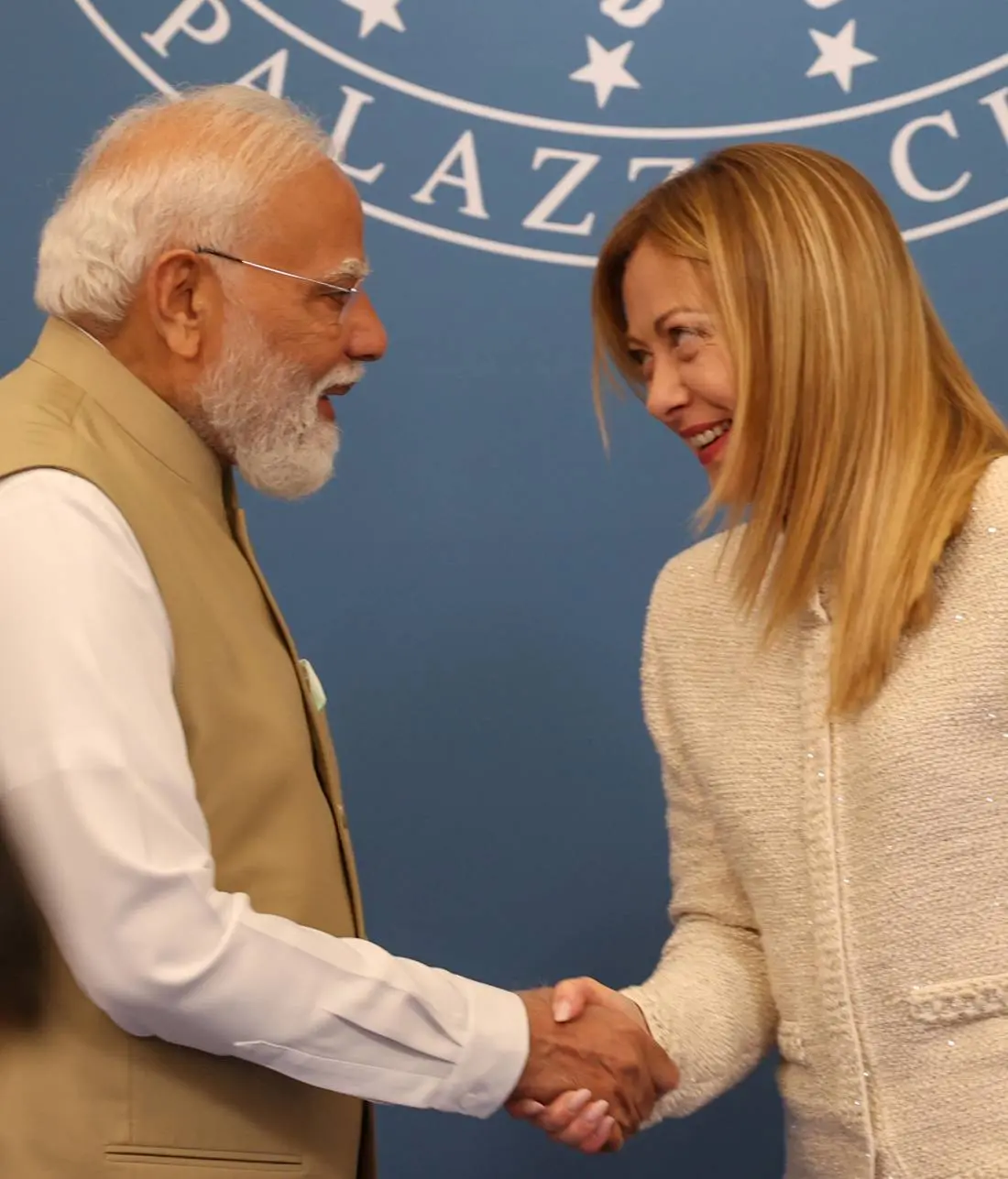
Against this backdrop, Prime Minister Narendra Modi’s recent engagement with Italian Prime Minister Giorgia Meloni has attracted significant global attention — not merely because of the warmth shared between the two leaders, popularly dubbed the “Melodi effect but because the evolving India–Italy relationship as well emerging as an important strategic partnership in the new global order.
India and Italy upgraded their ties to a special strategic partnership, firmed up a defence industrial roadmap, and vowed to expand annual trade to Euro 20 billion by 2029, as Prime Ministers Narendra Modi and Giorgia Meloni held wide-ranging talks to enhance bilateral ties, focusing on the emerging “Indo-Mediterranean” corridor, defense technology, renewable energy, and expanded trade relations in the face of increasing geopolitical upheavals. Their May 2026 meeting built directly on previous official engagements, including Modi’s visit to Italy for the G7 Summit and Meloni’s state visit to India for the G20 Summit.
The two leaders, delving into global challenges, expressed “deep concern” over the situation in West Asia and its impact on the region as well as the rest of the world, with PM Modi calling for the resolution of the conflict through dialogue and diplomacy. India and Italy have been in continuous talk over the conflict in Ukraine and West Asia to resolve the festering wars. Infact PM Modi described India-Italy relation as a “win-win partnership” and welcomed the upgradation of bilateral ties to the level of “Special Strategic Partnership”.
The partnership has significantly deepened beyond the historic 2012 diplomatic frost to address global security, counter-terrorism, and strategic connectivity across the Indo-Pacific and Mediterranean regions. Known for their warm personal rapport—affectionately termed “#Melodi” by social media—both leaders have used these state visits to solidify democratic ties and foster economic, space, and AI collaboration between New Delhi and Rome. And Italy occupies a very important place in that strategy.
Going forward, India and Italy today are moving beyond traditional diplomatic engagement toward deeper cooperation in trade, clean energy, advanced manufacturing, connectivity, defence, technology, food processing, mobility, tourism, and sustainable infrastructure. The significance of this partnership becomes even more relevant in the current global environment.
As energy markets remain volatile and global supply chains continue to face pressure, countries across the world are reassessing economic dependencies and searching for reliable strategic partners. India’s expanding engagement with Italy reflects its broader objective of building diversified economic relationships capable of supporting long-term resilience.
Italy, one of Europe’s largest industrial economies and a major manufacturing hub, offers India strong opportunities for collaboration in green technologies, industrial innovation, smart mobility, renewable energy systems, luxury manufacturing, tourism development, and infrastructure partnerships. Simultaneously, India represents for Italy one of the world’s fastest-growing large economies, a major consumer market, an emerging manufacturing destination, and a critical strategic partner in the Indo-Pacific region.This growing synergy explains why recent India–Italy engagements have moved beyond symbolic diplomacy into concrete economic cooperation.
For India, such partnerships are not only about expanding trade. They are part of a broader national strategy aimed at reducing vulnerability during global crises. Both leaders acknowledged the valuable contribution of the Indian diaspora in Italy and agreed to facilitate mobility of students, researchers and academia. They agreed to celebrate 2027 as the “Year of Culture and Tourism between India and Italy”. They welcomed the signing of MoUs between India and Italy on cooperation on development of the National Maritime Heritage Complex at Lothal, Gujarat and on recruitment of nurses from India.
Both leaders expressed their keen desire to build connectivity infrastructure through concrete projects and reaffirmed their commitment for the implementation of the India – Middle East – Europe Economic Corridor (IMEC). The India–Italy partnership fits naturally into this larger framework of economic preparedness and future-oriented cooperation.
Importantly, the relationship also carries a strong people-to-people and cultural dimension. Italy’s expertise in heritage preservation, experiential tourism, luxury hospitality, and cultural branding aligns closely with India’s growing focus on spiritual tourism, destination development, and integrated tourism infrastructure. As India continues to invest in projects related to connectivity, pilgrimage circuits, hospitality expansion, and aviation growth, collaborations with countries like Italy could unlock new possibilities for tourism-led economic development. As a matter of fact, tourism and hospitality, in particular, offer immense opportunities.
The “Melodi” narrative may have started as a light-hearted social media moment, but beneath the headlines lies a serious geopolitical reality: India and Italy are steadily building a modern strategic partnership suited for a rapidly changing world. At a time when global energy shocks, trade realignments, and geopolitical tensions continue to test economies worldwide, partnerships rooted in trust, diversification, innovation, and long-term collaboration will matter more than ever. And in this emerging global story, the India–Italy relationship may become far more significant than many currently realize.
(Dr Bhavana Rai, author of this article, is an eminent Economist. Currently, she serves as Joint Director at the FHRAI Centre of Excellence for Research in Tourism and Hospitality (CERTH), She has previously been associated with reputed institutions such as ASSOCHAM, PHD Chamber of Commerce and Industry, and the Institute of Economic Growth)