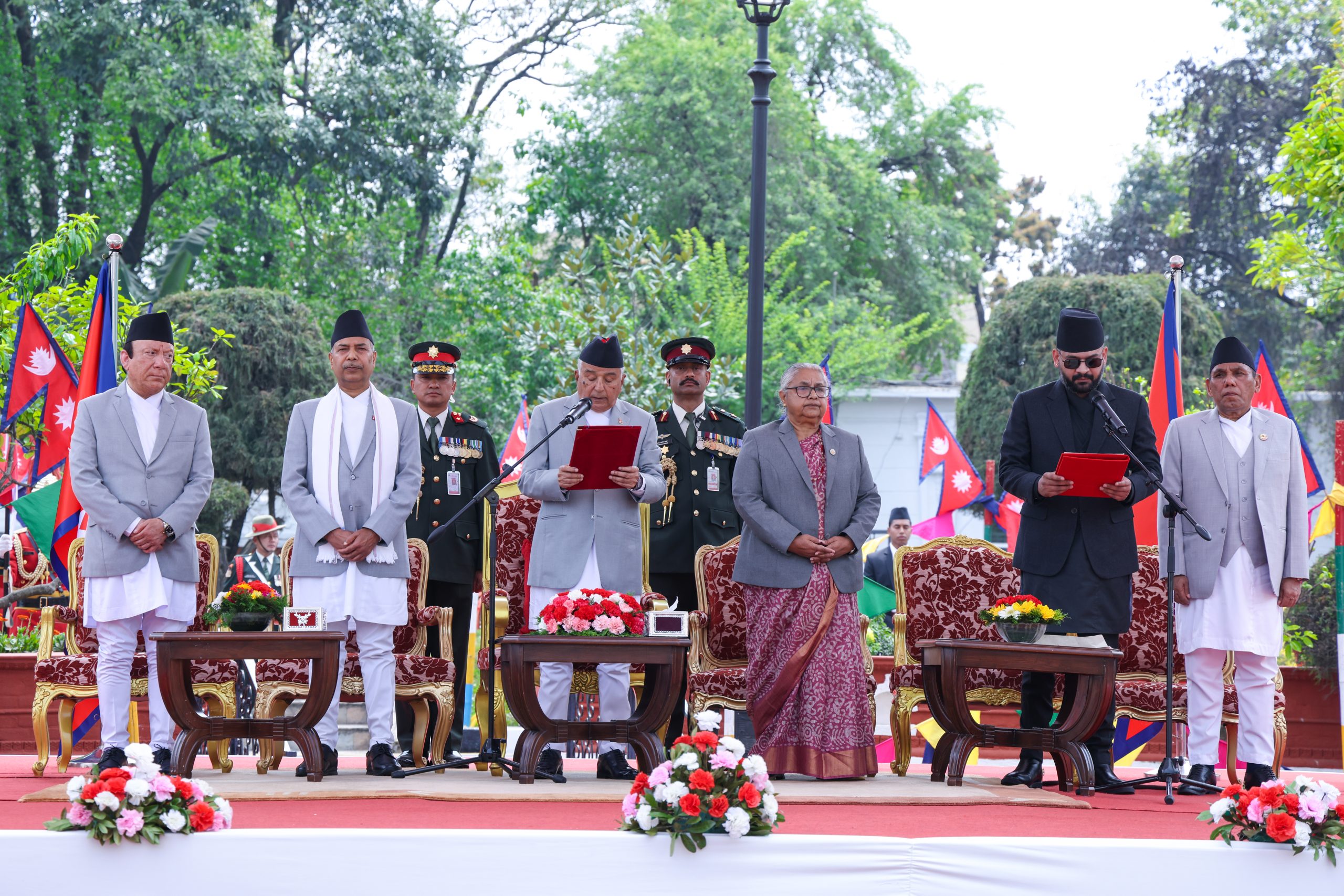
In the shadow of the Himalayas, a remarkable political earthquake has shaken Nepal. On March 27, 2026 Balendra Shah – better known as Balen, a former underground rapper and civil engineer – was sworn in as the country’s youngest-ever prime minister at the age of 35. His party, the Rastriya Swatantra Party (RSP), founded just four years ago, secured a stunning landslide victory in the March 5 general election, winning 182 seats in the 275-member parliament and delivering the first single-party majority in decades.
The swearing-in ceremony, conducted at the presidential palace in Kathmandu at an auspicious hour chosen by astrologers and attended by Hindu priests and Buddhist monks, capped one of the most dramatic chapters in Nepal’s recent history. Only six months earlier, in September 2025, Gen Z-led anti-corruption protests had erupted across the country. What began as demonstrations against a social media ban quickly spiralled into widespread unrest fuelled by deep anger over chronic corruption, youth unemployment, nepotism and economic stagnation. The protests turned deadly, with around 76–77 people killed – many of them young demonstrators shot by security forces. Government buildings, including parliament, were set ablaze, forcing the resignation of the veteran prime minister K.P. Sharma Oli and the dissolution of parliament.
Out of that chaos emerged a new political force. Balen Shah, who had first gained national attention as an independent mayor of Kathmandu in 2022, positioned himself as the voice of a frustrated generation. His blunt social media posts, fiery speeches and earlier rap lyrics skewering corrupt politicians resonated powerfully with young Nepalis tired of the same old faces cycling through power. In the election, Shah delivered a symbolic blow by defeating Oli himself in the veteran leader’s own Jhapa-5 constituency, winning more than 68,000 votes to Oli’s fewer than 19,000 – a margin of nearly 50,000.
The RSP’s victory was not merely impressive; it was historic. Traditional parties that had dominated Nepali politics for decades – the Nepali Congress and various communist factions – were routed. Voters handed the upstart party a clear mandate, reflecting a profound rejection of dynastic politics and a demand for accountability and fresh ideas. Shah’s background as a structural engineer who once performed as a hip-hop artist added to the improbable allure. On the eve of his swearing-in, he released a new rap video addressing the nation, calling for unity and reform – a gesture that quickly went viral.
Yet the challenges facing Nepal’s new prime minister are formidable. The country of 30 million people remains one of the poorest in South Asia, plagued by slow economic growth, high youth emigration for work abroad, creaking infrastructure and fragile coalition governments that have changed more than a dozen times in recent decades. Shah has promised to tackle corruption head-on, create jobs and restore political stability. His early moves have included implementing recommendations from a commission investigating the 2025 protest violence, including arrests of former leaders, and unveiling a 100-point governance roadmap.
For international observers, Nepal’s story carries echoes far beyond the Himalayas. It represents one of the clearest recent examples of a Gen Z “youthquake” successfully translating street protests into electoral power – a phenomenon seen in varying degrees in Bangladesh, Sri Lanka and elsewhere. In an era when many young people worldwide feel locked out of politics by entrenched elites, Nepal has shown that change is possible when frustration boils over and a compelling new voice emerges.
Shah’s rise also highlights the power of digital platforms. Gen Z organisers used TikTok, Discord and other social media tools to mobilise, bypass traditional party structures and amplify anti-establishment messages. His own journey from rap battles criticising “thieves” in politics to leading the nation underscores how cultural figures can reshape political landscapes in unexpected ways.Of course, governing will test whether the idealism that swept Shah to power can deliver results. As mayor of Kathmandu, he earned praise for improvements in waste management and infrastructure but also faced criticism for his abrasive style and occasional controversies. Scaling that to the national level, while navigating delicate relations with giant neighbours India and China, will be no small task. Early signs of impatience among supporters – and questions about balancing justice for protest victims with national reconciliation – already hint at the tightrope ahead.
Nevertheless, for a country long accustomed to political instability, the election of a young, independent-minded leader from outside the traditional elite offers a rare moment of hope. Balendra Shah’s ascent is more than a colourful tale of a rapper turned prime minister. It is a signal that in South Asia – and potentially beyond – a new generation is no longer content to wait its turn. They are demanding it, and in Nepal, at least for now, they have seized it.
Whether this experiment succeeds in delivering jobs, cleaning up governance and stabilising the economy will determine if Nepal’s Gen Z revolution becomes a model or a cautionary tale. For the moment, the world is watching as a fresh chapter unfolds in the Himalayan republic – one written not in the dusty ledgers of old parties, but in the rhythms of youth, protest and possibility.