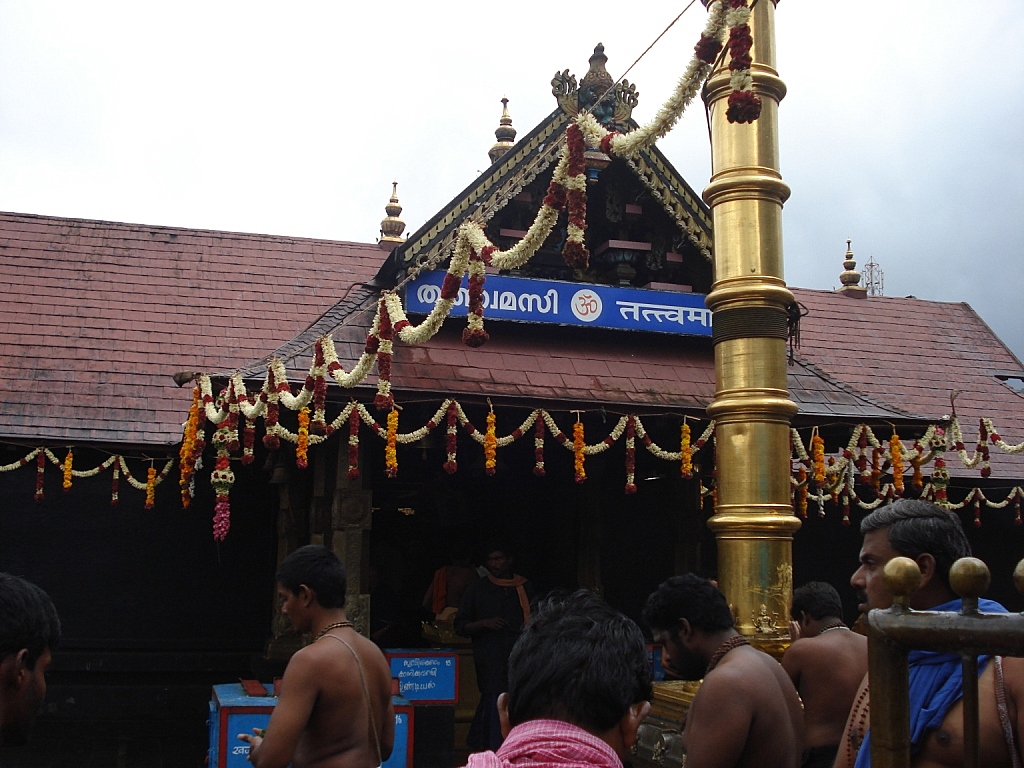
In a significant observation that could reshape the contours of religious freedom in India, the Supreme Court has cautioned that excluding particular denominations or sections of worshippers from temples and maths risks fragmenting society and undermining the inclusive spirit of Hinduism.
The remark came on Thursday during hearings before a nine-judge Constitution Bench examining petitions concerning discrimination against women at places of worship, including the long-contested case of Sabarimala Temple in Kerala, as well as broader questions on the scope of religious liberty across faiths.The bench, headed by Chief Justice Surya Kant, comprises Justices B V Nagarathna, M M Sundresh, Ahsanuddin Amanullah, Aravind Kumar, Augustine George Masih, Prasanna B Varale, R Mahadevan, and Joymalya Bagchi. It is addressing seven framed questions on the interplay between fundamental rights to equality and the constitutional protections for religious denominations under Articles 25 and 26 of the Constitution.
The hearing revives a contentious debate that has simmered in India for years. In September 2018, a five-judge Constitution Bench of the top court, by a 4:1 majority, struck down the centuries-old custom at Sabarimala that barred women aged 10 to 50 from entering the temple dedicated to Lord Ayyappa, ruling the practice unconstitutional and discriminatory. That verdict sparked widespread protests in Kerala and beyond.In November 2019, another five-judge bench, headed by then Chief Justice Ranjan Gogoi, referred the matter — along with similar issues of gender discrimination at religious sites — to a larger bench for authoritative resolution.
The nine-judge bench of the India’s apex court now grappling with the case is tasked with clarifying the limits of judicial intervention in religious practices and the balance between individual rights and denominational autonomy.
Denominational Rights Under Scrutiny
During arguments on Thursday, senior advocate CS Vaidyanathan, appearing for organisations including the Nair Service Society, Ayyappa Seva Samajam, and Kshetra Samrakshana Samiti, contended that a denominational temple retains the right to grant permissive entry or restrict worship to members of its own denomination.
At this point, Justice B V Nagarathna interjected with a pointed observation rooted in concerns for Hinduism’s broader unity. “There is one apprehension,” she said. “If you say the right of entry, in the context of Venkataramana Devaru, where they said anybody other than Gowda Saraswat Brahmin is excluded, it will affect negatively Hinduism.”
She continued: “Everybody must have access to every temple and math. Keep aside the controversy in Sabarimala judgement. But if you say it is a practice and it is a matter of religion that I will exclude others and only my section, my denomination will attend temple and nobody else. That is not good for Hinduism. Let the religion not be adversely affected. It will be counter productive for the denomination.”
Justice Aravind Kumar concurred, observing that such exclusion would divide society.
The reference to the 1958 Venkataramana Devaru judgment is instructive. In that case, the Supreme Court upheld the Madras Temple Entry Authorisation Act while affirming that, although the temple remained open to all Hindus, certain ceremonial practices reserved exclusively for the Gowda Saraswat Brahmin community were constitutionally permissible. The present bench is revisiting the delicate balance struck in that precedent.
Mr Vaidyanathan responded by arguing that if temples serve only their specific denomination, they cannot legitimately seek financial support from the state, private donors, or the general public, as they would not be dependent on them. He added that any law regulating such matters must withstand scrutiny on grounds of public order, morality, or health.
The Road to a Nine-Judge Bench
The Sabarimala dispute has followed a tortuous judicial path. The 2018 verdict, which declared the exclusionary practice illegal, triggered intense public debate over tradition versus constitutional morality.
Review petitions piled up, and in 2019 the matter was referred to a larger bench amid concerns that the issues raised transcended one temple and touched upon fundamental questions of religious freedom applicable to multiple faiths.
The nine-judge bench is not revisiting the factual merits of the Sabarimala custom alone but is instead examining overarching constitutional principles. These include the extent to which courts may scrutinise “essential religious practices,” the rights of religious denominations to manage their own affairs, and whether practices that exclude women or particular groups can survive constitutional scrutiny under equality provisions.
The hearing also occurs against the backdrop of similar challenges involving women’s entry or participation in other religious sites, underscoring the case’s wider implications for India’s pluralistic society.
Broader Constitutional Stakes
At its heart, the case pits two powerful constitutional values against each other: the right to equality and non-discrimination on one hand, and the freedom of religious denominations to profess, practise, and propagate their faith — including managing their institutions — on the other.Arguments before the bench have highlighted the tension between Article 25 (freedom of conscience and free profession, practice and propagation of religion) and Article 26 (freedom to manage religious affairs). Denominations often invoke Article 26(b) to claim autonomy in matters of worship, while petitioners emphasise Article 25(2)(b), which empowers the state to regulate or restrict practices for social welfare and reform, including throwing open Hindu religious institutions of a public character to all classes and sections of Hindus.
The bench’s observations on Thursday signal a judicial concern that overly rigid denominational exclusivity could fracture the social fabric and weaken the syncretic and inclusive ethos historically associated with Hinduism. Yet the court must also navigate the delicate task of protecting genuine faith-based practices without allowing discrimination to masquerade as religion.As the hearings continue, the nine-judge bench’s eventual ruling is expected to provide much-needed clarity on these vexed questions. Its decision will not only influence the future of the Sabarimala dispute but could set a lasting precedent for how India’s highest court balances individual rights with collective religious freedoms across communities.
For now, the Supreme Court has sent a clear message: while the Constitution safeguards religious diversity, practices that risk dividing society or harming the larger religious tradition may face rigorous constitutional scrutiny. The outcome of this landmark reference will reverberate far beyond the hills of Sabarimala.