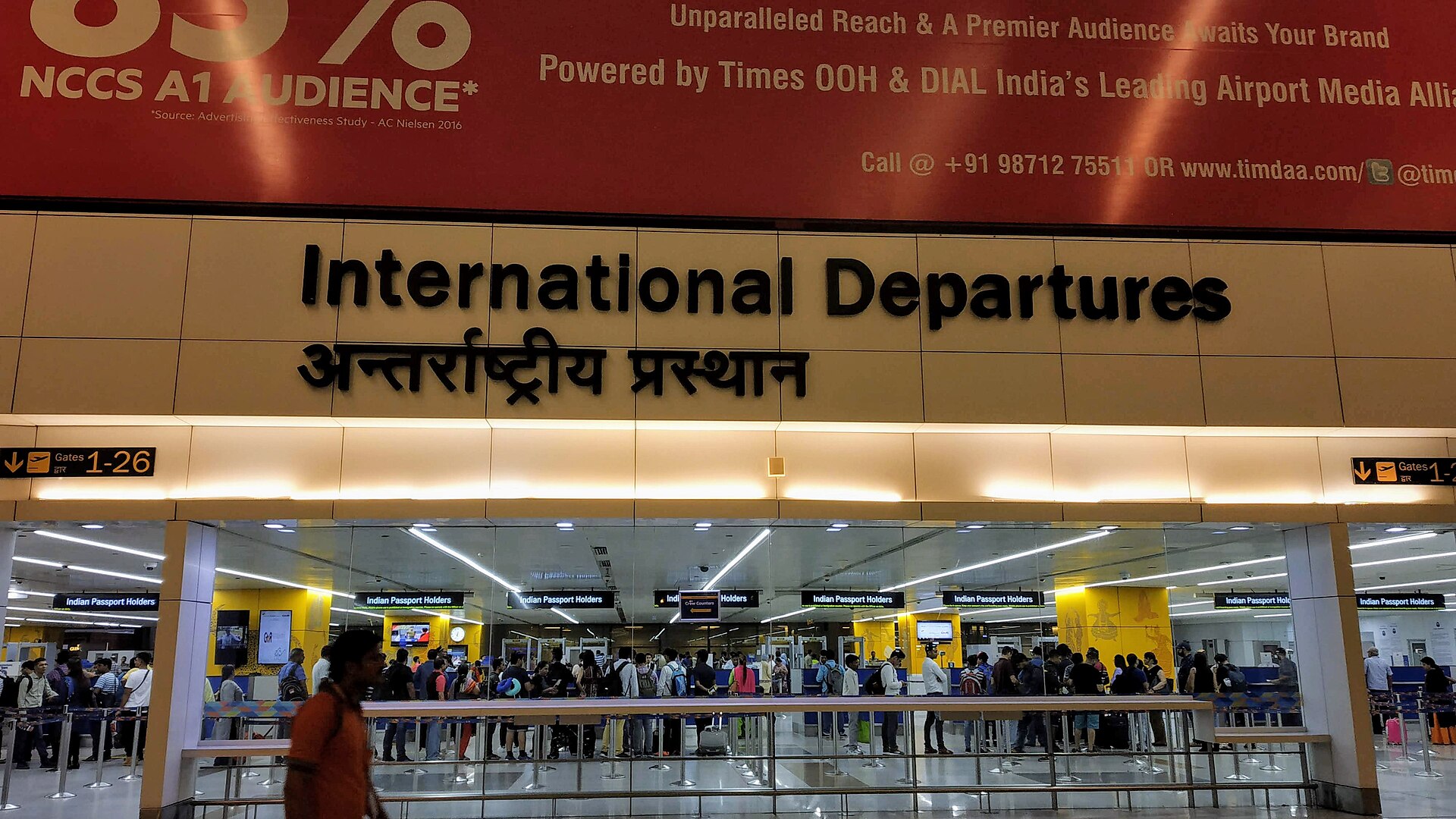
A routine afternoon on the tarmac at one of the world’s busiest airports in New Delhi turned into an embarrassing ground collision on Thursday when a taxiing SpiceJet aircraft clipped a stationary Akasa Air plane at Indira Gandhi International Airport’s Terminal 1.
The incident, which occurred around 2:15pm, involved no injuries but forced both aircraft out of service and prompted India’s aviation regulator to immediately remove the involved SpiceJet pilots and the responsible air traffic controller from duty pending a full investigation.
According to officials, the Akasa Air Boeing 737 MAX 8 had been pushed back from its stand at Bay 104 and was stationary, preparing for departure on flight QP 1406 to Hyderabad. Meanwhile, the SpiceJet Boeing 737-700 (registration VT-SLB), which had just arrived from Leh on flight SG 124, was cleared by air traffic control to taxi to Bay 106 after the pilot confirmed separation.
During the manoeuvre, the SpiceJet aircraft executed a turn without the required wing walker clearance, resulting in contact. The right winglet of the SpiceJet plane struck the horizontal tail surface of the Akasa aircraft, damaging both.
The Directorate General of Civil Aviation (DGCA) confirmed the details in a statement, noting that the impact affected the SpiceJet’s right-hand winglet and the Akasa plane’s horizontal tail surface. Both aircraft have been grounded at the airport while inspectors examine the extent of the damage and review ground handling procedures.
Akasa Air said its passengers and crew were safely disembarked and that the aircraft returned to the bay. The airline added that it was making alternative arrangements to transport passengers to Hyderabad as quickly as possible and that all relevant authorities had been notified.
SpiceJet described the event as a “ground occurrence” while taxiing and confirmed that its aircraft had sustained damage to the right winglet. The airline said it was co-operating fully with the investigation.
The civil aviation ministry stated that it was closely monitoring the situation and would take all necessary steps to maintain safety standards and prevent similar incidents. As part of the probe, the DGCA is also looking into ground handling aspects at the airport.
Thursday’s collision is the latest in a string of ground incidents at Delhi airport, which handles tens of millions of passengers annually and often operates close to capacity. While no one was hurt and the damage appears limited to non-critical parts of the aircraft, such events inevitably raise concerns about congestion, procedural adherence and the pressure on crews and controllers in one of India’s most congested air hubs.
Aviation safety experts note that ground collisions, though rarely catastrophic, can disrupt operations, erode passenger confidence and highlight vulnerabilities in ramp management — especially when multiple narrow-body jets are moving in tight spaces near busy terminals.
For now, the focus remains on determining precisely how the SpiceJet aircraft ended up making contact despite clearance protocols. Preliminary findings suggest a breakdown in visual confirmation or ground guidance during the turn.
Both airlines emphasised that passenger safety remained their top priority, and operations at Terminal 1 continued with minimal broader disruption. Yet the swift de-rostering of the pilots and controller underscores the regulator’s zero-tolerance approach in the immediate aftermath.
As investigators sift through radio communications, taxiway recordings and witness accounts, the episode serves as a reminder that even on the ground, where speeds are low and risks seem manageable, precision and vigilance remain essential in modern commercial aviation.