India Accelerates Drone Warfare Push with $140m Autonomous Combat Hub in Andhra Pradesh
In a move underscoring New Delhi’s fervent drive towards technological sovereignty in military hardware, the southern Indian state of Andhra Pradesh has inked a landmark memorandum of understanding (MoU) with Flying Wedge Defence and Aerospace (FWDA), a trailblazing Bengaluru-based firm, to establish the nation’s inaugural 500-acre hub dedicated to the manufacturing and testing of autonomous combat aircraft.
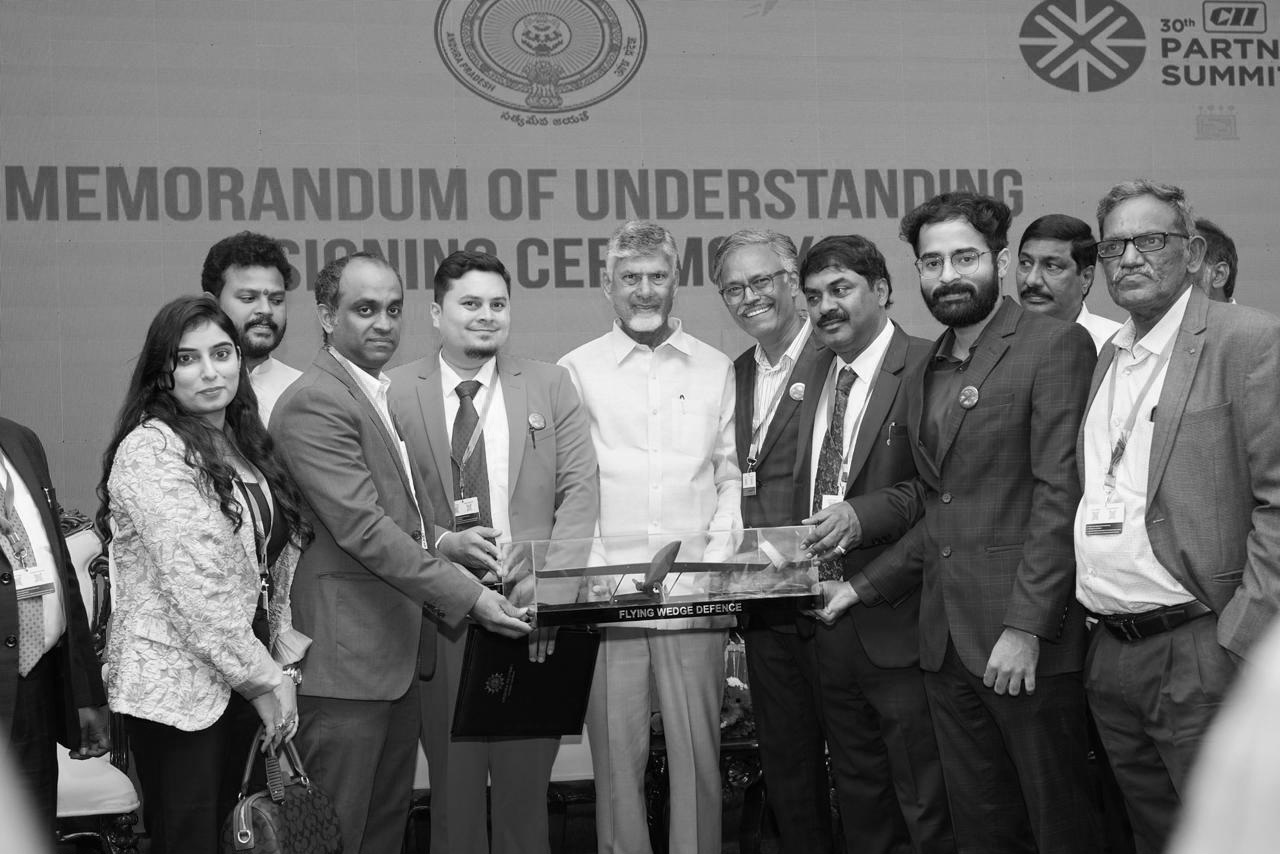
The agreement, formalised on Tuesday in the coastal city of Visakhapatnam, commits approximately Rs 1,169 crore (about $140 million) in capital investment and is poised to create more than 1,000 jobs—800 direct and 200 indirect—across research, advanced manufacturing, and ancillary sectors. Signed in the presence of Andhra Pradesh Chief Minister N Chandrababu Naidu and senior state officials alongside FWDA’s leadership, the pact positions the state as a burgeoning epicentre for next-generation defence innovation, aligning seamlessly with Prime Minister Narendra Modi’s flagship Aatmanirbhar Bharat (Self-Reliant India) and Make in India initiatives.
At a time when India grapples with escalating border frictions along its contested Himalayan frontiers with China and persistent skirmishes with Pakistan in Kashmir, this development represents more than mere industrial expansion. It signals a strategic pivot in New Delhi’s defence posture, accelerating the indigenisation of unmanned aerial systems (UAS) to diminish reliance on foreign imports—a vulnerability exposed during the 2020 Galwan Valley clash, where supply chain disruptions from Western and Russian suppliers hampered India’s operational readiness. By fostering homegrown AI-driven combat platforms, the project not only fortifies India’s asymmetric warfare capabilities but also enhances its deterrence quotient in a volatile Indo-Pacific theatre, where drone swarms and autonomous killers are redefining aerial dominance.”
This understanding will not only create high-value employment but will also catalyse an entire ecosystem of skilled talent, component suppliers, and academic collaborations in the region,” declared Suhas Tejaskanda, founder and chief executive of FWDA, during the signing ceremony. His words echoed the broader optimism surrounding the venture, which promises to transform Andhra Pradesh—a state long overshadowed by manufacturing powerhouses like Tamil Nadu and Karnataka—into a linchpin of India’s defence-industrial complex.
The facility, slated for development on a sprawling 500-acre site yet to be finalised but likely near the state’s burgeoning aerospace corridor in Tirupati or Anantapur, will encompass end-to-end operations: from research and design to assembly, rigorous testing, and systems integration. Dubbed the nation’s first “full-spectrum integrated autonomous combat aircraft development and testing complex,” it will specialise in AI-warfare technologies, including swarm intelligence platforms and advanced unmanned aerial vehicles (UAVs). This holistic approach addresses a critical gap in India’s defence ecosystem, where fragmented R&D efforts have historically lagged behind global frontrunners like the United States’ DARPA or Israel’s Rafael Advanced Defense Systems.
Geopolitically, the timing could not be more prescient. As Beijing ramps up its militarisation of the Line of Actual Control (LAC) with incursions into Arunachal Pradesh and Ladakh—prompting India to deploy over 60,000 troops and invest billions in border infrastructure—New Delhi views unmanned systems as a force multiplier. Drones, impervious to pilot casualties and capable of sustained loitering over hostile terrain, offer a cost-effective counter to China’s numerical superiority in manned fighters like the J-20 stealth jet. Similarly, in the western theatre, Pakistan’s acquisition of Turkish Bayraktar TB2 drones during the 2019 Balakot crisis highlighted the perils of import dependency; FWDA’s hub aims to flip this script, enabling India to not only defend but potentially export indigenous solutions to allies in the Quad (United States, Japan, Australia) and beyond.
The benefits to India’s defence apparatus are manifold and far-reaching. Economically, the Rs 1,169 crore infusion—sourced primarily from private equity and FWDA’s internal accruals—will stimulate a ripple effect, nurturing a supplier network for composites, avionics, and AI chips that could slash procurement costs by up to 30 per cent, according to estimates from the Confederation of Indian Industry (CII). Militarily, it accelerates the maturation of platforms like the FWD-200B, FWDA’s unmanned bomber that notched a historic maiden flight on 3 September 2024, marking India’s entry into the elite club of drone bomber developers. This stealthy, long-endurance asset, with a payload capacity exceeding 200 kilograms and AI-guided precision strikes, could revolutionise India’s strike doctrine, allowing for deep-penetration missions without risking aircrews—a boon amid the high-altitude hypoxia challenges of Ladakh operations.
Yet, the crown jewel remains the Kaal Bhairava E2A2 programme, unveiled by FWDA on 22 August 2025 and hailed as “India’s guardian of time.” This indigenous AI-powered unmanned aircraft, blending electronic warfare, electronic attack, and electronic support measures, clinched a silver medal at the prestigious Autonomous Robotics and Control Applications (ARCA) 2025 symposium in Croatia—just three months prior to this MoU. With real-time threat adaptation via machine learning algorithms, Kaal Bhairava exemplifies the “loyal wingman” concept, where drones escort manned jets like the Tejas Mk2, augmenting situational awareness and electronic countermeasures against adversarial jamming. Defence analysts, including those at the Institute for Defence Studies and Analyses (IDSA), project that scaling such systems could enhance India’s air defence grid by 40 per cent, particularly in countering hypersonic threats from adversaries.
Beyond the battlefield, the initiative dovetails with India’s dual-use innovation ethos, encapsulated in FWDA’s slogan: “Saving Jawans, Serving Kisan.” The company’s patented AI-ML-embedded drones, already deployed for precision agriculture—monitoring crop health and optimising pesticide use—underscore a holistic approach. In a nation where 58 per cent of the workforce is agrarian, these platforms promise yield boosts of 20-25 per cent, bridging military R&D with rural empowerment and fostering public support for defence spending, which currently hovers at 2.4 per cent of GDP.
This MoU arrives against the backdrop of sweeping defence reforms enacted earlier in 2025, which prioritised public-private partnerships to invigorate the sector. Under the revamped Defence Acquisition Procedure (DAP), 75 per cent of capital outlays must now prioritise indigenous content, a directive this project exemplifies. It also resonates with the Atmanirbhar Bharat roadmap, which has already propelled defence exports from Rs 686 crore in 2014 to over Rs 21,000 crore in fiscal 2024-25—a 30-fold surge. Yet, challenges persist: bureaucratic red tape, skill shortages, and intellectual property vulnerabilities could impede progress, as evidenced by delays in the HAL Tejas programme. FWDA’s track record, however, instils confidence; founded in 2022 by Tejaskanda—a former Indian Air Force officer with a Stanford engineering pedigree—the firm became the first Indian entity to secure Directorate General of Civil Aviation (DGCA) type certification for a homegrown UAV, a feat that bypassed the regulatory hurdles that have stymied peers.
Globally, the hub elevates India’s stature in the burgeoning AI-arms race. As the Ukraine conflict has dramatised the efficacy of cheap, attritable drones—Ukraine’s use of over 100,000 UAS since 2022 has inflicted disproportionate damage on Russian armour—nations from Tehran to Taipei are scrambling to indigenise. India’s endeavour positions it as a potential exporter to the Global South, where affordability trumps Western premiums; preliminary talks with Vietnam and the Philippines, both eyeing Quad-aligned tech transfers, hint at a lucrative market worth $10 billion by 2030, as per PwC projections.
Critics, including some opposition voices in Andhra Pradesh’s assembly, caution against overhyping the project amid the state’s fiscal strains post the 2024 bifurcation legacy. “While jobs are welcome, we must ensure equitable distribution beyond urban enclaves,” remarked YSR Congress Party leader V Vijayasai Reddy. Nonetheless, Naidu’s administration touts it as a cornerstone of Vision 2029, aiming to double the state’s GDP through high-tech corridors.
In essence, this Andhra Pradesh gambit is a microcosm of India’s geopolitical recalibration: from import-dependent underdog to autonomous innovator. By embedding AI at the heart of its defence calculus, New Delhi not only safeguards its sovereignty but also aspires to lead the ethical governance of lethal autonomous weapons—a discourse gaining urgency at the UN Convention on Certain Conventional Weapons. As Tejaskanda envisions, FWDA’s ecosystem could propel India “not just as a consumer, but as a global hub for next-generation AI warfare and combat UAV manufacturing.
“For a resurgent India navigating great-power rivalries, the skies over Andhra Pradesh now gleam with promise—of deterrence, prosperity, and perhaps, a redefined balance of power in Asia’s tinderbox.
