The Strait of Hormuz has long been the world’s most combustible oil tap. One-fifth of global petroleum and a hefty share of liquefied natural gas normally squeeze through its narrow waters. Since the outbreak of hostilities between America, Israel and Iran in late February 2026, that tap has sputtered. Even after a fragile ceasefire in April, sporadic incidents, Iranian “smart control” rules and elevated insurance premiums have kept traffic well below normal. The result is a slow-motion energy shock that is reshaping not just oil markets but the geography of Eurasian trade. Few countries sense both the danger and the opportunity more acutely than Turkey.
For Ankara the immediate arithmetic is painful. Turkey imports over 90% of its oil and nearly all its gas. Higher global prices have swollen its energy bill, widened the current-account deficit and complicated the central bank’s fight against inflation. Every sustained $10 rise in oil is estimated to add roughly $4.5-5bn to the annual import burden of the country. Petrochemical feedstocks and fertiliser imports have also been disrupted, squeezing Turkish industry and farmers. Yet Turkish officials, rarely ones to waste a crisis, are already reframing the disruption as a strategic opportunity.
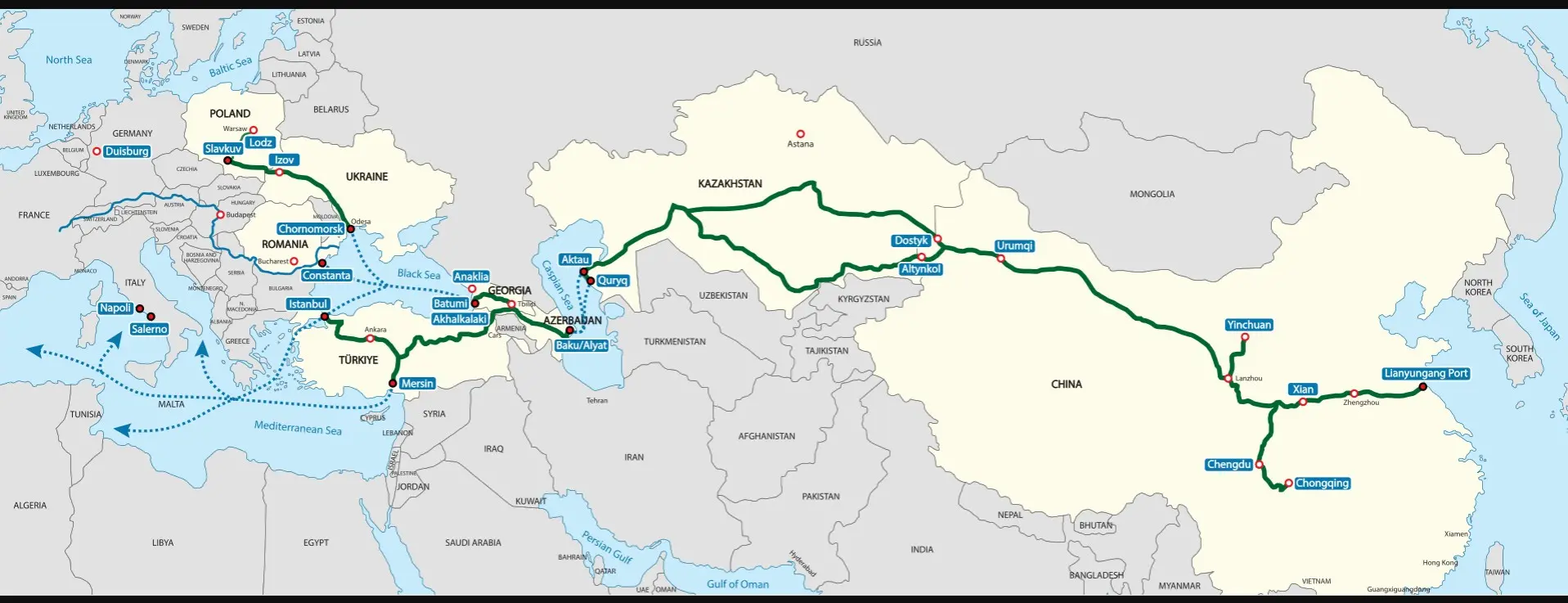
The deeper story is about corridors. For years Turkey has promoted the “Middle Corridor”, a patchwork of rail, road and sea links running from China through Central Asia, the Caspian, the Caucasus and into Europe. Freight volumes on parts of the route have surged since Russia’s invasion of Ukraine made the Northern Corridor less appealing. The Hormuz crisis has supercharged interest. Shipping firms and governments wary of maritime chokepoints are eyeing overland alternatives. Turkey sits at the western end of this route like a well-placed toll booth.
Complementing this is the Iraq Development Road, a $17-24bn project linking Iraq’s Grand Faw port on the Gulf to Turkey’s border and onward into Europe. Once dismissed as another grand announcement, the scheme has gained fresh momentum. while Iraqi and Turkish officials have accelerated talks, European and Gulf money is sniffing around. If realised, the route offers a land bridge that largely bypasses both the Strait and Iran. For Ankara it promises not only transit fees and construction contracts but a chance to become Europe’s preferred gateway to the Gulf and beyond.
This is classic Turkish statecraft: turning geography into leverage. President Recep Tayyip Erdogan has publicly condemned the original strikes as violations of international law while quietly offering mediation and messaging channels. Turkish intelligence reportedly helped keep lines open during the push for ceasefire. At the same time, Ankara has opposed Iran’s new Hormuz rules, warning they could become a permanent source of friction and drive Gulf states deeper into American and Israeli arms. The posture allows Turkey to pose as a responsible regional heavyweight without burning bridges.
The risks are real. Prolonged high energy prices could derail Turkey’s macroeconomic stabilisation. Renewed fighting might send missiles toward Turkish airspace again, as happened earlier in the conflict. Over-reliance on the Middle Corridor exposes Ankara to Caspian weather, Azerbaijani-Armenian tensions and potential Russian or Iranian spoiling.
Yet the upside is tempting. A more reliable overland system reduces Europe’s dependence on vulnerable sea lanes and on Russian or Chinese-dominated routes. For Central Asian republics it offers diversification. For Turkey it cements “strategic autonomy” while deepening ties with the West on mutually beneficial terms.
Western capitals have been slow to grasp the shift. The European Union has shown growing interest in the Middle Corridor; America less so. If Washington wants to counter Russian and Chinese influence in Eurasia without endless military commitments in the Gulf, investing in Turkish-led connectivity makes sense. The alternative is watching Beijing’s Belt and Road or ad-hoc Gulf rerouting fill the vacuum.
History reminds us that chokepoints create empires and also undo them. The Suez Canal, the Strait of Malacca, Hormuz itself—each has reshaped trade and power. Today’s crisis may accelerate the move from “just-in-time” maritime globalisation toward more resilient, multimodal networks. Turkey, with one foot in Europe, one in Asia, and a leader skilled at transactional diplomacy, is positioning itself at the junction.
Whether the Hormuz tap eventually flows freely again matters less than the realisation that the world can no longer afford to rely on a single narrow strait. Ankara intends to profit from that lesson.