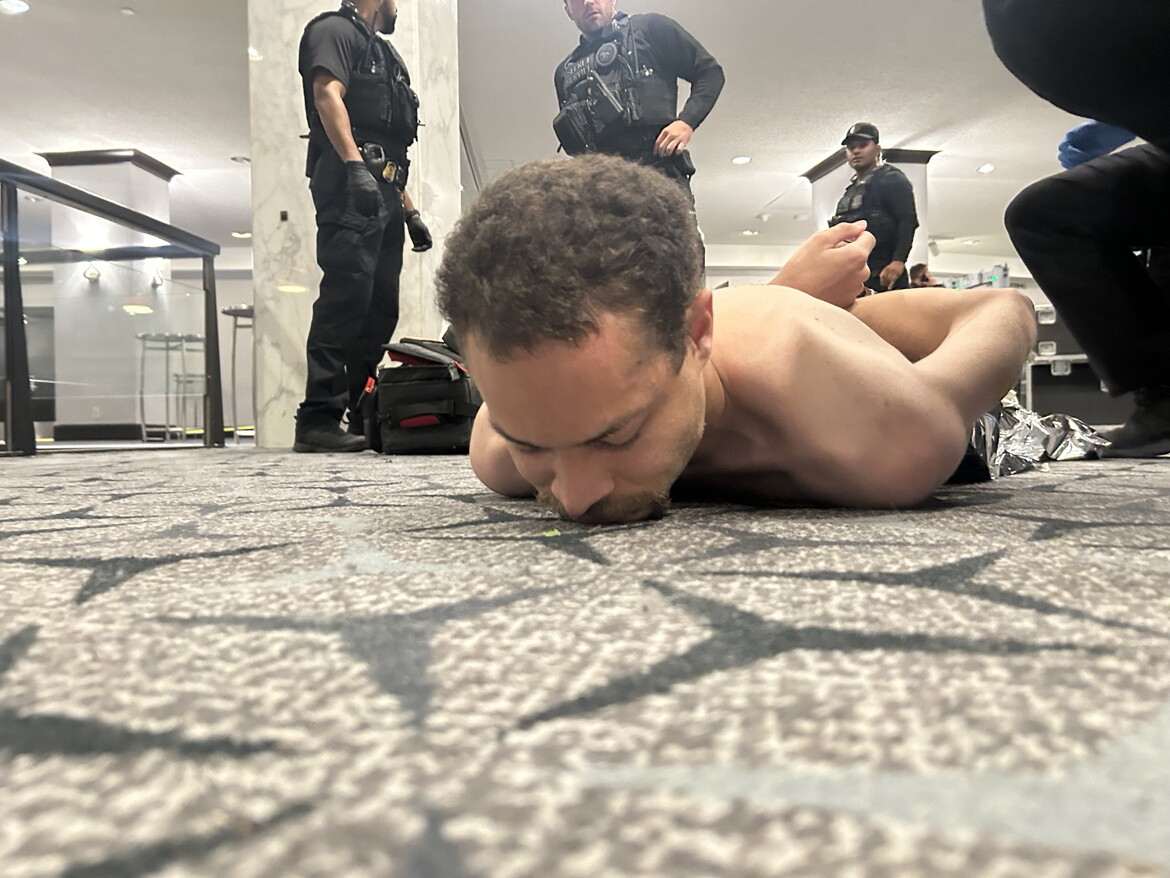
By the time the first champagne flutes hit the carpet at the Washington Hilton on Saturday night, Cole Tomas Allen was already on the floor, shirtless and handcuffed, his face pressed against the marble just metres from the magnetometers that had failed to stop him. President Donald Trump, moments earlier ushered off the stage by Secret Service agents as gunfire echoed through the lobby, would later post the image himself on Truth Social: a pale, dishevelled 31-year-old Californian, surrounded by tactical boots. “The man has been captured,” Trump declared shortly afterwards. “A very sick person.”
What authorities and journalists have pieced together in the 24 hours since the shooting outside the White House Correspondents’ Association dinner reveals a suspect who was neither a drifter nor a hardened militant, but a highly educated, quietly ambitious Southern Californian whose public profile until last night read like that of any other bright, slightly eccentric STEM graduate trying to make a living in the gig economy.
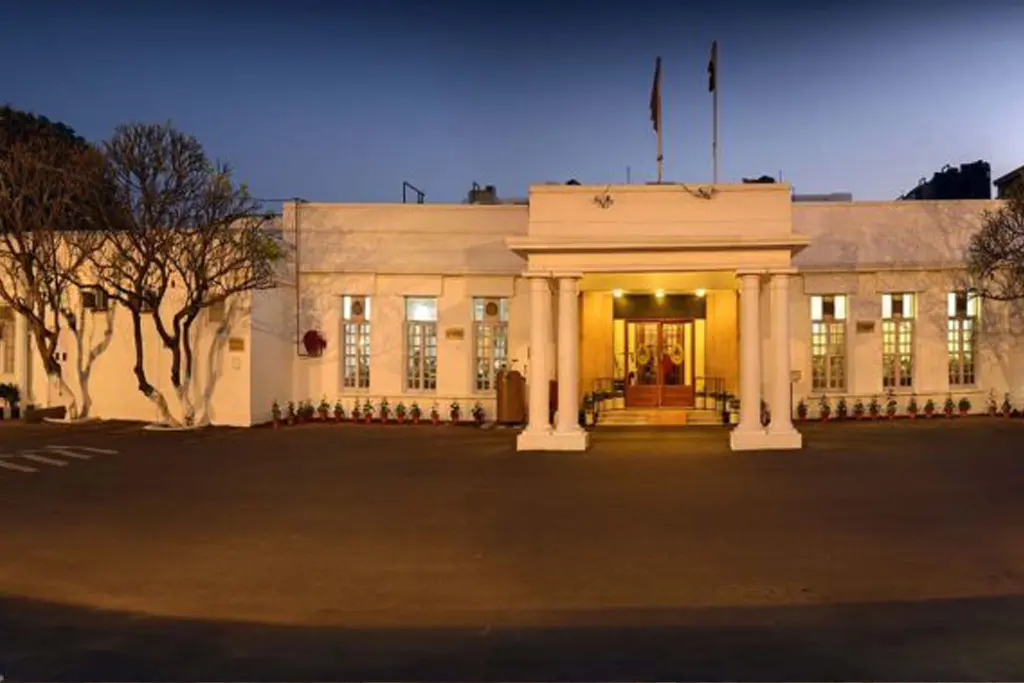
Allen, of Torrance, California — a tidy Los Angeles suburb known more for aerospace engineers than political violence — was identified by law enforcement officials within hours of the incident. He had checked into the Hilton days earlier, having booked the room in early April. Officials believe he was a registered guest at the very hotel hosting the black-tie gala attended by some 2,600 journalists, politicians and administration officials, including the president, first lady Melania Trump and Vice-President JD Vance.
He was carrying a shotgun, a handgun and multiple knives when he sprinted through a Secret Service checkpoint near the main ballroom entrance shortly after 8:35pm on 25 April. Video released by the president himself shows the chaotic sprint; agents drew weapons and returned fire. One officer was struck in his bulletproof vest and is expected to recover fully. Allen himself was not shot. He was tackled, subdued and taken into custody. He was later transported to a medical facility for assessment before being placed in federal custody.
As the investigation moved swiftly into its early phase, U.S. Attorney for the District of Columbia Jeanine Pirro announced that Cole Tomas Allen faces preliminary federal charges including using a firearm during a crime of violence and assault on a federal officer with a dangerous weapon. He is expected to be arraigned on Monday in federal court in Washington, with prosecutors indicating that further counts are likely to follow as agents examine his motives, the weapons recovered and his actions inside the Hilton.
Interim DC Police Chief Jeffery Carroll and Mayor Muriel Bowser described the suspect as having acted alone. Two law-enforcement sources told CBS News that, once in custody, Allen stated he had intended to shoot officials in the Trump administration. No further motive has been publicly confirmed, and investigators continue to examine whether the attack was premeditated or the product of some deeper personal unraveling. FBI agents were seen at an address linked to Allen in Torrance on Sunday morning.
Until Saturday night, Allen’s life appeared ordinary, even admirable, on paper. A Caltech graduate (class of 2017) with a bachelor’s degree in mechanical engineering, he had been part of the university’s “Blitzkrieg Bots” robotics team, which won a competitive design contest in 2016. He served as a teaching assistant at the elite Pasadena institution and was photographed in its Mechanical Engineering 72 design lab, where students build robots and autonomous vehicles. In 2014, while still an undergraduate, he completed a summer research fellowship at NASA’s Jet Propulsion Laboratory, working on AI models for planetary mapping.
He followed that with a master’s in computer science from California State University, Dominguez Hills, completed in 2025 and celebrated with a LinkedIn graduation photo in cap and gown. Professionally, he listed himself as a “mechanical engineer and computer scientist by degree, independent game developer by experience, teacher by birth.” He had worked as a mechanical engineer for IJK Controls and, since March 2020, as a part-time tutor at C2 Education, a test-prep centre in Torrance specialising in SAT and ACT coaching. In December 2024 the company named him “Teacher of the Month.”
On the side, Allen developed indie video games. He released “Bohrdom,” a self-described “non-violent, skill-based, asymmetrical fighting game loosely based on a chemistry model,” on Steam in 2018. Public records suggest he may have worked on another title, “First Law.” His online footprint was modest — a LinkedIn profile, scattered gaming accounts — and he appeared to maintain a low public profile. One unverified social-media claim circulating after the shooting referenced a now-deleted Instagram post showing him in an IDF sweatshirt, but no official link to foreign affiliations has been confirmed.
Public records also indicate he made a small political donation to a PAC supporting Kamala Harris in 2024 and was registered as a Democrat, though such details offer little insight into what drove a man with a promising technical background and a steady tutoring job to arm himself and attempt to breach one of Washington’s most heavily secured events.
As of Sunday afternoon, the investigation remained in its earliest stages. No manifesto has surfaced. No prior threats have been publicly linked to Allen. His family in California — including a sister, Avriana F. Allen, 27, who according to some records has ties to Washington, DC — has not commented. Neighbours in Torrance described a quiet neighbourhood suddenly swarmed by federal agents.
In the ballroom, the dinner — the first attended by Trump as sitting president in his second term — was abruptly cancelled. Guests who had ducked under tables or pressed against the walls emerged to a city once again confronting the fragility of its rituals of power. For Cole Tomas Allen, the former Caltech robotics whizz, NASA intern, game designer and Teacher of the Month, the path that ended on the Hilton floor remains, for now, a mystery that federal prosecutors and counter-terrorism analysts will spend weeks, if not months, trying to unravel.