A gunman armed with a shotgun, a handgun and several knives stormed a security checkpoint at the White House Correspondents’ Association dinner on Saturday night, triggering gunfire that sent President Donald Trump and hundreds of guests diving for cover before Secret Service agents swiftly neutralised the threat and evacuated the president and other senior officials unharmed.
The incident unfolded shortly after 8pm at the Washington Hilton, where the annual black-tie gathering of journalists, politicians and dignitaries was under way. Mr Trump was attending the dinner for the first time as sitting president and had been seated on the dais with the first lady, Melania Trump, when the chaos erupted in the lobby just outside the main ballroom. No one was killed, though one Secret Service agent was struck in the torso by a bullet that was stopped by his protective vest.
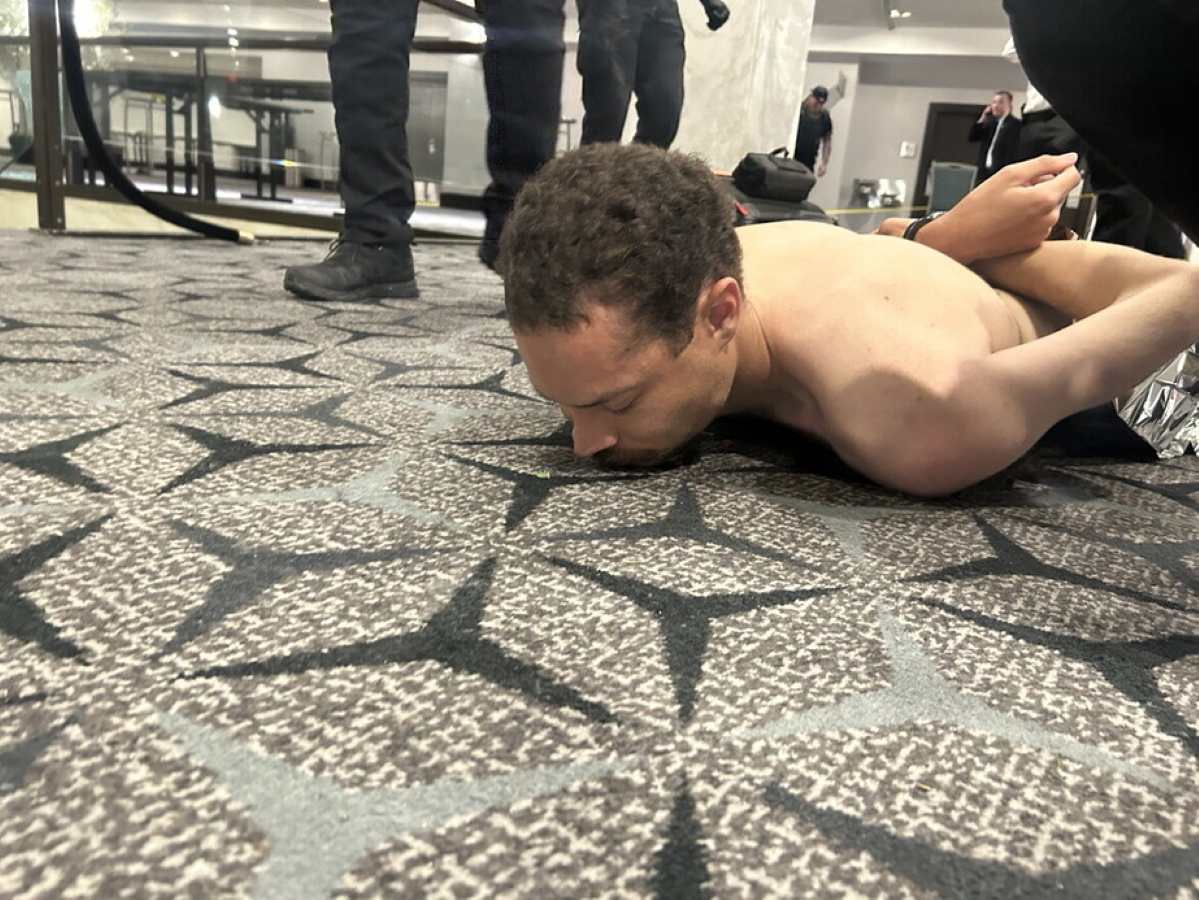
The suspect was identified by law enforcement officials as Cole Tomas Allen, 31, a tutor and part-time video-game developer from Torrance, California. He was taken into custody at the scene and later hospitalised for evaluation. Investigators said he acted alone and that his motive remained unclear. Mr Trump, addressing reporters from the White House later that night, described the gunman as a “sick person” and praised the Secret Service for its rapid response.
The evening had begun in the familiar rhythm of Washington ritual. Inside the cavernous ballroom, more than 2,000 guests — including cabinet secretaries, network anchors, Silicon Valley executives and the occasional Hollywood figure — had settled in. Salads had been cleared and the programme was beginning when the first reports of gunfire echoed from the lobby area beyond the magnetometers that screen all entrants.
According to security footage and law-enforcement accounts, Mr Allen charged the checkpoint, bypassing or rushing past the metal detectors. Secret Service agents and uniformed officers converged immediately. At least one shot was fired by the assailant; agents returned fire. One agent was hit but protected by his vest. The gunman was tackled and subdued within moments, preventing him from reaching the ballroom itself.
The sounds carried clearly into the main hall. Attendees described a sudden, sharp crack followed by shouts of “Shots fired!” and “Get down!” Tables were overturned as journalists, officials and guests dropped to the floor or scrambled beneath linen tablecloths. Wait staff froze mid-step. Reporters who had arrived expecting barbed jokes and awards found themselves live-tweeting or filming from beneath their seats.
One attendee, a veteran Washington correspondent who asked not to be named because of the sensitivity of the situation, said: “It was pandemonium for about 30 seconds. You hear the pops and your brain goes straight to active shooter. People were screaming, but it was surprisingly orderly once the initial panic hit.” Another guest, a senior administration official seated near the stage, recounted the moment the Secret Service detail moved in: “They were on the president in seconds. No hesitation. It was textbook.”
Mr Trump and the first lady were escorted off the dais by a phalanx of agents almost immediately after the first reports. Vice-President JD Vance, Defence Secretary Pete Hegseth, Secretary of State Marco Rubio and Ms Leavitt herself — who is visibly pregnant — were among those moved out in the same swift evacuation. The entire ballroom was cleared within minutes in a well-drilled operation that officials later described as a model of co-ordination between the Secret Service, Metropolitan Police and hotel security.
C-Span footage captured the precise choreography: agents forming a human shield around the president as he was hurried from the stage; guests rising cautiously once the all-clear was given; and the sudden, eerie quiet that fell over the room as the dinner was formally cancelled. The Hilton, which in 1981 had been the site of the assassination attempt on Ronald Reagan, once again found itself at the centre of a presidential security drama.
By late Saturday night, Mr Trump had returned to the White House and appeared in the briefing room. Flanked by senior aides, he expressed gratitude to the Secret Service and noted the brief moment of unity in the room born of shared fear. “Everyone was scared, but they handled it,” he said. “The agents were incredible.”
Law-enforcement sources said Mr Allen had been staying at the hotel. Public records and social-media profiles portray him as a Caltech graduate with no apparent history of political extremism or prior encounters with law enforcement. Warrants were being executed at addresses linked to him in Torrance as investigators sought to establish any possible motive. Preliminary charges include assault on a federal officer and the use of a firearm during a crime of violence.
For many inside the ballroom, the emotions shifted rapidly from terror to relief. “I thought, this is it — another attempt,” said one journalist who had covered previous threats against Mr Trump. “Then you realise the agents have it contained and you just feel this wave of gratitude mixed with disbelief that it happened again.” Others described lingering shock as they were herded to safety exits, some clutching phones to record the scene, others checking on colleagues.
The episode marks the third time in three years that Mr Trump has been exposed to the sound of gunfire in a public setting — incidents that have tested and repeatedly validated the proficiency of his protective detail. Saturday’s events also cast an uncomfortable shadow over the Correspondents’ Dinner itself, an institution meant to symbolise, however uneasily, the relationship between the presidency and the press.
By Sunday morning, the ballroom remained cordoned off as forensic teams worked. The dinner, traditionally a night of satire and self-deprecation, had been reduced to a footnote in a larger story about political violence. The speeches that were never delivered will be rescheduled. The questions about security, motive and coincidence, however, are likely to linger far longer.