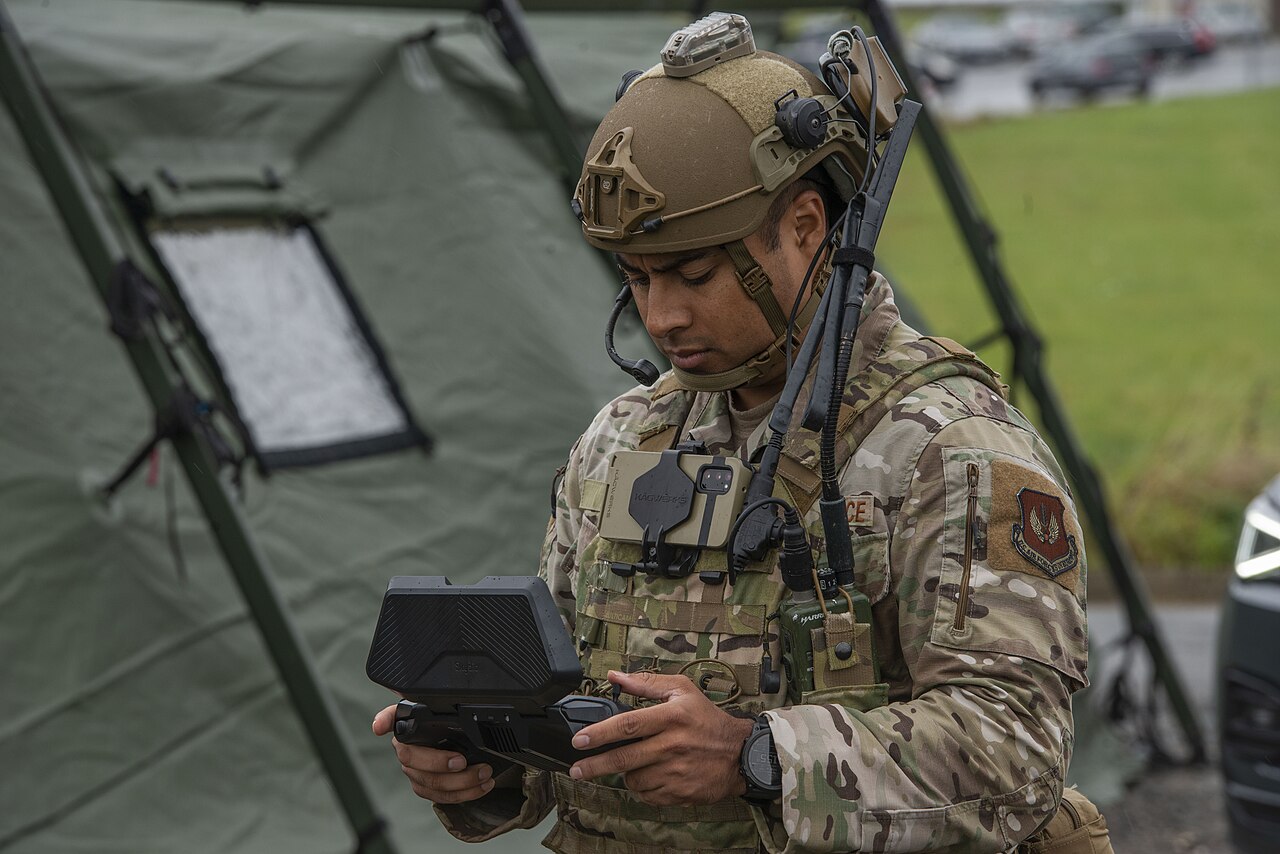
The Pentagon this week deepened its embrace of commercial artificial intelligence. Agreements with seven big technology firms—Google, Microsoft, Amazon Web Services, Nvidia, OpenAI, Reflection and SpaceX—will embed their models into classified American military systems. The aim is to give commanders and troops an edge in speed, targeting and logistics. In the brutal arithmetic of modern war, that edge matters.
The announcement is striking for what it reveals as much as for what it promises. It follows an ugly public spat with Anthropic, a firm that had tried to draw firm ethical lines. Anthropic wanted guarantees that its technology would not be used for fully autonomous lethal weapons or the domestic surveillance of Americans. The Pentagon, under Defence Secretary Pete Hegseth, took a more pragmatic line: if the use is lawful, it is permissible. The result was legal skirmishing, talk of “supply-chain risk” designations and the quiet sidelining of the more cautious player. OpenAI, less fastidious, has moved in. The hierarchy of priorities is now plain.
This is the logical next step in America’s response to a changing battlefield. Conflicts in Ukraine and the Middle East have demonstrated how cheap drones, autonomous systems and rapid data processing can shift the balance of power. China, for its part, is investing heavily in military AI as a way to blunt America’s traditional advantages, particularly in any contest over Taiwan. In such a world, hesitation carries a cost. The Pentagon believes commercial frontier models can compress the “kill chain”—the time between spotting a target and destroying it—from days or hours to minutes. Early users on the GenAI.mil platform already report slashing bureaucratic delays from months to days.
Yet capability and control are not the same thing. Today’s AI systems remain imperfect. They can hallucinate, misread context and encourage over-confidence among operators who come to trust the machine’s output too readily. In the fog of war, where data is noisy and intentions ambiguous, those flaws matter. Shortening decision times is militarily attractive; it also raises the risk that escalation happens faster than human judgment can intervene. The distinction between keeping a human “in the loop” and merely “on the loop” is already eroding. In future high-intensity conflicts, it could vanish.
The deeper worry is strategic. An arms race in military AI is under way. Each power sees the other’s advances as a threat. Algorithms that are opaque even to their creators make miscalculation more likely: a routine military exercise mistaken for mobilisation, or a swarm of drones interpreted as the prelude to attack. International efforts to set rules for lethal autonomous weapons have achieved little. When great powers feel their survival is at stake, norms bend.
For humanity and the planet, the implications stretch further still. AI is making warfare cheaper and more persistent. Swarms of inexpensive autonomous systems could prolong conflicts rather than shorten them. The same underlying technologies driving commercial progress are being repurposed for ever more efficient killing. Energy-hungry data centres and scarce minerals will face rising demand. Over time, as models grow more capable, the question of meaningful human oversight becomes harder. Military use today is both a proving ground and a cautionary tale: races in capability have a habit of outpacing efforts at safety or restraint.
None of this means America should unilaterally disarm in the AI domain. A world in which authoritarian regimes held a clear lead in military artificial intelligence would be more dangerous, not less. The real test is whether Washington—and its rivals—can pursue necessary technological advantage without sacrificing the fragile guardrails that have so far prevented great-power war from spiralling into catastrophe. History is full of military innovations, from the machine gun to nuclear weapons, whose full consequences only became clear in retrospect.
The Pentagon’s latest deals reflect a hard-headed realism about competition. That realism is necessary. But rapid integration with limited public debate over limits or verification carries risks of its own. In the age of AI, wars may be fought at digital speed. The question is whether humanity’s capacity for reflection can keep pace.