On the evening of 3 May 2026, hours after 2.27 million students sat India’s National Eligibility-cum-Entrance Test (NEET-UG), a chemistry tutor in Rajasthan opened a PDF that was already circulating through coaching circles and WhatsApp groups.
Labelled as “guess paper”, it appeared at first glance to be one of the countless unofficial prediction sheets that emerge before every major examination. Curious, the tutor compared it with the actual question paper. Then he checked again. Question after question matched.
When colleagues examined the Biology section, they found the same pattern. Together, the overlap ran into well over a hundred questions and a news about the medical entrance test paper leak began soon began hogging headlines in media. Within days, the National Testing Agency (NTA) cancelled the examination, the Central Bureau of Investigation (CBI) opened an inquiry, and millions of students who had spent years preparing for a single opportunity were told they would have to sit the test again.
The collapse of NEET-UG 2026 may prove to be one of the largest examination scandals in India. Yet an examination of police records, court documents, parliamentary proceedings and previous investigations suggests a more unsettling conclusion: India is no longer confronting a series of isolated paper leaks. It is confronting an entrenched examination underworld that has evolved over a quarter of a century.
More than 220 documented examination leaks and major cheating scandals have surfaced across at least 21 states since the mid-2000s, according to media investigations, court filings and law-enforcement records. Together, they have affected an estimated 100 million candidates. Remarkably, no comprehensive central government database tracks them.
The absence of a national record has obscured what the individual scandals reveal when viewed together: a recurring system of vulnerabilities, actors and incentives that repeatedly undermine examinations designed to allocate some of the country’s most valuable opportunities.
The Blueprint
The origins of the modern examination racket in India can be traced to Madhya Pradesh.
The first police case linked to what later became the infamous Vyapam scam was registered in 2000. More cases followed. By 2009, irregularities in pre-medical entrance examinations had become serious enough to trigger official scrutiny. Yet the network survived.
When the scandal finally exploded into public view in 2013, investigators uncovered a sprawling operation involving impersonators, brokers, officials and middlemen. Medical seats, government jobs and examination results were allegedly bought and sold through a parallel system operating alongside the official one.
The scam touched 13 examinations and affected millions of candidates annually. More than 2,000 arrests followed. The investigation became one of the most controversial ever in India, with dozens of deaths linked to individuals connected to the case, prompting national attention and eventually a CBI probe.
Vyapam exposed more than corruption. It provided a blueprint. The techniques, though, changed over time, the underlying business model did not.
The Industrialisation of Leaks
The next phase arrived with smartphones, encrypted messaging platforms and cheap digital imaging technology.
Between 2019 and 2024, at least 65 major examination leaks were reported across 19 states. Uttar Pradesh recorded the highest number, followed by Rajasthan, Maharashtra and Bihar.
The list is striking.
The Uttar Pradesh Teachers Eligibility Test was cancelled in 2021 after papers circulated before the examination. Bihar’s Combined Preliminary Examination was scrapped in 2022 when questions appeared online. The Uttar Pradesh Police Constable recruitment examination, affecting 4.8 million candidates, was cancelled in 2024. UGC-NET was called off a day after it was conducted.
Then came NEET-UG 2024 scam. Investigators traced an alleged leak network to Jharkhand’s Hazaribagh district, where questions were reportedly accessed before the examination. Dozens of arrests followed. The controversy generated nationwide outrage and prompted scrutiny of the examination system itself.
The pattern was familiar. What had changed was scale.
Recruitment examinations accounting for more than 300,000 government vacancies were delayed or cancelled. Organised networks allegedly charged between Rs 10 lakh and Rs 40 lakh per candidate. Question papers moved through Telegram channels, encrypted groups and coaching networks with remarkable speed.
Investigators have repeatedly identified vulnerabilities during printing, storage and transportation stages. In some cases, insiders allegedly provided access. In others, digital distribution amplified local breaches into national crises within minutes.
The examination economy had become a criminal economy.
The Cost Beyond the Classroom
The consequences are often measured in cancelled examinations and criminal cases. The deeper damage is harder to quantify.
Across India, competitive examinations function as gateways to social mobility. A medical seat, engineering admission or government job can transform the prospects of an entire family. That reality explains the extraordinary pressure concentrated around a handful of examinations.
In coaching hubs such as Kota and Sikar, families frequently spend years of savings on their children’s preparations for competitive tests. Some relocate cities. Others borrow heavily or mortgage assets. Aspirants often devote years to preparation, knowing that a single examination may determine their future.
When such examinations are compromised, the loss extends beyond marks and rankings. It erodes belief in merit itself.
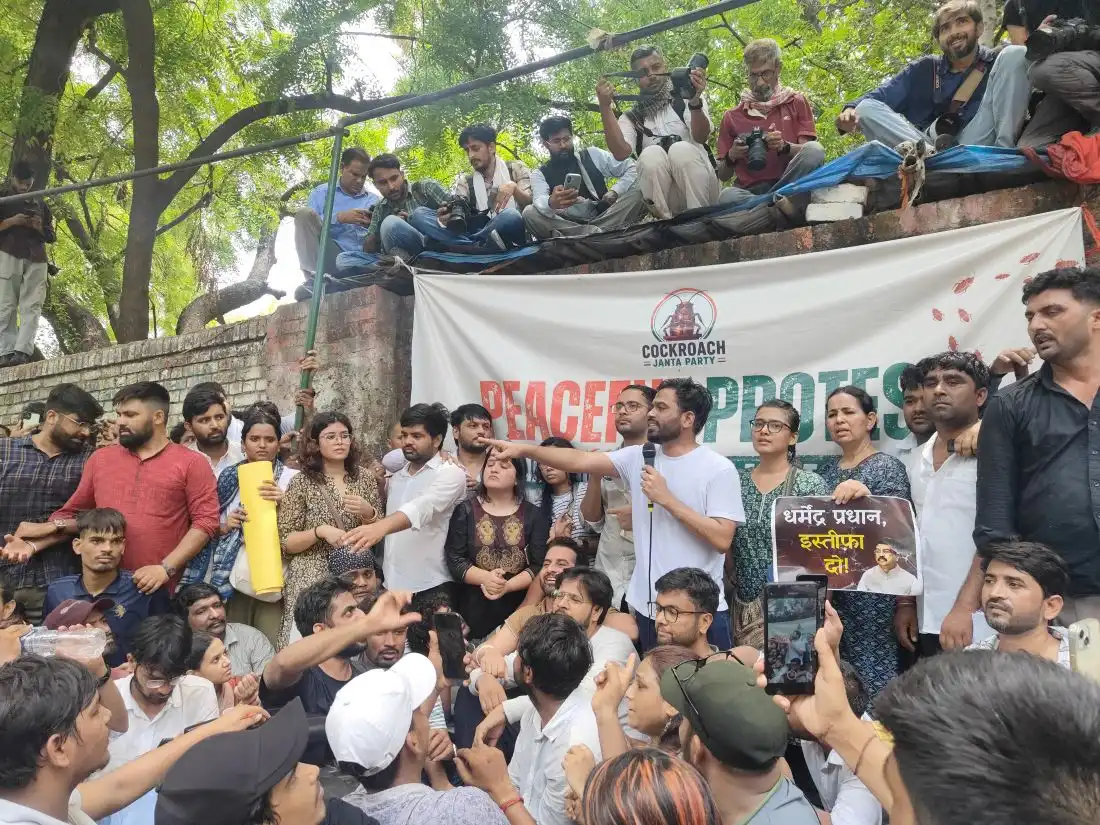
The slogan heard during recent student protests in Delhi — “Doctor ki degree bikau hai” (“Medical degrees are for sale”) — captured a fear that extends well beyond medicine. If success is perceived to depend on access to leaked papers rather than ability, the legitimacy of the entire system comes into question.
A Global Warning
Examination fraud is not unique to India. Countries from China and South Korea to the United States have grappled with cheating scandals involving high-stakes tests.
What makes India’s experience distinctive is the combination of scale and repetition.
Few countries conduct examinations involving millions of candidates with such frequency. Few have witnessed so many major leaks across recruitment, admissions and public-sector examinations over such a prolonged period.
The Indian government has responded with tougher laws, including the Public Examinations (Prevention of Unfair Means) Act, 2024, which provides for severe penalties against organised leak networks. The NTA has also announced plans to shift NEET to a computer-based format from 2027.
Whether those measures succeed remains uncertain.
As investigators continue examining the 2026 NEET controversy and millions prepare for a fresh attempt at the examination, one conclusion is difficult to escape.
For years, India treated paper leaks as recurring scandals. The evidence now suggests they are something else: the visible symptoms of a sophisticated parallel system that has grown alongside the country’s examination machinery for a generation.
Every year, millions of candidates enter examination halls believing they are competing against one another. The history of the past quarter-century suggests that many have also been competing against an invisible marketplace operating in the shadows — one that has repeatedly proved more adaptable than the institutions designed to stop it.
Technology may close some vulnerabilities while creating new ones. The larger challenge is restoring public confidence in institutions that many students increasingly view with suspicion.