Voters in India turned out in record numbers Thursday in Assam, Kerala and the union territory of Puducherry, kicking off a sprawling set of state assembly elections that will shape the country’s political landscape heading into the next national vote in 2029.
With polling still to come in Tamil Nadu later this month and in two phases in West Bengal, the contests involving more than 824 seats and nearly 17 crore eligible voters have become a high-stakes barometer for Prime Minister Narendra Modi’s Bharatiya Janata Party. Can the BJP extend its dominance beyond its traditional strongholds in the north and parts of the northeast? Or will entrenched regional parties continue to hold the line in the south and east, preserving a measure of federal pushback against the central government’s growing influence?
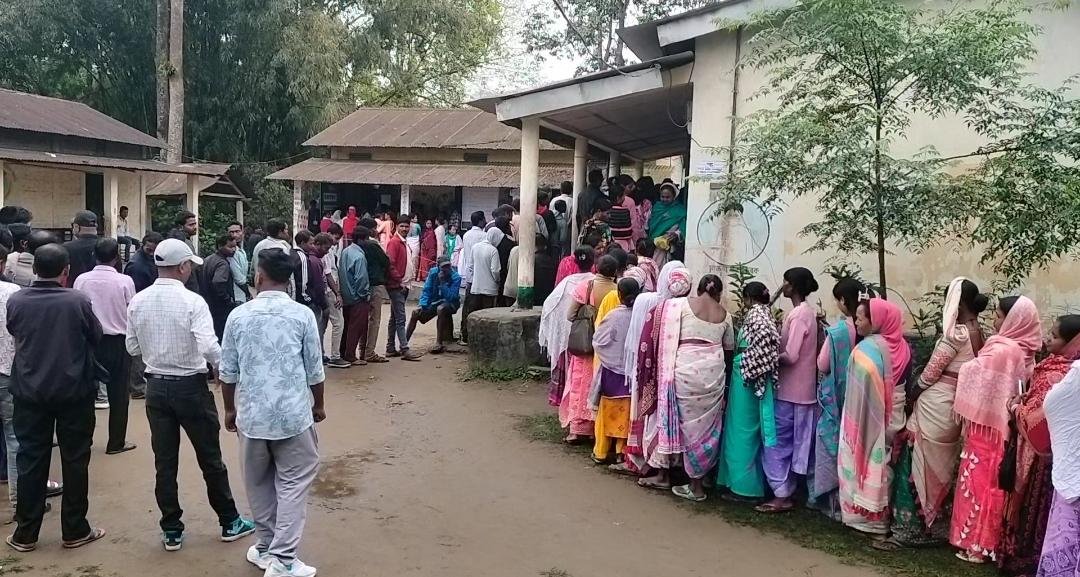
The early returns on turnout were striking. Assam reported nearly 86 percent participation by late afternoon, Puducherry hit record highs approaching 90 percent, and Kerala saw robust voting around 78 percent, with women often outnumbering men at polling stations. Election officials described smooth proceedings overall, though sporadic reports of minor clashes and heavy security deployment underscored the tensions that frequently accompany Indian polls. Results for all five assemblies are scheduled to be declared on May 4.
For Modi, now in his third term, these elections carry more than local significance. Success would signal that his blend of Hindu nationalist appeal, welfare delivery and centralized governance can penetrate regions long resistant to the BJP. Setbacks, particularly in the south, would highlight the enduring power of identity-based regionalism and concerns over federal autonomy, jobs and inflation that cut across state lines.
Assam: A likely hold for the BJP’s eastern anchor
In Assam, Chief Minister Himanta Biswa Sarma and his BJP-led alliance enter the contest as clear favorites after two terms in power. The state’s 126 seats have been shaped by Sarma’s aggressive focus on infrastructure, women’s cash-transfer schemes and a hard line on what he calls illegal immigration from Bangladesh — an issue that resonates deeply in a region with a history of ethnic tensions.
Delimitation exercises that redrew constituencies have drawn opposition charges of favoritism, but the BJP frames them as long-overdue corrections. Floods remain a perennial grievance, and unemployment worries persist, yet analysts and early opinion soundings suggest the NDA is on track for a comfortable majority. A strong win here would further consolidate the BJP’s foothold in the northeast, a region it has methodically courted.
Kerala and Puducherry: Tough terrain for the saffron surge
Kerala’s 140-seat battle stands out for its ideological contrast. The ruling Left Democratic Front, led by the veteran communist Pinarayi Vijayan, is seeking a rare third straight term on the back of its record in disaster management and social welfare. But it faces sharp criticism over allegations of corruption, family favoritism in appointments and stubbornly high unemployment in a state known for its high literacy and human development indicators.
The Congress-led United Democratic Front smells an opportunity, bolstered by its stronger showing in recent national polls. The BJP, which has hovered in the low double digits in vote share, is pushing hard to open a southern account — an uphill task in a state where secular traditions and skepticism of majoritarian politics run deep.
The tiny union territory of Puducherry, with just 30 seats, offers a symbolic prize. Its ruling alliance involving the BJP is fighting to hold on against a Congress-led challenge in what has become a revolving-door political arena.
Tamil Nadu and West Bengal: The bigger battlegrounds
The most consequential fights lie ahead. In Tamil Nadu, the Dravida Munnetra Kazhagam (DMK) government of M.K. Stalin defends its turf in a 234-seat assembly against a fragmented opposition that includes a weakened AIADMK and the emerging challenge from actor-turned-politician Vijay’s new party. Dravidian ideology, social justice rhetoric and welfare promises dominate, while the BJP’s efforts to ally with regional players and inject cultural issues have met limited traction so far.
West Bengal’s 294 seats promise the highest drama. Mamata Banerjee’s Trinamool Congress has governed since 2011 but is weighed down by anti-incumbency, massive recruitment scandals in education and lingering public anger over women’s safety issues. The BJP, which made significant gains in previous cycles, is mounting a vigorous campaign centered on “change” and central welfare schemes. Polling in two phases reflects the state’s size and volatility; past elections here have been marred by violence.
Opposition leaders across these states have accused the central government and the Election Commission of tilting the field — from voter-list revisions that some say disproportionately affected minorities to the use of central agencies against rivals. The commission has rejected the claims as routine administrative steps.
National stakes in a federal contest
Underlying the regional contests are broader currents: persistent youth unemployment, price pressures on essentials and debates over how much power should reside in New Delhi versus state capitals. Modi’s government has poured money into infrastructure and direct-benefit transfers, but critics argue its cultural and political centralization has strained the federal compact.
For the BJP, breakthroughs in Kerala, Tamil Nadu or West Bengal would mark a historic expansion and weaken the opposition’s ability to project a united front. For regional heavyweights and the Congress, holding the line would affirm that India’s democracy remains a mosaic of diverse voices rather than a march toward one-party dominance.
With turnout signaling high engagement, these elections are already reminding observers of the raucous, resilient nature of the world’s largest democracy. Whether the results reinforce Modi’s national momentum or expose its geographic limits will reverberate well beyond May 4 — offering an early, if imperfect, glimpse into the forces that will define Indian politics for years to come.