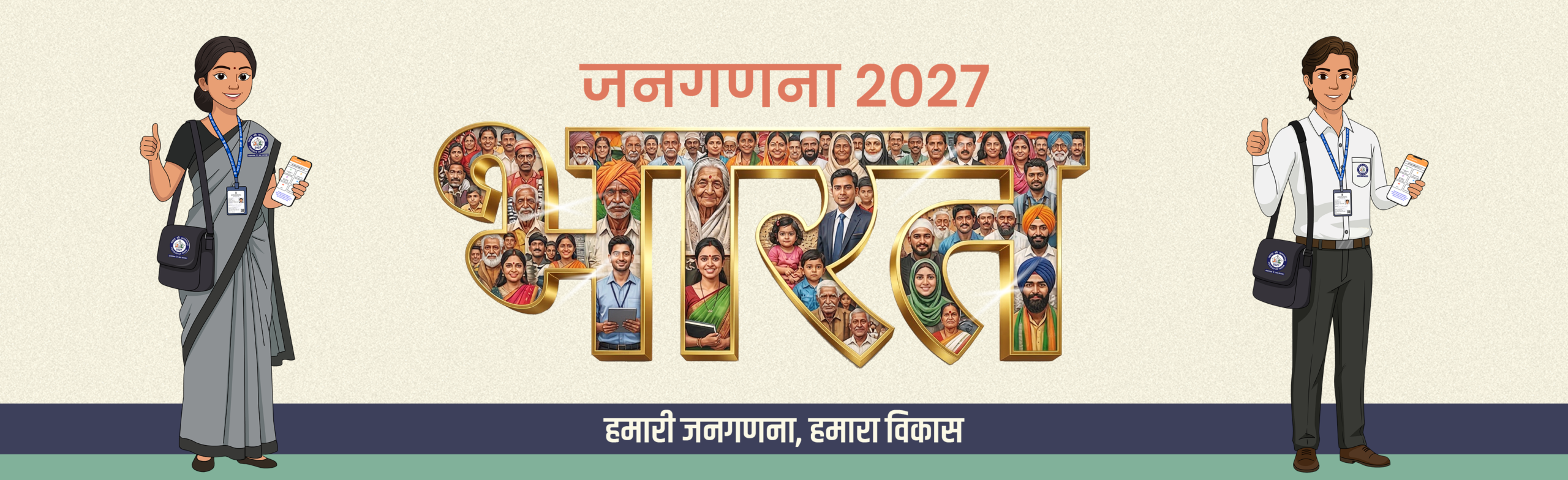
More than three million enumerators fanned out across India this week to begin the monumental task of counting the country’s roughly 1.4 billion people, launching a yearlong exercise that for the first time in nearly a century will systematically record every citizen’s caste.
The census — delayed for years by the COVID-19 pandemic and logistical hurdles — is no routine headcount. Its findings will shape welfare programs, political representation, the allocation of parliamentary seats and the future of affirmative action in the world’s most populous nation for the next decade or more.
Officials described the operation as the first fully digital census, with self-enumeration portals opening for households and a mobile app for field workers. Phase one, the house-listing and housing census that began April 1 and runs through September, will map dwellings, amenities and basic household details across 1.4 billion Indians. A second phase of population enumeration, scheduled for early 2027, will delve deeper into demographics, education, migration, fertility — and, most controversially, caste.
It marks the first national effort since the 1931 colonial census to ask every individual their specific caste or sub-caste, rather than simply noting whether they belong to the constitutionally recognized Scheduled Castes or Scheduled Tribes. Post-independence censuses had avoided broader caste data, with governments arguing it could deepen social divisions in a society where the ancient hierarchy still influences marriage, jobs and daily life for hundreds of millions.
A reluctant U-turn with high political stakes
Prime Minister Narendra Modi’s Bharatiya Janata Party had long resisted a full caste count, warning that it risked inflaming tensions and fragmenting society along identity lines. The government’s reversal last year came after sustained pressure from opposition parties, regional leaders and caste-based groups, especially in the politically crucial Hindi heartland and southern states where Other Backward Classes (OBCs) form large voting blocs.
Analysts say the decision also reflects electoral realities after the BJP fell short of a outright majority in the 2024 national elections. Accurate data on the size of different caste groups could force a recalibration of reservation policies in government jobs, education and legislatures — policies that already set aside nearly half of seats and positions for historically disadvantaged communities.
Critics, including some sociologists, worry that officially enumerating thousands of castes and sub-castes could harden identities rather than erode them. A provocative recent book has argued that counting castes may entrench the very system many seek to dismantle. Others counter that without fresh data, policies remain based on outdated 1931 figures or patchy state-level surveys, leading to inequities and political manipulation.
What the numbers could unleash
The stakes are enormous. India’s reservation system, rooted in the constitution’s effort to undo centuries of discrimination, has been a flashpoint for decades. Protests erupted in the 1990s when OBC quotas were expanded; fresh caste data could spark new demands to raise or redistribute those quotas, redraw electoral boundaries after the next delimitation exercise, and implement the long-delayed women’s reservation law in Parliament and state assemblies.
For policymakers, reliable caste figures could help target welfare more precisely in a country where nearly 800 million people still rely on subsidized food rations. Demographers and economists say the census will also provide the first comprehensive post-pandemic snapshot of India’s population — its aging patterns, internal migration, urban sprawl and access to education and digital infrastructure.
Yet the exercise faces practical challenges. Training millions of enumerators, ensuring data accuracy in remote Himalayan villages and dense urban slums, and protecting sensitive personal information in a digital format will test the government’s capacity. In snow-bound regions such as Ladakh, Himachal Pradesh and parts of Jammu and Kashmir, enumeration begins earlier to beat the winter.
Opposition parties have welcomed the inclusion of caste data but accused the government of dragging its feet on the overall census, saying delays have hurt planning for everything from school construction to pandemic preparedness.
A mirror to a changing India
As enumerators knock on doors from Kerala’s backwaters to Rajasthan’s deserts, the census is forcing India to confront one of its oldest and most persistent fault lines. For supporters, detailed caste data is a tool for greater social justice in a rapidly modernizing economy. For skeptics, it risks reducing complex individuals to inherited labels in a nation striving to move beyond them.
The final numbers, expected after 2027, will not just tally heads. They will help determine who gets a larger share of political power, public resources and opportunities in a country of staggering diversity — and deepening aspirations. How India reckons with those figures could reshape its democracy and social compact for generations.
Yet even as enumerators begin their work, questions swirl not just about how the data will be collected, but about how much of it will ultimately see the light of day.
Under the Census Act, individual responses have long been treated as confidential and shielded from RTI requests or court use. While the government has committed to including caste in this exercise, officials have so far withheld even internal records of deliberations on the decision from public scrutiny. Many observers — citing the experience of the 2011 SECC, whose detailed caste data was never fully released amid claims of widespread errors and anomalies — believe the most granular caste figures may never be placed in the public domain in raw form.
Instead, the government could opt for controlled, aggregated releases focused on broad policy categories, using the information internally to refine welfare targeting or prepare for the next round of delimitation. Opposition parties and social justice advocates are already pressing for full transparency, arguing that partial disclosure would undermine the very purpose of updating decades-old numbers. The Rashtriya Swayamsevak Sangh (RSS), the ideological fountainhead of the ruling BJP, has backed caste enumeration for welfare purposes but cautioned that the data should not be used as a political tool to divide society.
For policymakers, the exercise offers a chance to move beyond patchy state surveys and outdated estimates. But if large parts of the caste data remain closely held, critics warn, it could fuel accusations that the count serves administrative convenience more than genuine social reckoning.