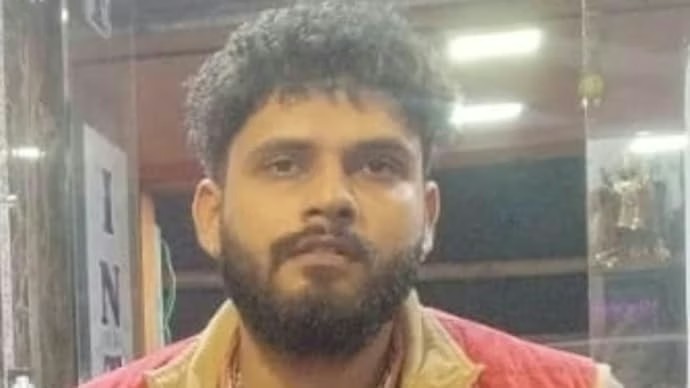
When Sahil Chauhan stepped off a flight at Indira Gandhi International Airport on 10 April 2026, the most wanted hitman of Haryana’s Bhuppi Rana gang was no longer a shadowy figure operating from halfway across the world. Handcuffed and flanked by officers from the Haryana Special Task Force, the 30-something gangster — also known in some police records as Sahil Rana — had just completed a journey that began years earlier in the dusty court complex of Jagadhari and ended in a Thai deportation lounge.
The operation, coordinated by India’s Central Bureau of Investigation with the ministries of external affairs and home affairs, marked another quiet success for New Delhi’s growing ability to chase fugitives through Interpol channels. More than 150 wanted criminals have been repatriated in recent years via the same mechanism, officials say.
Yet Chauhan’s case stands out: a textbook example of how local gang rivalries in northern India have spilled into international hideouts, forcing police to master the art of cross-border pursuit.
Chauhan, a resident of Shahzadpur in Ambala district, first surfaced in police files around 2016 as a foot soldier in the violent world of organised crime that has long plagued Haryana, Punjab and Chandigarh. He rose quickly within the Bhuppi Rana gang — and was also linked at times to the rival Bambhiha network — becoming known for contract killings, extortion and armed robberies. By the time Haryana police compiled his dossier, he faced at least 16 serious cases involving murder, attempted murder, dacoity and the illegal use of firearms.
The incident that sealed his notoriety came on 4 January 2017 inside the heavily guarded Jagadhari Court Complex in Yamunanagar. Monu Rana, a figure from a rival faction, had been brought for a routine hearing in his own pending criminal matters. According to the chargesheet later filed by Haryana police, Chauhan walked into the premises and opened fire in a brazen display of gang muscle. The attack, carried out in broad daylight amid lawyers, litigants and security personnel, underscored the audacity of the region’s underworld. Chauhan was arrested, charged and eventually sentenced to 10 years in prison. But after being released on bail, he vanished — slipping out of the country before authorities could secure him again.
What followed was a sophisticated game of cat and mouse. Chauhan obtained a passport through fraudulent means and embarked on a meandering route designed to evade detection: from Kolkata to Dhaka, then Jakarta, Bali, Malaysia, Angola and Vietnam, before finally settling in Thailand. Police later pieced together the itinerary from travel records and intelligence. For years he lived quietly in Bangkok, far from the courtrooms and crime scenes of his home state, while remaining a high-priority target for the Haryana STF, which continued to investigate his role in multiple contract killings.
The breakthrough came when Haryana police requested a Red Notice through the National Central Bureau in New Delhi. Interpol circulated the alert, and Indian agencies, working through the newly strengthened Bharatpol platform, geo-located him in the Thai capital. On 10 April, Thai authorities deported him. Within hours of landing in Delhi, he was in STF custody and on his way to face fresh interrogation — and, eventually, the completion of his earlier sentence plus any new charges.
Senior officials described the operation as a model of inter-agency cooperation. The CBI, acting as India’s Interpol national central bureau, stressed that such repatriations rely on seamless coordination between state police, central ministries and foreign counterparts. “Sahil Chauhan is wanted by the Haryana Police in multiple criminal cases involving murder, attempt to murder, dacoity, and the use of illegal firearms/weapons,” the agency noted in its statement. “He is a key member of the Bhuppi Rana gang operating in Haryana, Punjab and Chandigarh areas.
”For law enforcement in Haryana, the arrest is more than a single trophy. The state has become a laboratory for India’s battle against organised crime syndicates that thrive on real-estate rackets, sand mining, contract killings and political patronage. The Bhuppi Rana gang itself gained notoriety in the late 2010s through high-profile murders, including the 2018 killing of Bhupesh Rana in Barwala, in which Chauhan and other associates were named. Rivalries between such groups have occasionally spilled into political spheres and even drawn the attention of central agencies probing larger conspiracies.
Chauhan’s return also highlights a shift in India’s approach to fugitive economics. Gone are the days when criminals could simply melt away into neighbouring countries. With improved passport tracking, digital intelligence sharing and diplomatic pressure on friendly nations such as Thailand, police are closing the net faster. Haryana STF sources privately describe this as their fifth successful foreign repatriation in 2026 alone — a statistic that suggests a more aggressive and sophisticated strategy is paying dividends.
Yet questions linger about the ecosystem that produced men like Chauhan. How did a young man from a small Haryana town become a feared enforcer capable of orchestrating hits while on the run? What networks — financial, logistical, perhaps even political — sustained him during nearly a decade abroad? Investigators are now poring over his communications and associates, hoping the interrogation will yield fresh leads on remaining gang members still at large.
For now, Chauhan sits in custody, his global odyssey over. In the courtrooms of Haryana, where his story began with gunfire, it will likely end with the slow grind of justice. And in the process, Indian agencies have sent a signal to other fugitives: the distance between Bangkok and a prison cell is shorter than it once seemed.