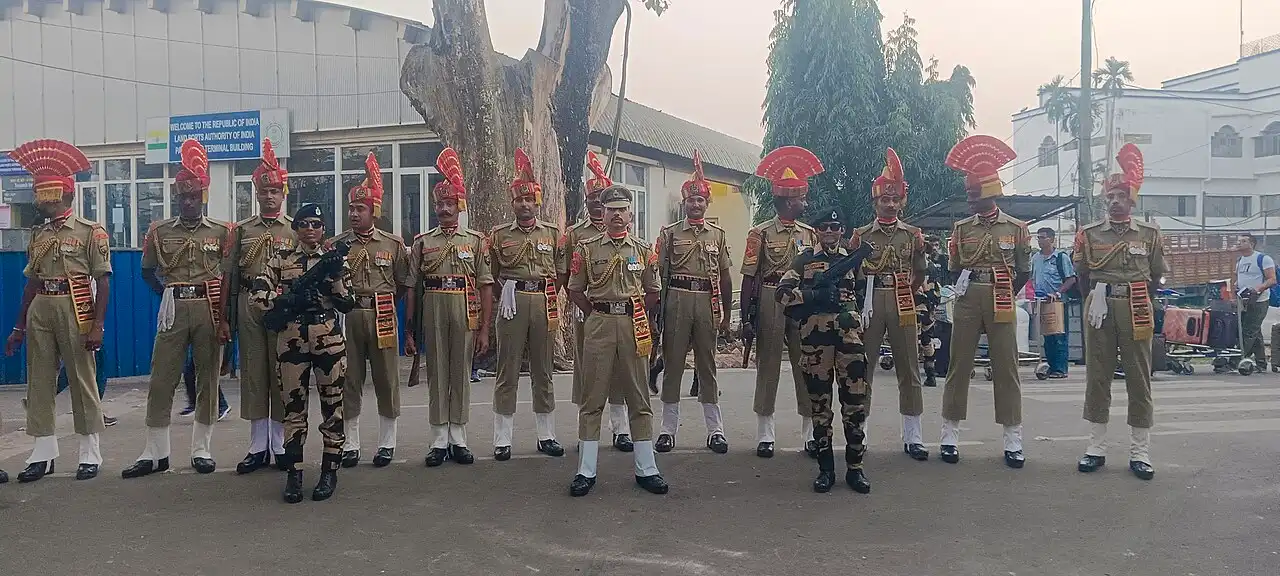
In a major push to modernize its border security and bolster evidence gathering, India’s Home Ministry has approved the deployment of more than 5,000 night‑vision body‑worn cameras (BWCs) and a select number of biometric scanning units for Border Security Force (BSF) troops along the 4,096‑kilometer India‑Bangladesh frontier.
Under the plan, two batches of BWCs—each capable of recording 12 to 14 hours of continuous video—will be issued to frontline BSF personnel charged with patrolling vulnerable Border Outposts (BOPs). At the same time, “smart outposts” in high‑risk infiltration zones will receive fingerprint and iris‑scan devices for undocumented migrants intercepted on Indian soil.
Officials said the move stems from a “comprehensive security review” conducted after political upheaval in Bangladesh following the August 5, 2024, election that saw Prime Minister Sheikh Hasina’s government fall. Internal assessments warned of potential spikes in unregulated crossings, cattle smuggling, narcotics trafficking and fake currency operations along the porous border.
BSF sources said the primary aim of the cameras is to record the deportation process of illegal entrants and document any armed confrontations with transnational criminals. “Each clip will be geo‑tagged and time‑stamped, creating an irrefutable record of every encounter,” said one senior official, speaking on condition of anonymity. “That’s invaluable for both internal inquiries and external investigations.”
Security analysts note that beyond evidentiary value, the equipment serves as a powerful deterrent—discouraging excessive force by troops and aggression by smugglers once both sides know their actions are on tape.
The biometric devices will feed fingerprints and iris scans directly into the Foreigners Registration Office (FRO) database, creating an evidence‑based record of every individual apprehended. Officials expect this will streamline deportation proceedings and help identify repeat offenders involved in human trafficking networks.
Since the year’s start, the BSF has intercepted 1,372 Bangladeshis entering India illegally and coordinated with state police to repatriate an additional 3,536 migrants. Last year’s figures stood at 2,425 incoming and 1,049 outgoing crossings. Meanwhile, border‑area clashes—ranging from brick‑bat attacks to small‑arms fire—have been on the rise, with 77 incidents reported in 2024 and 35 so far this year.
New Delhi’s decision comes amid repeated protestations from Dhaka over alleged “unjustified firings” by Indian forces. The Bangladesh Border Guard (BGB) has accused BSF troops of using lethal force disproportionately. BSF officials counter that they open fire only “as a last resort” to protect lives. Now, they say, the recorded footage will serve to verify rules‑of‑engagement compliance for both sides.
Still, India’s move is likely to resonate with international audiences monitoring border‑management innovations. From the U.S.‑Mexico wall’s integrated sensors to the European Union’s Frontex pilots, governments increasingly turn to biometric verification and real‑time video to stem illicit flows while safeguarding their forces.
Beyond frontline deployment, the BWCs and scanners will support after‑action reviews, training modules and joint operations with customs and intelligence agencies. Commanders plan to analyze footage monthly to identify procedural lapses and refine standard operating procedures.
Officials believe that, over time, the data-driven approach will not only curb smuggling and unauthorized migration but also thread the needle between national security and human‑rights obligations.
As India charts its “smart border” strategy, the BSF’s new body cams and biometrics suite mark a significant leap toward a high‑tech frontier—one where every step, every fingerprint and every moment of confrontation is captured, catalogued and, above all, accountable.