Vanniyars to Storm Jails Dec 17: Reviving a Century-Old Struggle for Dignity Amid Electoral Storm
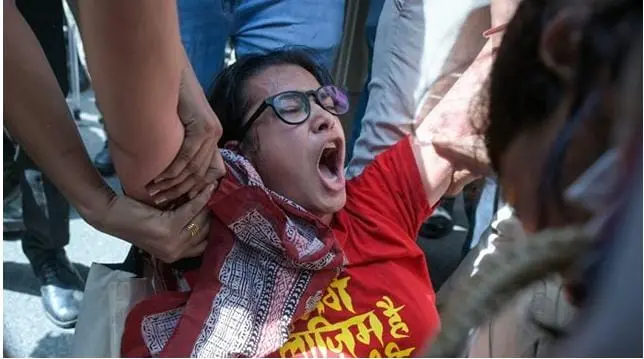
In a resounding echo of Tamil Nadu’s storied history of caste-based agitations, Pattali Makkal Katchi (PMK) leader Dr. Anbumani Ramadoss issued a fiery call on Sunday for a statewide “fill the jails” protest on December 17, urging hundreds of thousands of supporters to besiege government offices and court mass arrests to demand a 15 percent internal reservation for the Vanniyar community within the state’s Backward Classes quota. The escalation, timed just months before the April-May 2026 Assembly elections, underscores the high-stakes politics of affirmative action in India’s southern Dravidian heartland, where a once-martial agrarian caste’s quest for socio-economic redemption collides with the ruling Dravida Munnetra Kazhagam (DMK)’s promises of social justice.
Dr. Ramadoss, the 56-year-old former Union Health Minister and scion of the PMK’s founding patriarch S. Ramadoss, framed the impending stir as a cathartic uprising against “repeated betrayals” by Chief Minister M.K. Stalin’s administration. “This is not just a protest; it is the Vanniyar community’s pain exploding into strength,” he declared in a statement that reverberated across northern Tamil Nadu’s dusty villages and urban diaspora networks. The call targets every one of the state’s 234 Assembly constituencies, with PMK cadres instructed to rally Vanniyars “across all parties and movements”—including those simmering within the DMK itself—to lay siege to collectorates and secretariats at 11 a.m. on the designated day. “Our prisons will overflow, forcing the government to enact the law before the year ends,” Ramadoss vowed, invoking the scale of the 1987 reservation riots that birthed the PMK and claimed 21 lives.
For the estimated 13 percent of Tamil Nadu’s 72 million people who identify as Vanniyar—roughly 9 million souls scattered from the arid plains of Villupuram to the industrial corridors of Chennai—this agitation represents more than policy advocacy. It is a visceral reclamation of a heritage eroded by colonial land grabs and post-independence inequities, a fight to hoist a community from the margins back toward the clout it wielded as ancient chieftains. Their prevailing socio-economic condition in the southern state is a vivid example of the enduring fault lines of India’s caste system, where affirmative action battles remain the lifeblood of democracy.
The Vanniyars, also known as Vanniyakula Kshatriya or Palli, trace their lineage to the fire-worshipping Vanni clans immortalized in the Sangam literature of ancient Tamil Nadu (circa 300 BCE–300 CE). These texts, etched in palm-leaf manuscripts and recited in coastal hamlets to this day, portray them as bow-wielding guardians of forests and villages—fierce warriors who tamed the wild frontiers of the Coromandel Coast. Under the Chola Empire (9th–13th centuries CE), they evolved into palayakkarars, or poligars, hereditary chieftains who fortified hillocks like Gingee—once dubbed the “most impregnable fortress in India” by Mughal chroniclers—and levied taxes on wet and dry lands. Inscriptions from Thiruvannamalai temples speak of Vanniya Nattar lords as custodians of kaniyatchi, inalienable agrarian rights that sustained a semi-autonomous martial identity. They were not the Brahmin priests or Vellala overlords of the fertile Cauvery delta, but sturdy Shudra tillers who bridged the elite and the subaltern, their lives a tapestry of plowshares and broadswords.
This stature began crumbling with the East India Company’s inexorable advance in the 18th century. The British, obsessed with revenue extraction, dismantled the poligar system through the Carnatic Wars and the Vellore Mutiny of 1806, where sepoy rebellions—fueled partly by Vanniyar foot soldiers—were brutally quashed. The Ryotwari and Zamindari settlements of the 1820s–1850s, as chronicled in the Imperial Gazetteer of India (1908), systematically alienated smallholders like the Vanniyars, funneling their modest plots to Chettiar moneylenders and Pillai intermediaries. Famine cycles in 1876–78 and 1896–97 ravaged northern districts like Salem and South Arcot, where Vanniyars formed the backbone of dryland cultivation. By the 1931 Census of the Madras Presidency—India’s last comprehensive caste enumeration— they were reclassified as a “Depressed Class,” their literacy hovering at a dismal 8 percent, with 85 percent consigned to landless labor. Anthropologist Lloyd Rudolph’s 1980s analysis projected them at 10 percent of the presidency’s population, concentrated at 25–40 percent in northern Tamil belts, yet trapped in a debt spiral that turned proud tillers into perpetual serfs.
Post-1947 independence offered glimmers of redress, but the Dravidian movement’s early embrace of backward classes—pioneered by the Justice Party in the 1920s—sidestepped the Vanniyars, bundling them with dominant Vellalar castes. It was the Sattanathan Commission of 1970, appointed by DMK Chief Minister M. Karunanidhi, that first spotlighted their plight: a 12–15 percent demographic slice, yet literacy below 20 percent, with the majority as itinerant laborers in Chengalpattu and Arcot. The commission’s report, gathering dust in state archives, decried their exclusion from the state’s nascent reservation matrix, painting a portrait of a community adrift—neither Dalit enough for Scheduled Caste protections nor elite enough for unreserved spoils.
The dam broke in 1987, when the Vanniyar Sangam—precursor to the PMK—orchestrated a month-long railway blockade and highway shutdown, paralyzing Tamil Nadu and claiming 21 lives in police firing. The violence, replayed in grainy archival footage cherished by diaspora youth on YouTube, forced the DMK to concede Most Backward Class (MBC) status in 1989, carving out a 20 percent quota in education and jobs shared with 116 other castes. S. Ramadoss, a lanky surgeon from Thailapuram, channeled this fury into the PMK’s founding that July, transforming agrarian grievances into electoral muscle. The party, symbolized by a mango leaf, became the Vanniyars’ battering ram, securing alliances with the BJP-led NDA and propelling Anbumani to Parliament in 2014.
Yet, four decades on, the MBC umbrella has proven a leaky shelter. The Ambasankaran Commission of 1985—whose door-to-door survey pegged Vanniyars at 13.01 percent (6.5 million in a 50-million state)—revealed stark disparities: 70 percent landless or marginal farmers with holdings under one acre, literacy at 25–30 percent, and higher education enrollment below 5 percent. Women fared worse, with rates dipping to 20 percent amid cultural norms tying them to household toil. The Janarthanan Commission of 2011 echoed these woes, noting Vanniyars snared just 2–3 percent of MBC seats in medicine and engineering, their rural poverty hovering at 60–70 percent in strongholds like Cuddalore and Thiruvannamalai. Agricultural distress post-2003—exacerbated by monsoon failures and usurious credit—drove waves of migration to Bengaluru’s construction sites and Chennai’s garment factories, where daily wages of 500 rupees ($6) barely stave off despair.
This marginalization, Ramadoss argues, is no accident but a “trampling of social justice” by a DMK that styles itself as the Justice Party’s heir. The Supreme Court’s March 31, 2022, verdict quashed a 2021 AIADMK-PMK law granting 10.5 percent sub-quota to Vanniyars, citing “lack of quantifiable data,” but greenlit internal reservations if backed by fresh surveys. Over 1,300 days later—1,267 by some counts—the DMK has dawdled, Ramadoss charges. A May 8, 2022, meeting at the Secretariat yielded Stalin’s pledge for a special Assembly session before the 2022 academic admissions; S. Ramadoss fired off 10 letters and held 10 calls, while Anbumani logged three face-to-faces and 50 representations from aides. “Every assurance was a mirage,” Ramadoss lamented, pointing to the government’s pre-2024 Lok Sabha pivot: no caste census, no quota.
The Tamil Nadu Backward Classes Commission, tasked with a three-month report in 2022, has ballooned to 1,040 days of inertia, its term extended to July 2026 in what Ramadoss brands a “travesty.” Amid this, the Kulasekaran Commission—formed post-2020 PMK agitations—limps on without a final word, as Stalin’s DMK eyes a statewide caste survey tied to the delayed 2026 national census. Critics within the Vanniyar fold whisper of “quota hijacking” by five or six MBC sub-castes, diluting benefits for the community’s 80–90 percent rural base. PMK manifestos inflate their share to 18–24 percent for leverage, demanding a Kerala-style compartmental quota and 2 percent central slots, but official benchmarks hold at 13 percent—a figure pivotal to the 69 percent total reservation breaching the 50 percent cap.
The December 17 call, then, is electoral dynamite. With polls looming, it positions PMK—polling 4–5 percent statewide—as a kingmaker, its Vanniyar bastions pivotal in 40 northern seats. Anbumani, navigating a fresh rift with his father (who announced parallel December protests via the Vanniyar Sangam on September 24, 2025, mobilizing youth under 30), seeks to broaden the tent: pamphlets to AIADMK, Congress, and even DMK defectors, promising a “united Vanniyar front.” Observers see shadows of 1987, when blockades won MBC status, or 2013, when PMK violence racked up 600 crore rupees in damages before arrests. “This agitation tests the DMK’s Dravidian soul,” said political analyst Siddharth Siva, speaking from Toronto’s Tamil community center. “For global Tamils, it’s a reminder: our votes abroad echo home, but our kin’s chains remain.”
Yet, amid the clamor, glimmers of ascent pierce the gloom. Reservations have tripled literacy to approximately 75 percent by 2021 estimates, funneling youth into polytechnics and state services—though Group I jobs lag at 5–7 percent. Diaspora remittances, funneled through Singapore and Toronto NGOs, fund scholarships and borewells in Villupuram. Cultural revivals—Vanniyar Kshatriya sabhas reenacting Chola epics—stir pride, countering the “Shudra demotion” narrative peddled by some elites. PMK’s 2025 conference, with 14 resolutions, vows a caste census under the 2008 Statistical Act, not just for quotas but to “regain ancient stature.”
For Tamils abroad, nursing memories of Jaffna’s libraries or Kuala Lumpur’s labor hostels, the Vanniyar saga is universal: a tale of warriors reduced to wage slaves, now rising through ballots and barricades. As December 17 nears, Chennai’s secretariat braces for sieges, but the real battle rages in the hearts of a community that once lit the Vanni fires—refusing to flicker out.