Imagine standing on the frozen edge of the world, where the wind slices like a blade and the ice stretches endlessly toward a horizon that seems to touch another planet. Beneath your boots lies not just snow and ancient ice, but a vast, hidden system that has shaped Earth’s climate for millions of years. Here, in West Antarctica, scientists are listening to the ice groan and crack as warm ocean waters eat away at its foundations from below. What they are finding is unsettling: parts of this colossal ice sheet may already have crossed critical thresholds, setting in motion changes that could reshape coastlines for centuries to come.
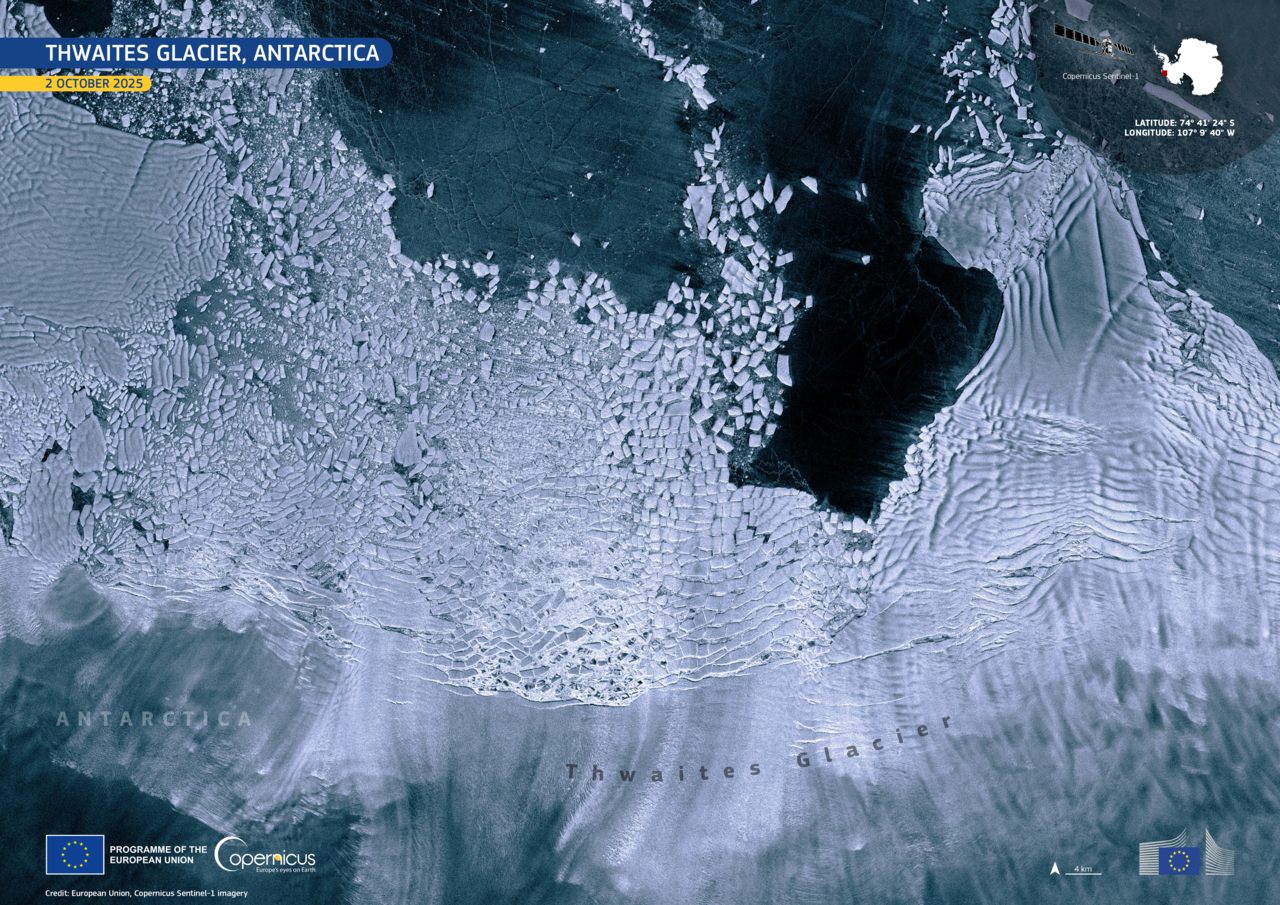
The Antarctic Ice Sheet holds enough frozen water to raise global sea levels by around 58 metres if it were to melt entirely. Most of that ice sits in East Antarctica, long considered relatively stable. But it is the West Antarctic Ice Sheet – and particularly one notorious glacier – that has captured the attention of researchers worldwide. Thwaites Glacier, often dubbed the “Doomsday Glacier,” is roughly the size of Great Britain. Its collapse alone could add more than 65 centimetres to global sea levels. Together with neighbouring glaciers, it acts as a cork holding back enough ice to raise seas by several metres.
Recent research paints a more nuanced – and concerning – picture. A major study published in Nature Climate Change in early 2026 analysed the Antarctic ice sheet not as one uniform mass, but as a collection of interconnected drainage basins, each with its own tipping thresholds. Some basins, particularly in the Amundsen Sea sector that includes Thwaites and Pine Island glaciers, appear to have the lowest thresholds. At today’s global warming level of roughly 1.3°C above pre-industrial temperatures, parts of West Antarctica may already be committed to substantial long-term ice loss.
The mechanics of instability
What makes West Antarctica so vulnerable is its geography. Much of the ice sheet is grounded on bedrock that lies below sea level and slopes downward as it extends inland – a configuration known as marine ice sheet instability (MISI). Warm Circumpolar Deep Water sneaks beneath the floating ice shelves that fringe the glaciers, melting them from below. As the shelves thin and weaken, the glaciers accelerate, their grounding lines – the critical point where ice meets bedrock – retreat inland. Once retreat begins on a retrograde slope, it can become self-reinforcing: more ice flows into the ocean, exposing more vulnerable bedrock, and the process gathers pace.
Satellite observations confirm the changes. Over recent decades, Thwaites has shown some of the highest rates of ice loss. New modelling calibrated with satellite data suggests that by the 2060s, the rate of ice loss from Thwaites alone could rival the current annual contribution from the entire Antarctic ice sheet. Expeditions in 2025 and 2026, including daring hot-water drilling through hundreds of metres of ice on Thwaites, are now providing direct measurements of ocean temperatures and currents beneath the glacier, revealing just how efficiently warm water is undermining the ice.
Professor Ricarda Winkelmann, one of the lead authors of the 2026 tipping basins study, emphasises an important distinction: “Crossing a tipping point doesn’t mean immediate collapse. Large-scale ice loss unfolds over centuries, but the process may already have been set in motion in parts of the West Antarctic Ice Sheet.” About 40% of the ice stored in West Antarctica could already be committed to long-term loss under current conditions.
East Antarctica, often called the “sleeping giant,” was once thought safer. Newer research shows that certain basins there could cross their own thresholds at 2–3°C of warming, potentially adding significantly more to sea levels over millennial timescales.
What “irreversible” really means
The word “irreversible” is frequently used in these discussions, but it requires careful interpretation. On human timescales – decades to a few centuries – some of these processes are effectively one-way once triggered. Glacial isostatic rebound (the land rising as ice weight is removed) may eventually slow or stabilise retreat in places, but the ice lost to the ocean will not return quickly. Ancient sediment records drilled from beneath the ice show that West Antarctica has been ice-free in warmer periods of Earth’s past, offering sobering context for what might lie ahead.
For coastal communities, the implications stretch far beyond this century. Even modest additional contributions from Antarctica compound the effects of thermal expansion of seawater and melting from Greenland and mountain glaciers. Higher seas mean more frequent and severe flooding during storms, erosion of shorelines, salinisation of freshwater supplies, and costly adaptations for cities from London and New York to Shanghai, Mumbai, and countless low-lying islands.
Yet the story is not one of inevitable doom in the coming decades. The rate and ultimate scale of ice loss still depend heavily on how much more the planet warms. Rapid and deep cuts in greenhouse gas emissions could limit the extent of crossing additional tipping thresholds, particularly in East Antarctica, and slow the pace of change.
A race against time beneath the ice
Scientists working on Thwaites and other remote glaciers describe a sense of urgency mixed with wonder. Drilling operations face extreme conditions: equipment can be lost through suddenly thinning ice, and the logistical challenges of working in one of the most inhospitable places on Earth are immense. Yet each dataset returned – whether from satellites, ice cores, or instruments lowered through boreholes – refines our understanding.
These efforts reveal not only the risks but also the remarkable interconnectedness of Earth’s systems. Changes in Antarctic sea ice and ice shelves influence global ocean circulation, weather patterns, and even the Southern Ocean’s ability to absorb carbon dioxide.
As one researcher on a recent Thwaites expedition put it, the ice is speaking to us in real time. The question is whether we are prepared to listen – and to act on what we hear.
The Antarctic Ice Sheet took millions of years to form. In the space of a few human generations, we may be locking in its long-term transformation. The choices made this decade will determine how high the waters rise for our grandchildren and the generations beyond. In the vast white silence of Antarctica, the future of many coastlines is quietly being written.