As Donald Trump’s 8pm Washington deadline looms on Tuesday, the world is confronting not just another flashpoint in the Middle East but a stark moral and diplomatic reckoning: almost every major voice on the international stage — from the United Nations and European capitals to Gulf states and religious leaders, including the Pope — is urging restraint and dialogue, even as American rhetoric escalates toward threats of widespread destruction.The immediate crisis centres on the Strait of Hormuz, the narrow chokepoint through which a fifth of the world’s seaborne oil once flowed. Iran effectively closed the waterway after US and Israeli strikes began on 28 February, triggering a surge in global energy prices that has rippled into higher costs for fuel, food and transport worldwide. President Trump has demanded its immediate reopening as part of any deal, warning in a Truth Social post on Tuesday morning that “a whole civilisation will die tonight, never to be brought back again” if Iran fails to comply. He has spoken of obliterating bridges and power plants within hours and reducing the country to rubble, while leaving vague openings for a breakthrough.
Yet this bellicose tone stands in sharp contrast to a swelling global chorus calling for de-escalation. Pope Leo XIV, the first American-born pontiff, has described Trump’s threats against Iranian civilisation as “truly unacceptable.” In Easter messages and recent appeals, he has urged leaders to “lay down weapons” and choose peace through dialogue rather than force. The pontiff has called for a prayer vigil and warned that God rejects the prayers of those who wage war. The US Conference of Catholic Bishops has echoed this, stating that threats to destroy civilian infrastructure and an entire civilisation “cannot be morally justified” and risk amounting to war crimes.
This religious and moral pushback joins a broader wave of international pressure. UN Secretary-General António Guterres expressed himself “deeply troubled” by rhetoric that would make entire civilian populations bear the consequences of political decisions, stressing that no military objective justifies the wholesale destruction of society’s infrastructure. France and other European voices have warned that targeting energy facilities could violate international law. In the UN Security Council, a Bahrain-led resolution demanding the reopening of the strait garnered 11 votes but was vetoed by Russia and China, highlighting deep divisions even as most members sought to prevent further escalation.
Pakistan has stepped forward as an active mediator. Prime Minister Shehbaz Sharif has publicly urged Trump to extend the deadline by two weeks and called on Iran to reopen the strait temporarily as a goodwill gesture, proposing a regional ceasefire to allow diplomacy to advance toward a permanent resolution. Islamabad’s efforts, involving contacts with US and Iranian officials, reflect its self-positioned role as a bridge between the parties. Mediators from Egypt and Turkey are also racing to facilitate indirect talks. Iran has rejected short-term ceasefires in favour of a permanent end to hostilities, linking the strait’s reopening to sanctions relief, particularly on its oil sector. Washington has shown signs of flexibility on easing some sanctions to stabilise global markets.
The human and economic toll is mounting. More than 1,900 people have been killed in Iran since the conflict began, though official updates have slowed. In Lebanon, where Israel continues operations against Iran-backed Hezbollah, deaths exceed 1,500 with over a million displaced. Dozens more have died in Gulf states, the West Bank and Israel, alongside 13 US service members. Strikes have hit military targets on Kharg Island — Iran’s key oil export hub — for the second time, along with bridges and rail lines used for logistics. Iran has retaliated with missiles toward Saudi Arabia and Israel, prompting temporary closures such as the King Fahd Causeway.
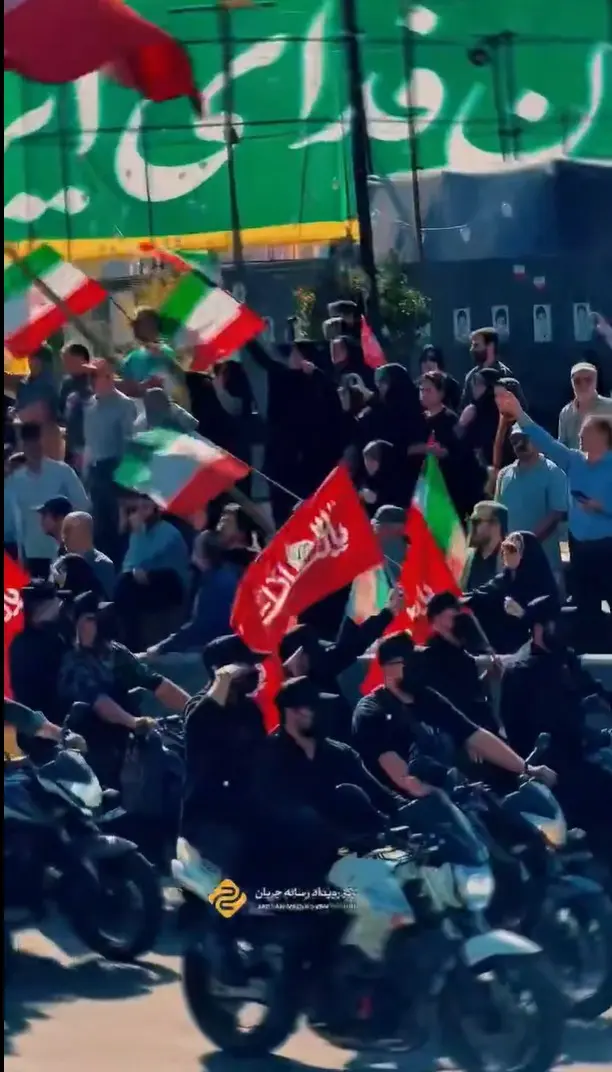
Inside Iran, the mood is one of defiance mixed with anxiety. President Masoud Pezeshkian announced that 14 million citizens, including himself, have volunteered to fight. Revolutionary Guard commanders have encouraged parents to send children to checkpoints, while calls have gone out for young people, students and professors to form human chains around power plants and other sites — a tactic seen in past crises. An Iranian envoy at the UN warned that Trump’s language borders on incitement to war crimes and pledged “proportionate” self-defence.
For ordinary Iranians, the prospect of losing electricity, water, internet and fuel is not abstract. Many fear a descent into conditions reminiscent of the “Stone Age,” as Trump himself has evoked. At the same time, some opponents of the Islamic Republic had initially hoped external pressure might hasten political change, only to worry that prolonged chaos could entrench instability instead.
The paradox at the heart of this moment is clear. US and Israeli air dominance has inflicted significant damage on Iranian military infrastructure, yet Iran’s asymmetric leverage — the strait blockade and threats to regional energy facilities — has imposed costs that resonate far beyond the Gulf. Oil prices have skyrocketed, pressuring economies worldwide and forcing even Washington to weigh the merits of sanctions relief on Iran’s energy sector, a step that would have seemed inconceivable before February.
As the deadline expires, the trajectory remains uncertain. Trump has a history of setting and extending ultimatums. Back-channel communications continue, and proposals for phased ceasefires or temporary openings of the strait are under discussion. A short extension could allow mediators to narrow differences, potentially yielding a fragile pause that calms markets without resolving deeper issues such as Iran’s nuclear programme, proxy networks or regional influence.Yet the broader stakes extend beyond tonight’s clock. The conflict has exposed the limits of unilateral military power in an interconnected world. Chokepoint control has proven a potent equaliser against advanced weaponry. Mid-tier actors like Pakistan have gained unexpected diplomatic weight. And the near-universal call for peace — articulated by the Pope, the UN, European governments and Gulf neighbours — underscores a widespread desire to avoid a wider war that could destabilise the global economy for years and radicalise the region further.
Forward-looking observers see two broad paths. One leads to a managed de-escalation: a negotiated reopening of the strait tied to limited sanctions easing, followed by longer-term talks on security guarantees. This would not deliver decisive victory for any side but could prevent catastrophe and restore a tense normalcy. The other risks escalation — intensified strikes on Iranian infrastructure, possible ground operations on Kharg Island, and retaliatory disruptions that keep oil prices elevated and humanitarian suffering high.
In this crucible, the global appeal for restraint, voiced most powerfully by moral authorities like Pope Leo XIV, serves as a counterweight to escalation. Whether leaders heed it will determine if Tuesday’s deadline marks the beginning of a difficult diplomatic off-ramp or the prelude to deeper conflict. For now, the world watches, hoping that the collective call for peace — from pulpits, chancelleries and assembly halls alike — can still prevail over the logic of confrontation.