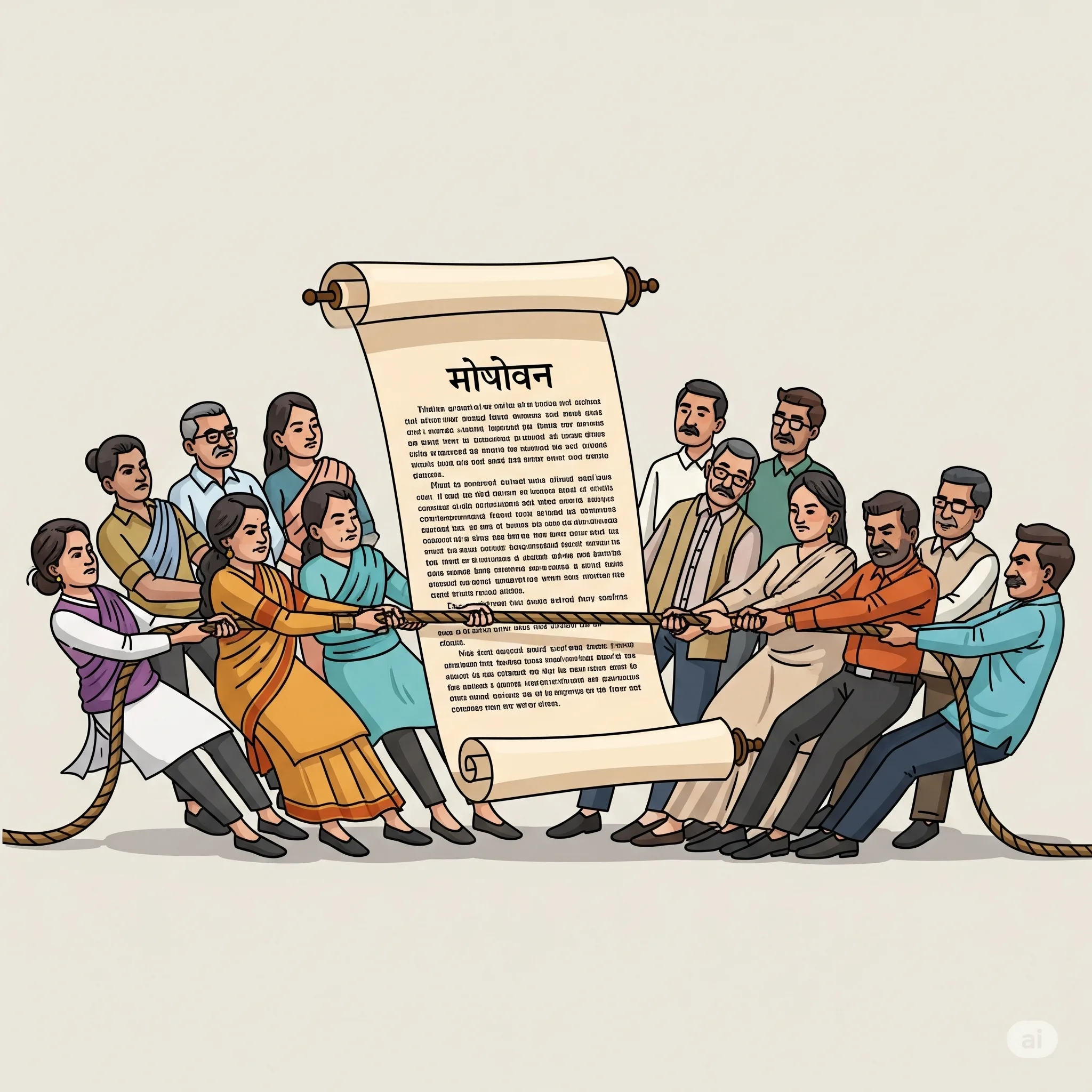
India, a nation long celebrated for its vibrant diversity, finds itself at a critical juncture, grappling with escalating social and political tensions. A fierce and often acrimonious debate over Bangladeshi and Rohingya migrants has emerged as a central flashpoint, exacerbating existing Hindu-Muslim fault lines and threatening the country’s foundational pluralistic fabric. This issue extends far beyond mere immigration policy; it is deeply intertwined with electoral strategies, the ascendance of a dominant political ideology, and the very definition of Indian citizenship.
The ruling Bharatiya Janata Party (BJP) aggressively champions a narrative of large-scale illegal infiltration leading to significant demographic shifts, particularly in states like Assam, West Bengal and Jharkhand. This claim, however, faces scrutiny due to a striking absence of substantial verifiable evidence on the ground. Despite this, the narrative fuels a potent political agenda, further intensified by recent actions from the Election Commission of India (ECI) regarding voter roll revisions and the nationwide year-long outreach planned by the Rashtriya Swayamsevak Sangh (RSS), the BJP’s powerful ideological mentor. These developments collectively signal a concerted effort to reshape India’s political and social landscape, raising profound questions about the nation’s future trajectory.
The Phantom Influx: Claims vs. Evidence
The BJP, under the leadership of Prime Minister Narendra Modi and Home Minister Amit Shah, has strategically placed the “infiltration” of Rohingyas and Bangladeshis at the core of its high-decibel political campaigns. This narrative has been particularly prominent in states like Jharkhand, West Bengal, and Assam, where leaders allege a “rapidly changing” demography in regions such as Santhal Parganas and Kolhan due to this purported influx. A report by BJP leader Asha Lakra, a member of the National Commission for Scheduled Tribes, even claimed to confirm infiltration based largely on “anecdotal material gathered from conversations with neighbours, panchayat members, and villagers”.
Despite these emphatic claims from the highest echelons of power, however, there is a notable absence of reliable, official evidence to substantiate large-scale illegal infiltration. The number of alleged Bangladeshi and Rohingya infiltrators arrested thus far remains remarkably small. While the Indian government has cited figures such as 1.7 million (17 lakh) undocumented Rohingyas or approximately 40,000 as per the Ministry of Home Affairs , these numbers have been met with skepticism by some Indian human rights organizations. Arijit Sen of Amnesty International India, for instance, has criticized the Home Ministry’s estimate of 40,000 Rohingya posing a “national security” threat, describing this position as “bereft of a moral or legal compass” and one that “feeds into the rising tide of Islamophobia in India”. This narrative of “undocumented Bangladeshi” has, since the 1990s, served as a “favourite scapegoat of right wing Hindus,” being blamed for issues ranging from shrinking job opportunities and terrorism to demographic changes. The inflated figures concerning Rohingyas are similarly used to attribute various alleged acts to them, mirroring accusations leveled against undocumented Bangladeshis.
The Human Rights Watch (HRW) reports indicate that while Indian authorities claim to expel illegal entrants, many individuals pushed into Bangladesh, particularly Bengali-speaking Muslims, are in fact Indian nationals who have been unlawfully expelled without due process. Bangladesh authorities have repeatedly voiced their criticism of India’s unilateral actions, urging the adoption of “transparent, verifiable processes to address these cases in line with international standards”. Instances abound where Indian citizens, such as the Adhikary family, a Bengali-speaking couple with their two-year-old son, were detained for nearly a year in Karnataka on similar charges. Reports from June 2025 detail hundreds of Bengali migrants detained in BJP-ruled states like Rajasthan (300), Odisha (444), and Chhattisgarh (9), with at least seven pushed into Bangladesh without due process. Disturbingly, in May 2025, India reportedly pushed 100 Rohingya refugees into Bangladesh and abandoned 40 more in the Indian Ocean, actions described by critics as being in “blatant disregard of all international protocols and protection mechanisms”.
The strategic utility of an unsubstantiated narrative becomes clear when examining these discrepancies. The “infiltration” claim, despite lack of concrete proof of the numbers project to call it a large-scale phenomena, serves as a powerful political tool for the BJP. It allows the party to mobilise its Hindu base by tapping into anxieties about perceived cultural and demographic shifts, thereby reinforcing the “us versus them” framework central to the Hindutva ideology. This approach also provides a convenient pretext for initiating processes like citizenship verification and voter roll revisions, which the criticis of the move claim, can disproportionately affect minority groups often conflated with “outsiders.” This pattern points at a calculated political maneuver where fear and identity politics are leveraged for electoral and ideological objectives, potentially at the expense of human rights and democratic principles as perceived and alleged by multiple sections of critics, civil society groups and majority of non- BJP political parties in India.
Adding another layer of complexity, the Jharkhand High Court has been hearing a Public Interest Litigation (PIL) since 2022 concerning alleged Bangladeshi infiltration. The court directed the state government to identify illegal immigrants in six districts, noting the petitioner’s argument that the tribal population in these areas significantly declined from 44.67% in 1951 to 28.11% in 2011, while the minority population increased from 9.44% to 22.73% during the same period. The court also observed “conflicting” stands between the Centre and the state on the infiltration issue. While Union Home Minister Amit Shah welcomed the Jharkhand High Court’s directive, stating the Centre would form a committee to investigate the infiltration from Bangladesh , Prime Minister Narendra Modi, in a rally in Jamshedpur, criticized the Hemant Soren-led Jharkhand Mukti Morcha (JMM) government for “refusing to acknowledge the ongoing infiltration, despite a high court order on September 12 to establish an independent panel to probe the ‘infiltration of Bangladeshi immigrants’ in the state”. This highlights a political back-and-forth, with the Centre criticizing the state for inaction, even as a comprehensive report from the Modi government to the Jharkhand High Court, an order issued “a few years ago,” remains awaited.
This situation, particularly in states like Assam, has drawn scrutiny from Indian legal experts. A report titled “Unmaking Citizens: The Architecture Of Rights Violations And Exclusion In India’s Citizenship Trials,” authored by Indian legal scholars Mohsin Alam Bhat, Arushi Gupta, and Shardul Gopujkar, highlights how Foreigners’ Tribunals in Assam, supported by the Gauhati High Court, have allegedly “stripped thousands of citizenship”. The report, based on an extensive review of over 1,200 High Court decisions, argues that these tribunals have become “routine instruments of exclusion,” often disregarding due process and constitutional safeguards. It notes that even binding judicial precedents from the Supreme Court, which state that the burden of proof cannot shift to the accused unless the state first provides meaningful information, are often rendered “functionally irrelevant” in practice. This suggests a systematic dismantling of procedural justice, where individuals may be declared “foreigners” without full knowledge of the evidence against them.
The alleged xenophobic persecution of Bengali-speaking migrants, including Indian citizens, often based on their language or clothing, is a worrying development. Coupled with the construction of detention centers since 2019, this risks creating a new stateless population in South Asia, disproportionately impacting Indian citizens who speak Bengali.
The Electoral Crucible: Voter Rolls and Disenfranchisement Fears
The Election Commission of India (ECI) has injected further tension into the political landscape by launching a “Special Intensive Revision (SIR)” of electoral rolls in Bihar, ahead of the state’s assembly elections. The ECI asserts this exercise is necessary to “protect the integrity” of voter lists by removing duplicate, deceased, shifted, or ineligible entries, including potential “foreign illegal migrants”. Initial findings from Bihar, as reported by the ECI itself, indicated significant numbers: 2.2 million (22 lakhs) names marked as deceased, 700,000 voters found registered in multiple places, and approximately 3.5 million (35 lakh) people untraceable or permanently moved away. The ECI shared these lists with 12 political parties, including the BJP, Congress, and RJD, inviting objections before finalising the draft rolls. Chief Election Commissioner (CEC) Gyanesh Kumar defended the exercise, stating, “Should we be swayed by these attacks (by Opposition) and allow bogus votes to be cast in the name of deceased, permanently shifted, enrolled at two or more places or illegal foreign immigrants? First in the state and then across the country?”
However, this process has drawn strident protests from opposition parties, including the Congress and the Rashtriya Janata Dal (RJD). They allege that the SIR is a politically motivated maneuver, initiated “at the behest of the BJP,” aimed at disenfranchising “lakhs of voters belonging to Dalits, other backward classes, tribals and minority communities, particularly Muslims” in Bihar [User Query]. Petitioners like the Association for Democratic Reforms (ADR) and the RJD have described the exercise as a “grave fraud” on voters, citing irregularities such as Booth Level Officers (BLOs) forging signatures, submitting forms for deceased individuals, and enrolling voters without their knowledge or consent.
A major point of contention centers on the ECI’s alleged demand for “documentary proof of citizenship” from already enrolled voters. Petitioners argue this move violates Supreme Court rulings, which have held that the onus of proving citizenship lies only on new applicants, not existing electors. The Association for Democratic Reforms (ADR), a non-government poll watchdog, has warned that many voters, particularly those in the 18-40 age group, lack the specific documents requested by the ECI, raising fears of widespread exclusion.
The electoral process, in this context, appears to be functioning as a tool for demographic engineering as critics claim. While the SIR is ostensibly about maintaining “integrity,” its timing and focus on “foreign illegal migrants” align strategically with the BJP’s broader narrative of infiltration and demographic change. By disproportionately targeting Bengali-speaking Muslims, who are often conflated with “illegal Bangladeshis,” the process becomes a de-facto mechanism for altering the electorate along religious and ethnic lines. This approach directly undermines the democratic principle of universal adult franchise and equal citizenship as the critics and most non-BJP parties claim. If the electoral roll, the very foundation of democratic participation, can be manipulated to exclude specific communities, it compromises the fairness of elections and the representative nature of the government. This raises concerns about India’s trajectory towards a state where certain groups might face systemic disadvantages in democratic participation.
Adding to these concerns, the ECI has announced plans to carry out similar SIR exercises “across the country,” with a detailed schedule to be released soon. This national rollout raises fears that states like West Bengal, ruled by the Trinamool Congress (TMC) and sharing a border with Bangladesh, could be next in line for a controversial voter roll revision, potentially escalating social and communal tensions further across India.
The interplay of state power and ideological goals is evident in this nationwide initiative. The ECI, a body constitutionally mandated to be independent, initiating a nationwide exercise amidst such widespread controversy, coincidentally echoing the ruling party’s core narrative, suggests a potential alignment with the BJP’s ideological objectives. The justification of “protecting the integrity of electoral rolls” provides a veneer of legitimacy, but the specific targeting of “illegal foreign immigrants” resonates deeply with the BJP’s political agenda. This dynamic points to a weakening of institutional checks and balances within India’s democracy. When independent bodies are perceived to be acting under political influence, it erodes public trust in democratic processes and institutions, paving the way for more authoritarian tendencies and the further marginalization of dissenting voices and minority communities.
ADR’s analysis of the Bihar SIR highlights a sharp drop in the state’s elector-to-adult population ratio, from 102% in 2019 to 97% in 2024. They project that the SIR has “slashed the figure further,” potentially leaving “94 lakh eligible adults off the draft electoral rolls”. This indicates a significant trend of under-enfranchisement, raising serious questions about the inclusiveness of India’s democratic process.
The Hindutva Imperative: Consolidating Power, Reshaping Identity
Despite holding power at the Centre for nearly eleven years under Prime Minister Narendra Modi and governing most key states, the BJP continues to aggressively push its “Hindutva politics” with its “Nation First” narrative. This sustained effort extends beyond mere electoral victories.
The BJP officially adopted Hindutva as its ideology in its 1989 Palampur resolution, claiming it represents “cultural nationalism” and its conception of “Indian nationhood.” RSS Chief Mohan Bhagwat has stated that Hindutva is “India’s identity”. Gurdarshan Singh Dhillon, an Indian scholar, notes that the BJP-RSS combine has brought about a “radical shift” by appealing to the sentiments of the majority community, and its communal agenda “has set the minorities to think about their place and their future in India,” threatening to “undermine the sanctity of the Indian State”. “Militant Hindu organizations”, he adds, argue that ‘Hindutva’ alone can be the basis of India’s unity.
Understanding Hindutva’s core is crucial to grasping these developments. Formulated by Vinayak Damodar Savarkar in 1922 , Hindutva is distinct from the diverse religious practices of Hinduism, though BJP, RSS and other Hindu nationalist organisations firmly differ with such assertions. Indian scholars emphasise that Hinduism, in its essence, is a “vibrant tapestry woven from millennia of diverse traditions, philosophies, and spiritual practices,” while Hindutva “presents itself as a political ideology rooted in ethno-nationalism, far removed from the lofty spiritual ideals that characterize Hinduism”. As articulated by RSS chief Mohan Bhagwat, Hindutva is “India’s identity”. It is an ideology focused on forging a collective identity, instrumentalizing Hinduism for political ends, and defining the Indian nation in terms of Hindu heritage. Its proponents, including Savarkar himself, aimed to “Hinduise Politics and Militarise Hindudom” , envisioning a “Hindu-majority state, where the political and cultural landscape is shaped by Hindu values”.
This ideology has been described by some as a variant of “right-wing extremism”, even “almost fascist in the classical sense,” adhering to a concept of a “homogenised majority” and “cultural hegemony”. However, some analysts dispute the identification of Hindutva with fascism, suggesting it is an “extreme form of conservatism or ethno-nationalism”. Prominent Indian figures have voiced strong concerns; B.R. Ambedkar, for instance, warned that “If Hindu Raj does become a fact, it will, no doubt be the greatest calamity for this country. No matter what the Hindus say, Hinduism is a menace to liberty, equality and fraternity. It is incompatible with democracy. Hindu Raj must be prevented at any cost”. Critics, including Indian scholars, have also highlighted that Hindutva has been criticised for “misusing Hindu religious sentiments to divide people along communal lines and for distorting the inclusive and pluralistic nature of Hinduism for political gains”. This political ideology, while drawing on certain aspects of Hindu culture, often misrepresents the core teachings of Hinduism by focusing on political dominance rather than the spiritual, ethical, and philosophical values that the religion embodies, they argue.
Under Prime Minister Modi, Hindutva has adopted a “distinctly populist and more aggressive posture,” polarizing society by openly denigrating Muslims to mobilize Hindu voters. This manifests in various exclusionary practices, including “vigilante” groups engaging in cultural policing, preventing interaction between Muslim boys and Hindu girls, patrolling highways for cow protection, and making it difficult for Hindus to sell property to Muslims in mixed neighborhoods, leading to ghettoisation. Indian studies confirm that Muslims and Dalits face significant residential segregation in Indian cities and country’s backwaters, often relegated to areas with poor public services like piped water and sewage. Economist Sukhadeo Thorat’s 2015 paper found that house owners in the Delhi region often deny housing to both Dalits and Muslims, with Muslims facing greater discrimination, sometimes being “openly advised to look for housing in a Muslim locality, thereby reinforcing the concept of residential segregation in the city”. Waves of communal violence have also been identified as a factor driving the “ghettoisation of Muslims in riot-prone cities irrespective of social class, education, and status”. Legal frameworks, such as the Citizenship Amendment Act (CAA) of 2019, explicitly make non-Muslim refugees eligible for Indian nationality, effectively making Muslims “second-class citizens de jure”. State-level laws further restrict interreligious marriages and conversions out of Hinduism. These practices are often accompanied by discrimination in the job market, contributing to the socioeconomic decline of Muslims. The public discourse has also seen a “banalisation of Islamophobia,” where previously illegitimate anti-Muslim rhetoric has become commonplace, linked to an increase in physical violence, including lynchings.
In what would complement the BJP’s political actions, the RSS has planned to launch an unprecedented nationwide outreach during its centenary year, commencing October 2. This massive initiative includes organising over “one lakh Hindu Sammelans (conferences)” across 58,964 Mandals (rural units) and 44,055 Bastis (urban units), alongside a “pan India door-to-door public contact programme”. These Sammelans are slated to discuss “social festivals, significance of Hindu unity and harmony in the Hindu society and Panch Parivartan, the RSS agenda to bring a five fold transformation in society with reestablishment of Sanatan values and culture. Thousands of “Samajik Sadbhav Baithaks” (Social Harmony Meetings) to be organised with support of the RSS across the country will seek connect members of different castes in Hindu society with a common chord of Hindutva. The stated goal for the centenary year is “inclusive outreach across professions, geographies, and communities to foster holistic social integration,” with RSS workers visiting homes to disseminate the Sangh’s message.
The BJP’s sustained aggressive push, even after significant electoral success, indicates that their agenda extends beyond mere political power. The RSS’s centenary programs, with their vast scale and seemingly benign objectives like “social harmony” and “inclusive outreach,” are a strategic long-term effort to embed Hindutva ideology deeper into the social fabric. By reaching “every village and every house,” they aim to normalise and popularise a specific, majoritarian definition of Indian identity (“Hindu-ness”) from the grassroots up. The opposition parties see the RSS’ move as a systematic, long-term ideological project to fundamentally alter India’s constitutional secular and pluralistic character. It implies a future where dissent against the dominant narrative becomes increasingly difficult, and the rights and identities of minorities are continually challenged, potentially leading to a more homogenous, less diverse society, they argue.
Furthermore, a symbiotic relationship exists between political power and ideological outreach. Since the BJP came to power under Prime Minister Modi, Hindutva forces have become “more and more vocal with assertive notions of their strength”. Modi’s populism has made Hindutva more “exclusionary and assertive”. The BJP’s political power provides a fertile ground for the RSS to expand its ideological influence, and conversely, the RSS’s deep grassroots penetration strengthens the BJP’s electoral machinery. This creates a self-reinforcing cycle: political power enables ideological propagation (e.g., through policy, rhetoric, state institutions), and ideological propagation consolidates the political base. This suggests that the current trajectory of divisive politics is not a temporary phase but a deeply entrenched and accelerating process. The fusion of state power with a dominant ideological movement can lead to the further marginalisation of opposition, suppression of dissent, and a gradual shift towards an authoritarian system where the “will of the majority” (as defined by the ruling ideology) overrides constitutional protections for minorities.
The Opposition’s Gambit: Caste as a Counter-Narrative
Recognizing their struggle to “check the rising BJP and its Hindutva agenda,” the opposition, particularly the Congress party, is now banking on caste politics, hoping to succeed in dismantling the BJP’s Hindutva plank and dislodge it from power. This strategic pivot is primarily articulated through their promise to conduct a nationwide caste census and remove the 50% cap on reservations for Scheduled Castes (SCs), Scheduled Tribes (STs), and Other Backward Classes (OBCs). This move is seen as an effort to strategically tap into the OBC vote bank and consolidate a counter caste-based constituency to the BJP’s Hindutva vote bank. Congress leader Rahul Gandhi’s acknowledgment of the party’s past shortcomings in addressing the OBC community’s needs is part of this strategic outreach, and the Congress’s alliances with caste-based parties like the RJD in Bihar, the Samajwadi Party in Uttar Pradesh, and the DMK in Tamil Nadu further strengthen its OBC strategy.
However, this is a “complex and challenging endeavor” for the opposition as it requires significant resources and infrastructure to conduct a nationwide caste census in a fair and transparent manner. Furthermore, the Congress will need to navigate the “legal complexity surrounding the 50% ceiling on reservations,” which has been upheld by the Supreme Court. The party also faces the challenge of regaining the trust of OBC voters, who have been drawn to other parties, including the BJP.
In a surprising and politically astute move, the BJP-led government has announced its own plan for caste enumeration in the upcoming census. This is a calculated response, a strategic pivot aimed at countering the opposition’s backward empowerment agenda and winning over deprived sections of society. The BJP learned a crucial lesson from the last Lok Sabha elections, where the consolidation of disadvantaged sections around the opposition’s agenda contributed to the BJP falling short of a clear majority. By greenlighting the caste census, the BJP hopes to disarm its rivals of a potent electoral issue and empower non-dominant backward castes. The BJP has demonstrated political flexibility in the past, adopting popular schemes (for example, freebies) initially offered by opposition parties after realising their electoral appeal.
The shifting sands of electoral strategy are evident in this dynamic, moving from identity politics to distributional politics. The opposition’s embrace of caste politics represents an attempt to shift the electoral discourse from a purely religious-nationalist identity (Hindutva) to one based on social justice and economic redistribution (caste-based reservations, census data for resource allocation). This acknowledges that while Hindutva unifies a segment of the majority, caste identities remain a powerful, often sub-national, mobilising force. The BJP’s counter-move to adopt the caste census plank itself demonstrates its political pragmatism and its ability to co-opt opposition agendas to neutralise a potential threat to its poll prospect, ans also further expand its own appeal beyond its traditional base. This strategic dance between Hindutva and caste politics suggests a complex electoral landscape where parties are constantly adapting to maintain and expand their vote banks. It indicates that while religious polarisation is a dominant force, the deep-seated realities of caste continue to exert significant influence on Indian politics.
However, the opposition’s reliance on caste politics has potential to increase tension in the society and make situation rather worse in the country . While the opposition’s caste plank aims to counter Hindutva, it inherently emphasises divisions within society along caste lines. This carries the risk of intensified societal division. In an already highly polarised environment, which could lead to new forms of social friction, as different caste groups assert their claims and compete for resources and representation. The re-emphasis on caste identities, even for social justice, could inadvertently deepen societal fragmentation, especially if not managed with extreme sensitivity and a focus on broader unity. This suggests a challenging outlook where India’s political competition, regardless of the plank, seems destined to exacerbate societal divisions.
Echoes of the Past: A History of Communal Fault Lines
The current communal polarisation in India is not an isolated phenomenon but deeply rooted in the nation’s post-independence history. Hindu-Muslim relations in India remain fractured by the schisms that led to genocidal massacres during partition in 1947. For decades after independence, Hindutva organisations like the RSS largely remained on the periphery of Indian politics.
The cumulative effect of historical polarisation is undeniable. The current heightened tensions are not isolated incidents but a culmination of decades of simmering communal fault lines, strategically exploited and deepened by political actors. The Babri Masjid demolition in 1992 was a watershed moment, legitimising and mainstreaming Hindutva, which then gained significant political power. This historical trajectory shows a gradual but consistent erosion of India’s secular foundations, paving the way for the current “us vs. them” rhetoric and policies. Each incident of violence, rather than being an anomaly, has contributed to a normalised environment of prejudice and discrimination. The “idea of India” as a pluralistic, secular democracy is under existential threat, as the very definition of nationhood is being redefined along majoritarian lines.
Moreover, a symbiotic relationship exists between economic disparity and communalism. The “resurgence of Hindu-Muslim economic competition” and the “isolation and economic backwardness of Muslim community” are cited as contributing factors to communal ideology. The Sachar Committee Report (2006), a government document, exposed the extent of economic and educational backwardness of Indian Muslims. This report attributes the “retrograde condition” of Muslims to not religious but other social factors, highlighting “poverty, poor literacy rate, low earnings, and lack of employment” as major reasons for disadvantages faced by Muslim women. While political and ideological factors are prominent, economic grievances and disparities often serve as underlying catalysts or accelerants for communal tensions. The “infiltration” narrative, for instance, can be implicitly linked to economic anxieties, even if not explicitly stated by the BJP, making it resonate with segments of the population. Addressing communal tensions in India requires not only confronting ideological extremism but also tackling underlying socioeconomic inequalities. If economic disparities persist or worsen, they will continue to be exploited by political forces to deepen communal divides, making any resolution more challenging and potentially leading to a more unstable and inequitable society. Administrative failure and the role of media in sensationalism and spreading rumors also fuel these tensions.
India’s Crossroads: The Future of a Fractured Nation
The current trajectory of divisive politics, propelled by the migrant issue, electoral maneuvers, and an aggressive Hindutva agenda, is profoundly impacting India’s social fabric and democratic principles. Indian political analysts and civil society organizations have voiced significant concerns regarding the state of democratic institutions and the rights of minorities. Bhabani Shankar Nayak, an Indian scholar, asserts that the Modi government, “driven by the ideology of Hindutva—has systematically undermined India’s federal structure and the principles of decentralised, participatory development”. Reports from various Indian scholars highlight how investigative agencies are allegedly misused to target political opponents, undermining democratic norms, and how the federal structure has faced significant upheavals.
Concerns about political and civil liberties have also been raised. Civil society observers in India note an increasing use of “draconian laws against terrorism”, such as the Unlawful Activities Prevention Act, that permit indefinite imprisonment without formal charges or the possibility of bail. There are fears that new laws on data protection and social media regulation could lead to “greater self-censorship and persecution”. Furthermore, the media landscape is widely perceived as “dominated by outlets owned by politicians and business interests closely aligned with the ruling party,” leading to a “tightly controlled” information order. Rahul Mukherji, an Indian scholar, observes how the state has “systematically stifled dissent and reshaped civil society to align with its Hindu nationalist agenda”.
Regarding religious minorities, Indian civil rights bodies and scholars report a significant deterioration of their rights. Amnesty International India has stated that laws like the Citizenship Amendment Act (CAA) “legitimises discrimination on the basis of religion and stands in clear violation of both the constitution of India and international human rights law”. Religious minorities are reportedly subjected daily to “hate crimes fuelled by conspiracy theories” and face “systemic state action and policies” that make it “open season” on them. Attacks on Muslims, Christians, and their places of worship are reported as routine, and several states have passed laws seeking to control inter-religious marriage and religious conversions. Thomas Blom Hansen, an Indian scholar, notes that while overt communal violence has declined, the rise of Hindu majoritarianism has fostered a “pervasive atmosphere of fear and stigma for minorities”. This environment, where a “national populist” approach speaks in the name of the majority and openly denigrates Muslims, fosters conditions that can lead to authoritarianism by leaving “no room for diversity, dissent, or opposition”.
The “xenophobic persecution” of Bengali migrant workers and a “flawed” citizenship verification processes, such as the National Register of Citizens (NRC) in Assam which excluded 1.9 million (19 lkah) people, are actively creating a “new stateless population” in South Asia, disproportionately impacting Indian citizens. This raises the specter of a humanitarian crisis within India’s borders, political observers in India say.
The “banalisation of prejudice” and the increase in physical violence, including lynchings, further underscore a worsening social environment, admit many bureaucrats and ruling party leaders in private. This indicates the peril of perpetual polarisation as a governing strategy. When political competition revolves around deepening societal divisions—be they religious, caste, or linguistic—rather than addressing common challenges, it creates a self-perpetuating cycle of tension. For the ruling party, it serves to consolidate a majority vote bank. For the opposition, it is a desperate attempt to counter. This constant state of heightened tension can exhaust civic discourse, hinder economic development, and prevent the nation from addressing critical long-term issues. The long-term consequence could be a weakening of national cohesion and a diminished capacity to respond effectively to internal and external challenges, potentially leading to instability.
The aggressive push for a Hindu-majority state strikes at the very heart of the idea of India, an idea forged through our shared anti-imperialist freedom struggle. Uniformity, in a nation comprising hundreds of ethnicities, religions, and languages, is fundamentally contrary to Indian history and its constitution. Such uniformity, as analysis suggests, could only be achieved through “dictatorship and totalitarian intolerance”.
India stands at a critical crossroads, where the interplay of migration narratives, a dominant ideological agenda, and electoral strategies is reshaping its social and political landscape. The aggressive promotion of an “infiltration” narrative by the ruling BJP, despite a lack of verifiable evidence, serves as a potent political tool to mobilize its base and justify actions that disproportionately affect minority communities. The Election Commission’s controversial voter roll revisions, coincidentally to be coupled with the extensive grassroots outreach by the RSS, suggest a concerted effort to redefine Indian citizenship and alter the electorate, pushing the nation towards a de facto “ethnic democracy.”
India’s history post-independence is replete with instances of communal polarization, from the scars of Partition to the watershed moment of the Babri Masjid demolition and the subsequent rise of Hindutva. This historical trajectory reveals a consistent erosion of secular foundations, where economic disparities and administrative failures often exacerbate underlying tensions. The current environment, marked by the “banalization of Islamophobia” and increased violence, represents a culmination of these historical fault lines.
The future of India appears poised for continued social friction. While the opposition attempts to counter the Hindutva plank with caste-based politics, this strategy, too, carries the risk of deepening societal divisions. The pervasive nature of polarization, increasingly employed as a core governing strategy, threatens to exhaust civic discourse, impede development, and undermine national cohesion. If the current trajectory persists, India risks moving further away from its founding principles of secularism and pluralism, potentially leading to a more authoritarian state where constitutional protections for minorities are increasingly diminished, and the very idea of a diverse, inclusive India is fundamentally challenged.