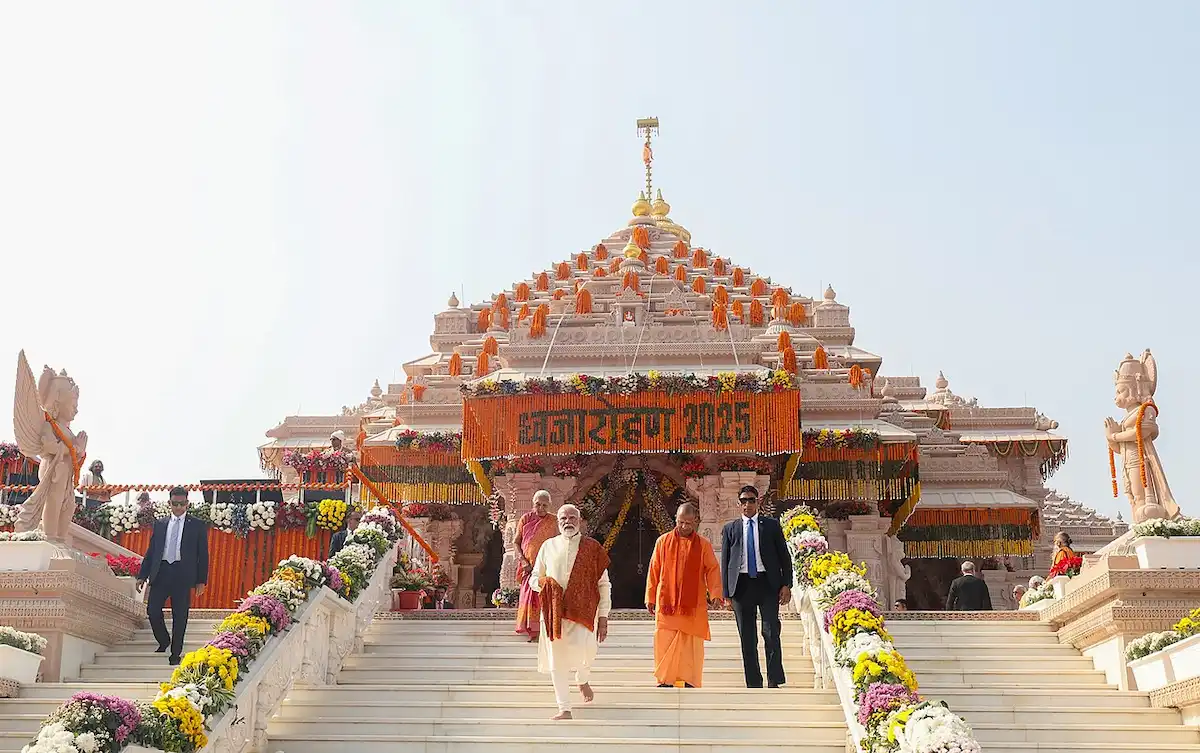
In the sacred town of Ayodhya, where a grand temple to Lord Ram was inaugurated in January 2024 amid fervent celebration, an uncomfortable drama is unfolding. What was meant to be the crowning achievement of Hindu nationalism—a symbol of cultural resurgence after decades of legal battles, communal tension, and the violent demolition of the Babri Masjid in 1992—now risks becoming a political liability for India’s ruling Bharatiya Janata Party (BJP). Allegations of embezzlement from donations to the Ram Temple have escalated into a major row, just months before assembly elections in Uttar Pradesh early next year. The saffron party, which has long staked its identity on devotion to Ram, finds itself on the defensive.
The Shri Ram Janmabhoomi Teerth Kshetra Trust, which oversees the temple, has been rocked by claims of theft and mismanagement of offerings from millions of devotees. On Thursday night, police arrested eight people, including a former driver of the Trust’s general secretary, Champat Rai. Nearly Rs 80 lakh ($95,000) and some foreign currency were reportedly recovered. A raid on the home of Lavkush Mishra, a junior employee involved in counting cash, yielded around Rs 12 lakh. The Special Investigation Team (SIT) set up by the Yogi Adityanath government in Uttar Pradesh uncovered lapses in donation management, prompting an FIR. In a striking development, Mr Rai and trustee Anil Mishra have resigned, citing moral responsibility. The Trust’s treasurer, Govind Dev Giri, expressed shock and assured devotees that silver bricks and ornaments are safe with proper accounting. The resignations will be considered at a Trust meeting on July 7. Vishva Hindu Parishad (VHP) chief Alok Kumar has suggested the need for a chief executive officer to professionalise management. Yet these steps have done little to quell the uproar.
The Ram Temple is no ordinary place of worship. Its construction followed a bitterly contested Supreme Court verdict in 2019 that awarded the disputed site to Hindus while providing alternative land for a mosque. The campaign to build the temple, rooted in the belief that it marks Ram’s birthplace, mobilised millions. Donations poured in not just from wealthy supporters and corporations but from ordinary Indians—notes tucked into spice boxes by mothers, coins from children’s piggy banks, and small contributions from the poor. The BJP framed the project as a “national movement” and a restoration of Hindu pride. Any suggestion of betrayal of that faith strikes at the party’s core political narrative.
Opposition parties have seized on the scandal with gusto. The Congress has questioned Prime Minister Narendra Modi’s silence, demanding a Supreme Court-supervised probe and the dissolution of the Trust. Spokesman Akhilesh Prasad Singh called it a “betrayal of faith,” while Pawan Khera highlighted the humble origins of many donations. Congress leader Jairam Ramesh invoked a line from a popular Hindi film Upkaar: those who deceive God will hardly spare humans. Priyanka Gandhi Vadra described the episode as “tragic” and “shameful,” emphasising the government’s responsibility for funds collected nationwide. Samajwadi Party chief Akhilesh Yadav, a key rival in Uttar Pradesh, accused the BJP of treating money as its only religion and pledged to develop Ayodhya into a peerless sacred city if voted to power. He questioned how the chief minister, who frequently visits Ayodhya, could claim ignorance.
The political implications are profound. Uttar Pradesh, India’s most populous state with 403 assembly seats, is a bellwether for national politics. The BJP, under the hardline Hindu monk-turned-chief minister Yogi Adityanath, has dominated through a blend of Hindutva mobilisation, welfare delivery, and administrative toughness. The Ram Temple was supposed to be its ultimate calling card. Instead, the scandal provides ammunition for rivals to portray the party as hypocritical—professing maryada (dignity) in the name of Ram while allegedly failing to safeguard devotees’ offerings. Allegations that senior figures ignored warnings, removed whistleblowers, and deleted CCTV footage deepen the damage.
The Yogi government’s response—an SIT probe and arrests—aims to project decisiveness. Yet critics note that the FIR initially targeted only junior employees, raising suspicions of a cover-up. Grandfather of one arrested man publicly demanded cases against Mr Rai and Mr Mishra. The Trust’s insistence that valuables are safe and its call for stringent punishment against the guilty sound defensive. Even VHP leaders acknowledge shaken public trust and the need for swift justice in a fast-track court.
For the BJP, the timing could hardly be worse. Assembly polls in early 2027 will test its grip on the state after two terms. While the party remains organisationally strong and Mr Adityanath retains a formidable image, faith-based issues carry unique emotional weight in the Hindi heartland. Embezzlement at a temple built on the back of decades of sacrifice and agitation risks alienating not just core Hindu voters but also the broader aspirational base the BJP has cultivated. In rural and small-town Uttar Pradesh, where temple visits and religious processions remain central to social life, stories of “looting” at Ram’s abode travel fast and resonate deeply. Analysts see this as a slow-burning crisis rather than an immediate electoral killer.
The BJP has weathered past controversies through strong leadership messaging and welfare schemes. Mr Modi’s personal popularity and the party’s narrative of development alongside cultural assertion provide buffers. Yet prolonged headlines about arrests, resignations, and opposition demands for high-level accountability could erode the moral high ground the saffron camp claims. If the probe implicates higher functionaries or drags on without visible convictions, the damage will multiply. The Congress and regional parties like the SP are already framing it as systemic rot within the “Ram bhakt” establishment.
Broader questions loom about the governance of religious trusts in India. The Ram Temple Trust was established under Supreme Court directions, giving it a semi-official character. Its troubles highlight tensions between fervent public devotion, vast inflows of unregulated cash and valuables, and the need for transparent professional management. The call for a CEO-style structure reflects recognition that moral authority alone may not suffice in an era of scrutiny.
As the July 7 Trust meeting approaches and the SIT probe continues, Ayodhya’s political temperature is rising. What began as an internal embarrassment has become a national talking point. For the BJP, restoring not just accounts but the “truth-light” of public faith— as the treasurer put it—will be essential. Failure to do so swiftly risks turning a temple of resurgence into a symbol of hubris ahead of crucial state polls. In Indian politics, few wounds cut deeper than perceived insults to religious sentiment—especially when the temple in question was meant to heal old divisions. The coming months will test whether the party’s political management can match its devotional rhetoric. Jai Shri Ram may still echo, but questions of accountability are growing louder.