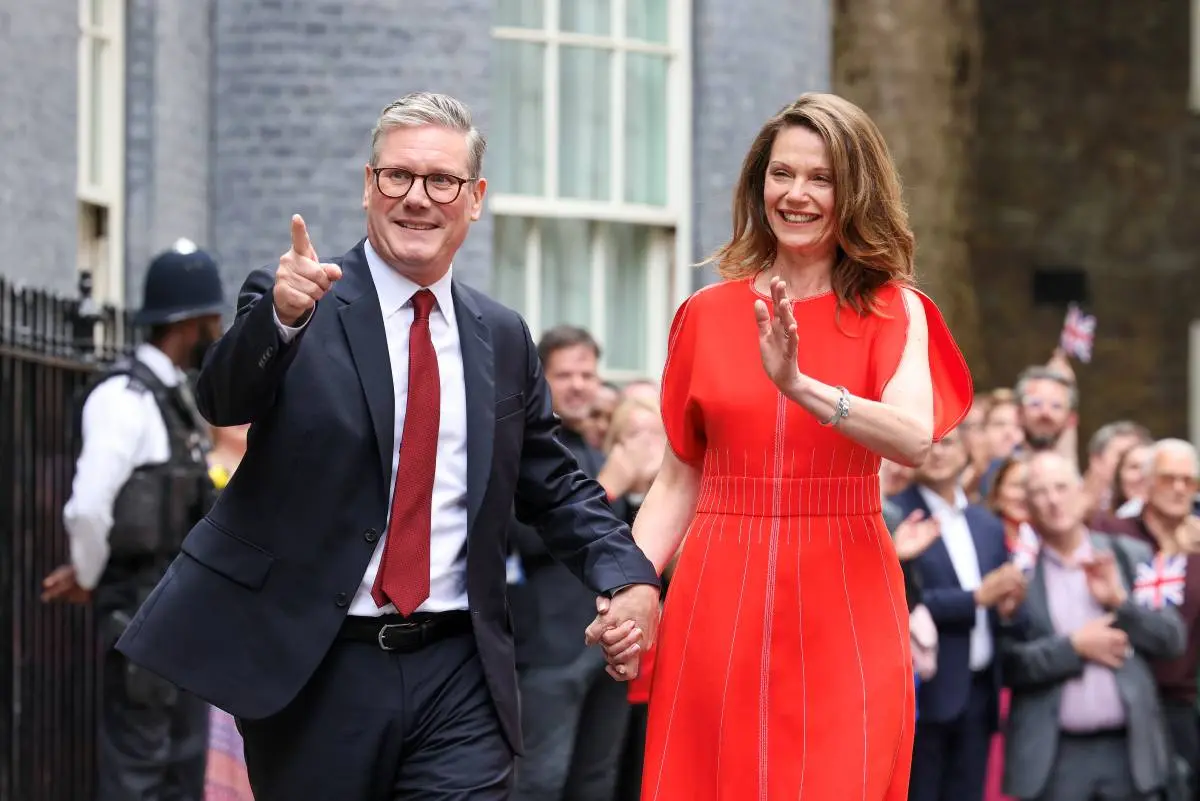
In the damp early summer of 2026, Westminster finds itself once again in the grip of familiar British political theatre: a prime minister besieged by his own party. Barely two years after Keir Starmer led Labour to a landslide victory in July 2024, ending 14 years of Conservative rule, pressure is mounting on him to step aside in favour of Andy Burnham, the mayor of Greater Manchester, whose decisive win in this week’s Makerfield by-election has electrified the party’s left-leaning and northern wings. What began as a contest to fill a vacant seat has become a proxy battle for the soul and future of British social democracy.
The backdrop is one of deep disillusionment. Starmer entered Downing Street with the largest Labour majority since Tony Blair in 1997—an emphatic 174-seat advantage that seemed to promise stability after the chaotic carousel of five Conservative prime ministers in as many years. Yet the inheritance was poisoned. Britain in 2024 was a country exhausted by Brexit’s lingering dislocations, stagnant productivity, strained public services, and the scars of inflation that had eroded living standards. Global headwinds, from energy shocks to the after-effects of the pandemic, compounded domestic woes. Starmer’s government, cautious and managerial in tone, promised “national renewal” but has often appeared trapped by fiscal caution and internal contradictions.
Recent months have proved especially bruising. The appointment of Peter Mandelson, a veteran New Labour fixer, as ambassador to Washington—despite his past associations with Jeffrey Epstein—reignited accusations of sleaze and elitism. U-turns on tax policy and cuts to social benefits alienated both the party’s traditional base and centrist voters who had lent Labour their support. Economic growth has remained anaemic, while voters in Red Wall seats—those former Labour heartlands in the Midlands and North that Boris Johnson captured in 2019—have grown restless. Into this vacuum has stepped Nigel Farage’s Reform UK, a populist outfit blending hardline immigration controls, net-zero scepticism, and anti-establishment rhetoric. Though still a smaller force than the main parties, Reform’s appeal in deindustrialised towns has alarmed Labour strategists.
Enter Andy Burnham. A former cabinet minister under Gordon Brown and Ed Miliband, Burnham reinvented himself as “Mayor of the North” after losing the Labour leadership contest in 2015. In Greater Manchester he has cultivated a reputation for pragmatic leftism: negotiating with central government, expanding public transport with cheaper bus fares, and positioning himself as a defender of regional interests against a London-centric establishment. His victory in Makerfield, a classic northern English constituency, was framed explicitly as a bulwark against Farageism. By defeating a Reform challenger with a solid margin, Burnham not only held the seat but strengthened his claim to offer the party a path back to its working-class roots.
The numbers tell a striking story. According to reports, nearly 300 Labour MPs may now back Burnham in a leadership contest. Behind the scenes, allies say he is already sketching the outlines of a potential cabinet. Peter Kyle, the Business and Trade Secretary, offered a carefully worded endorsement on Sunday, noting that Burnham was “working really hard” and “reflecting on the political realities.” Starmer, by contrast, has adopted a stance of defiant continuity. Speaking to reporters on Saturday, he insisted: “I was elected with a considerable mandate… I don’t think plunging us into chaos is a good thing for the country.” He praised Burnham as “a huge asset” but made clear he would fight any challenge.
Such resolve is understandable. Starmer has long viewed himself as the man who restored Labour’s electability after the Corbyn years. Yet loyalty in British politics is often transactional, and the parliamentary party is restive. A formal leadership contest would require challengers to secure nominations from at least 20% of MPs, plus support from either 5% of constituency parties or three affiliated organisations such as trade unions. Several figures, including former Health Secretary Wes Streeting, are said to be watching developments closely.
Should Starmer yield, Britain would be searching for its seventh prime minister in a decade—a grim statistic that underscores the institutional fragility of its politics since the Brexit referendum. Two broad scenarios are under discussion. In the first, Starmer resigns but remains in post during a transition, allowing an orderly handover. In the second, he departs immediately, with a senior cabinet figure acting as caretaker until a new leader is chosen. Either path risks further instability at a time when markets are jittery about Britain’s debt dynamics, sluggish growth, and exposure to global trade tensions.
Burnham’s pitch is unapologetically interventionist. He has called for an end to “trickle-down economics,” which he argues “didn’t trickle down very much at all.” His platform emphasises practical relief for households: lowering water and energy bills, extending affordable public transport, and addressing the regional inequalities that Brexit and globalisation have exacerbated. For international observers, the contrast is instructive. While Starmer’s government pursued a technocratic reset—stabilising relations with the EU, tightening fiscal rules, and attempting incremental planning reform—Burnham channels a more emotional, place-based politics that resonates in post-industrial Britain.
The stakes extend beyond personnel. A Burnham-led Labour Party might tilt leftward on economic policy, testing the tolerance of financial markets and moderate voters. Yet failure to address the concerns that fuel Reform’s rise—particularly on immigration, cultural change, and living costs—could see Labour haemorrhaging support in its traditional strongholds. Britain’s fragmented political landscape, with a resurgent Liberal Democrats and Scottish National Party dynamics still in flux, makes any misstep perilous.
As Burnham prepares to take his seat in the Commons on Monday, declaring his by-election win Labour’s “last chance to change,” the coming days will test whether the party can engineer a controlled succession or whether deeper divisions will spill into the open. For a country craving competence after years of turbulence, the choice between continuity and reinvention is rarely straightforward. Britain’s voters, and its anxious allies abroad, will be watching closely to see whether Labour’s internal drama produces renewal—or merely more of the same familiar chaos.