Elon Musk’s growing influence over the US federal government has left many Americans and international observers alarmed.
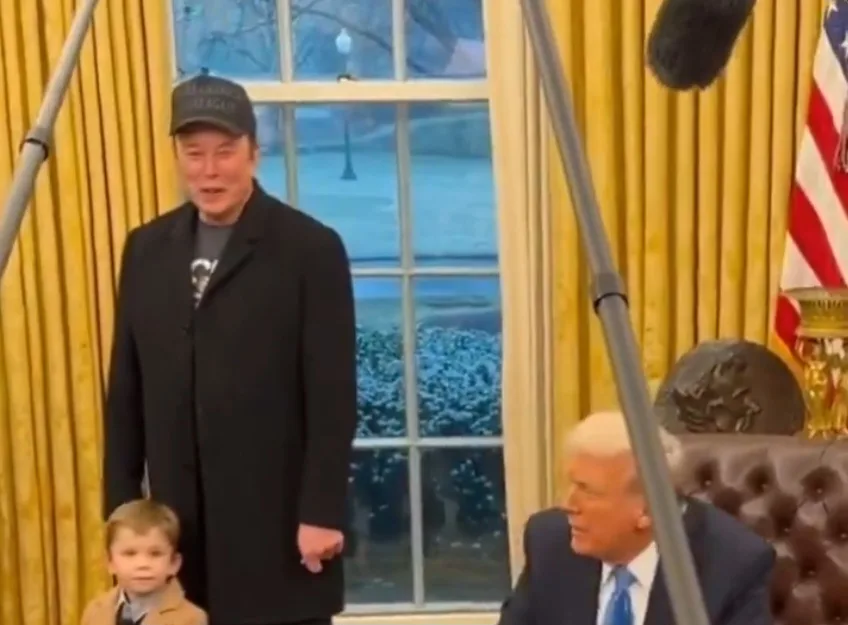
As the world’s richest individual, Musk has increasingly embedded himself into the fabric of Washington’s political machinery, with the support of President Donald Trump. This partnership, solidified by a newly signed executive order, has raised questions about the true nature of Musk’s involvement in government affairs.
A New Era of Government Reform?
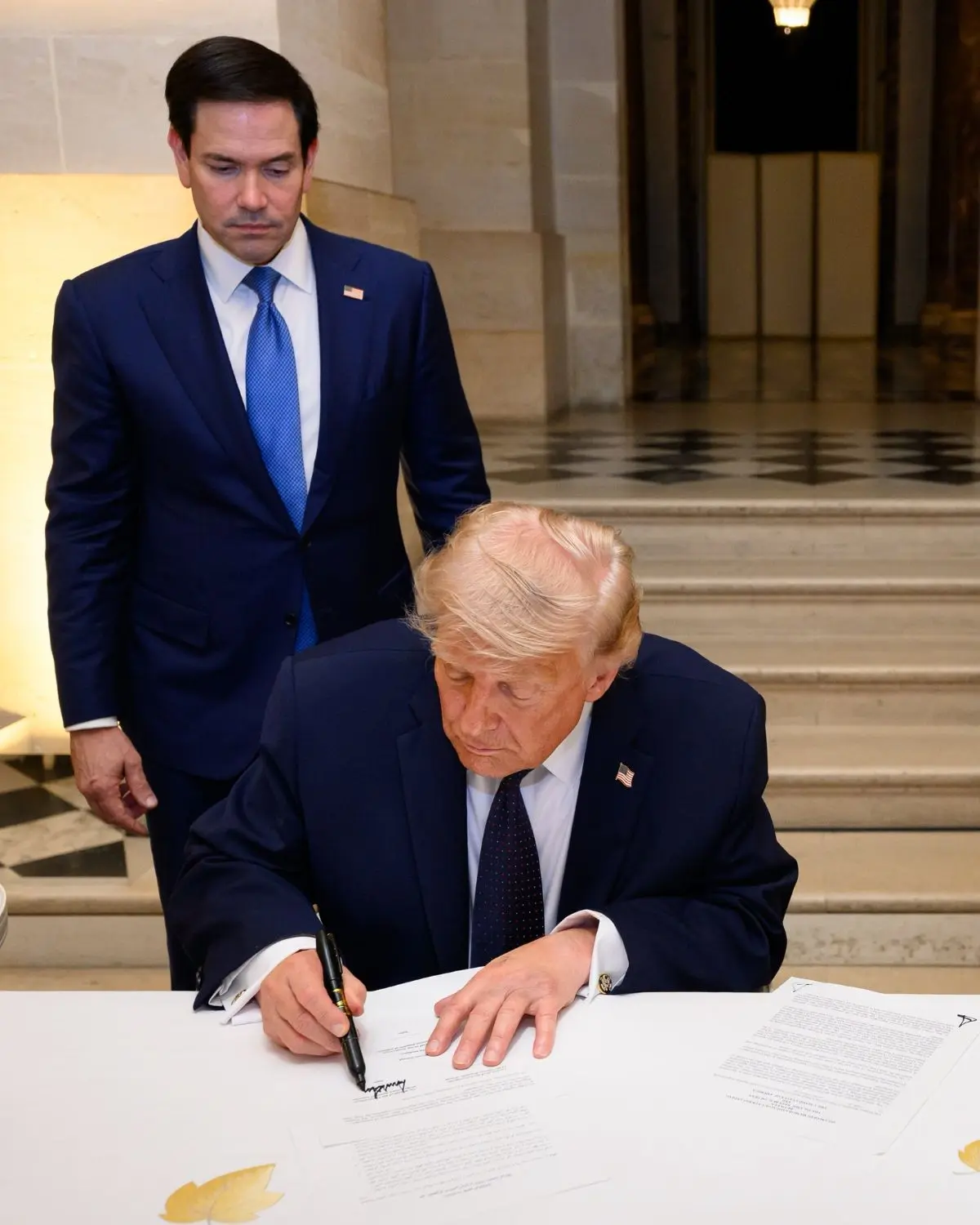
On February 12th, 2025, President Trump signed an executive order that further empowers Musk’s Department of Government Efficiency (DOGE).
The order requires federal agencies to cooperate with Musk’s team in slashing staffing levels and restricting new hires—moves that are purported to streamline government operations.
While some praise the efficiency gains promised by DOGE, others view Musk’s ascent within the government as problematic, with accusations of a covert power grab.
Is It a Hostile Takeover or Something More Sinister?
Critics argue that Musk’s actions, described by some as a “hostile takeover,” amount to a more insidious form of state capture. Rather than a violent coup or self-coup, Musk’s quiet infiltration of governmental functions mirrors the tactics seen in countries that have suffered from state capture—a process where political elites exploit state resources for personal and political gain.
The DOGE has already gained access to crucial government databases and reshaped institutions like USAID, raising red flags about the future of public policy under such control.
Musk’s critics argue that he is using his influence to redirect government operations to benefit a select group of powerful allies, including Trump himself, while bypassing transparency and accountability standards.
What Is State Capture?
State capture, as it is understood in political science, involves elites or corporations taking control of governmental institutions, information systems, and decision-making processes. By manipulating policies and resource allocation to serve their own interests, these actors gradually turn the state into a vehicle for private enrichment, often at the expense of the public good.
This process has unfolded in countries like Russia, Hungary, and South Africa, and it’s feared that Musk’s maneuvers in Washington may signal a similar trend in the US.
Over time, a captured state becomes less accountable, with political decisions increasingly made behind closed doors in a quid-pro-quo system that benefits the elite few.
Musk’s Network of Allies: Who Stands to Gain?
A significant consequence of Musk’s growing control over government resources is the potential for a small network of corporate and political elites to thrive.
Trump stands to gain from Musk’s efforts by consolidating his power within government, which may open doors for further expansion of his business empire.
With a captured state, Trump can have more influence over how public wealth is distributed, making economic policy decisions that benefit his personal and political associates.
Musk’s closest allies in silicon valley, many of whom are influential figures in the tech industry, are positioned to secure lucrative government contracts.
This especially applies to the development and deployment of artificial intelligence within federal systems.
By presenting their companies as the solution to government inefficiency, they can claim a share of a newly controlled market.
Musk’s inner circle which comprises a cadre of engineers, technicians, and advisors loyal to him are likely to benefit from significant career advancement, financial rewards, and increased opportunities.
The loyalty expected from these individuals, combined with potential legal impunity, is an example of the “loyalty-for-gain” systems that often characterize authoritarian regimes.
The Global Impact of State Capture in America
If Musk’s actions truly represent state capture, the impact on US governance could be severe.
The immediate fallout will likely involve poorer decisions, as experienced civil servants are purged and critical programs are dismantled.
This could degrade both the standard of living for American citizens and the nation’s global standing, as strategic decisions are made without due consideration of public interest.
Additionally, the lack of transparency and oversight could worsen corruption in the US federal government.
With Congress sidelined and watchdogs pushed to the margins, decisions could increasingly favor those who pass a “loyalty test” to the political powers that be, rather than being rooted in public interest.
A New Political Order?
The implications of Musk’s growing role in government are far-reaching, not only for the US but for global observers watching the evolution of political power dynamics.
As the billionaire continues to shape Washington’s bureaucracy to his will, the line between public service and private profit may become dangerously blurred.
For now, the US faces a pivotal moment: whether Musk’s government reform efforts will create a more efficient state or pave the way for a more authoritarian, privatized system of governance that leaves the public at a distinct disadvantage.